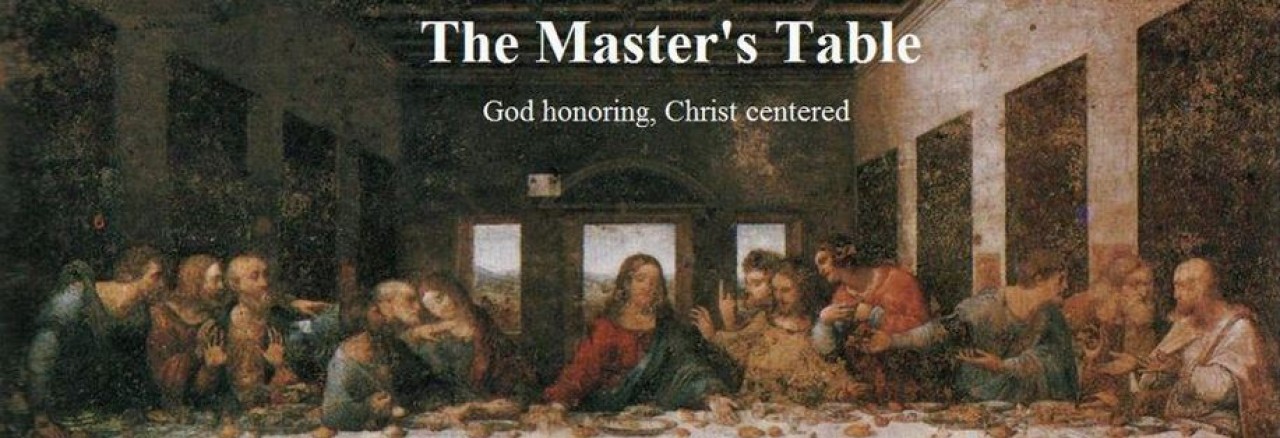
 I see memes on Facebook that say things like “Throw the screen in the trash.” My friends share links to competing articles promoting the virtues of digital projection and also what we lost when we stop using hymnals. I don’t think we have correctly identified the problem.
What projection gave us was the ability to all be on the same page without flipping through books and waiting for everyone to find the hymn number. New songs could be introduced quickly and easily; a hymn book is not expensive but replacing a few hundred can be. Updating the hymnal will inevitably mean someone’s favorite(s) gets left out. The same screen used for praise and worship can also be used to display sermon texts, Bible verses, photographs from mission trips and video clips. When I was a kid a missionary might set up a screen and a projector with a slide carousel and then pack all that up when service over. We stood to gain a lot by adding projection screens to our worship service.
The complaints are about what we lost. And I get it, I honestly do. Everyone in church used to join together in congregational singing. Worship is not a spectator sport but something we are meant to do together. Just because we can add new songs doesn’t mean that every time we meet there should be half a dozen songs to learn. Hymns were written with four parts that most people in church understood whereas today we have professional level musicians that practice several hours each week and then on Sunday the rest of us sit and watch. Maybe we don’t sit, we stand and look at the words on the screen to a bunch a songs we either don’t know or couldn’t possibly perform. Every member of your church is not called to be a Nashville recording artist. The hymn books had musical notation and were not just lyric sheets. Some folks look at the words the band is singing and long for the days we all turned to the same page in the hymnal.
Hymn books and digital projectors are tools. Who is using the tools and what are they trying to build? Think about a hammer. One person might build a bookshelf, a storage shed, or maybe even frame a house. Another person might use that same hammer to smash car windows or as a weapon to assault people. The same tool can build or destroy. God’s Word went from handwritten text on a scroll to being type set and mass produced on a printing press. Printing technology improved for the next 500 years or so and now people are reading the Bible with apps on their phone or tablet. But it’s the same Word. The tools have changed but reading the Bible on an iPhone doesn’t make an entire generation heathen nor does carrying a big black leather Bible make a person righteous. It’s all about what we are doing with the tools.
The big screen in front of your church may be a symptom but it is not the problem. If your church has brought in (or trained up) professional musicians that perform modern songs your congregation doesn’t know or cannot sing, they could have done that without the use of projection screens. If your church finally did away with the old hymn books that sat unused in dusty pew racks for years, that’s because that resource was not being used. It does not have to be one or the other. You can sing congregational hymns out of hardbound books and also a modern praise and worship chorus in the same service. You can project the words and the music to The Old Rugged Cross or Come Thou Fount of Many Blessings onto a white screen. Look at the image up top. One could put shaped notes on the big screen, if anyone remembers what those are. Worship didn’t change when we added screens to the sanctuary. A lot of things have changed over the years and the screen is highly visible, up front and center and not hiding in the dark in the back somewhere in a control room. Being printed in a book doesn’t give a song value; being projected onto a screen doesn’t make a song worthless. The converse is also true. The newest hymn books have praise and worship choruses that repeat the same few words several times.
Neither the screen nor the books are the problem nor the solution. If modern praise and worship music is lacking a deep theological foundation, that can be fixed by projecting something else onto the screen. Tearing the screen down and insisting people read from books isn’t going to help. Entire congregations used to stand and sing together and it was a beautiful thing. I might say to young people that just because your grandparents did things a certain way doesn’t mean they were wrong just because they’re old. I believe God is glorified in corporate worship. And I’m not that old.
 The Master's Table
I understand times and money are tough for the Church but let us not pretend we are just ‘using a new tool’ when we rely on screens for our divine worship service. Or that we are saving money by saving on the cost of a hymnal and replacing the liturgy with the impermanence of flashing lyrics and words on a screen. There is more to worship service than ‘the ease of getting through church’.
This article from patheos.com offers 15 reasons why our hymnal ought to be regarded more seriously than just a book sitting in a pocket on the back of a pew. These are a few of them from the article.
– Hymnals are a theological textbook. There is no perfect hymnal, but well-crafted hymnals are reliable sources of theological information.
– Hymnals involve tactile action. Hymnals make the people work. Picking up the hymnal, finding the right page, and holding it up to sing grounds you in time and space. Feeling the weight in your hand engages you in the activity more than staring at a screen ever could.
– Hymnals make songs less disposable. Okay, obviously you can throw a hymnal away if you want, but text on a screen is there one second and gone the next. There’s no visible permanence. Hymnals are symbols of consistency. They give life and breath to the great songs. They demonstrate that what we sing is worth keeping around.
– Hymnals allow you to sing anywhere. When you depend on projection to display hymn texts, you’re bound to do your music making in a space outfitted with sufficient media.
https://www.patheos.com/blogs/ponderanew/2014/07/22/reasons-why-we-should-still-be-using-hymnals/
Purging Lutheran, as I said in my post it doesn’t have to be one or the other. There is no reason that adding a screen means that hymnals have to be done away with. My preference is to have a blended service with old hymns and new music instead of doing one contemporary and one traditional service. The church loses something when Grandma and Grandpa go to one service, Mom and Dad go to another and their kids are in “children’s church” the whole time.
There isn’t something magic or blessed about hymn books that we can’t get any other way. “Hymnals allow you to sing anywhere.” Anywhere there is a hymnal. Nobody walks around with a hymn book. Maybe a professional choir director. Anything we can project onto a screen we can watch as a YouTube video, view on our phone, etc. There are high school kids that play music constantly, they always have their music with them and on their person. They may not be listening to the same things we are but there is no reason they couldn’t.
“…well-crafted hymnals are reliable sources of theological information.” I’m going to ignore the possibility of poorly crafted hymnals. Whatever it is about theology you enjoy finding in a hymnal could be displayed on the church’s big screen. And it does just disappear forever. If the service is uploaded to YouTube, broadcast via Facebook or archived to the church’s website anyone or everyone of us could watch it again later. I might argue that digital information is more readily available than that printed in physical media.
I’m not arguing for or against digital projection. I’m not advocating for or against hymn books. The issue is not as simple as “book good, screen bad” or vice versa. The media is only as good as the person programming it.