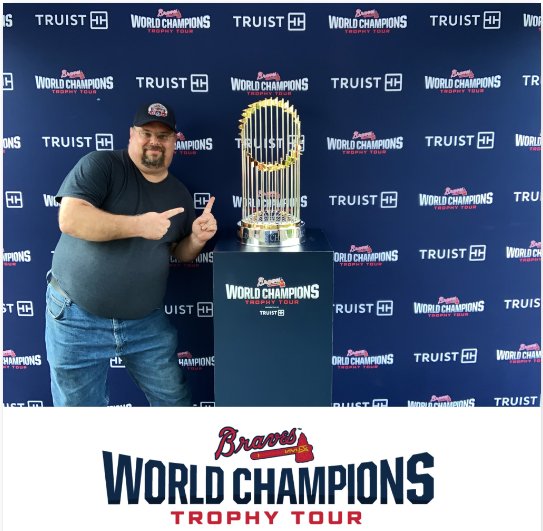
There are 151 stops on the World Champions Trophy Tour in recognition of 151 years of Braves baseball. It was only 81 degrees in Calhoun last night, the sky was overcast with a light breeze. On Thursday 600 people turned out to see the trophy in Cartersville where they had to wait in line in the hot sun. The tour continues through the summer with stops not only in Georgia but also Alabama, Tennessee and South Carolina. Here’s a link. Speaking of the Braves winning things… they are currently on a nine game winning streak with a 32 – 27 record. They continue their series with the Pirates today at 4:10.
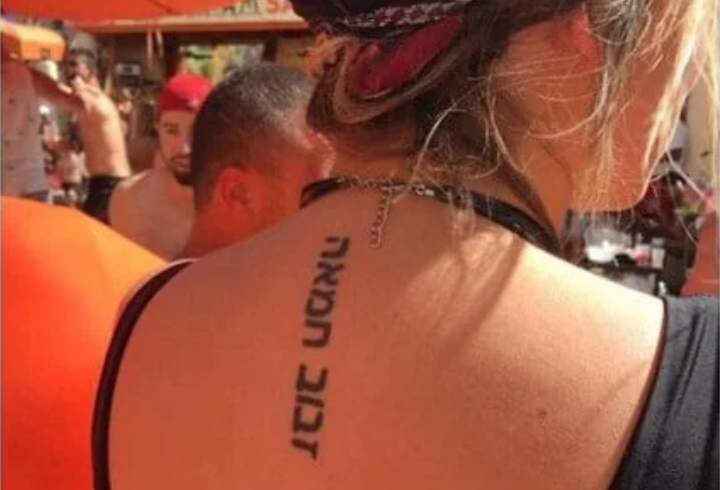
Have you ever heard the phrase lost in translation? Sometimes people go to a tattoo artist with a word or phrase they translated themselves using Google Translate, or something even sketchier, without consulting a native speaker of that language. It’s usually Chinese or Japanese and most Americans will never know the difference. The young lady picture above wanted the word butterfly in Hebrew. Butterfly is one word in English and in Hebrew, parpar and should look like this: פַּרְפַּר. She translated butter and fly separately and since she went to a non-kosher tattoo parlor the artist didn’t know any better and she now has “fly butter” on her back.
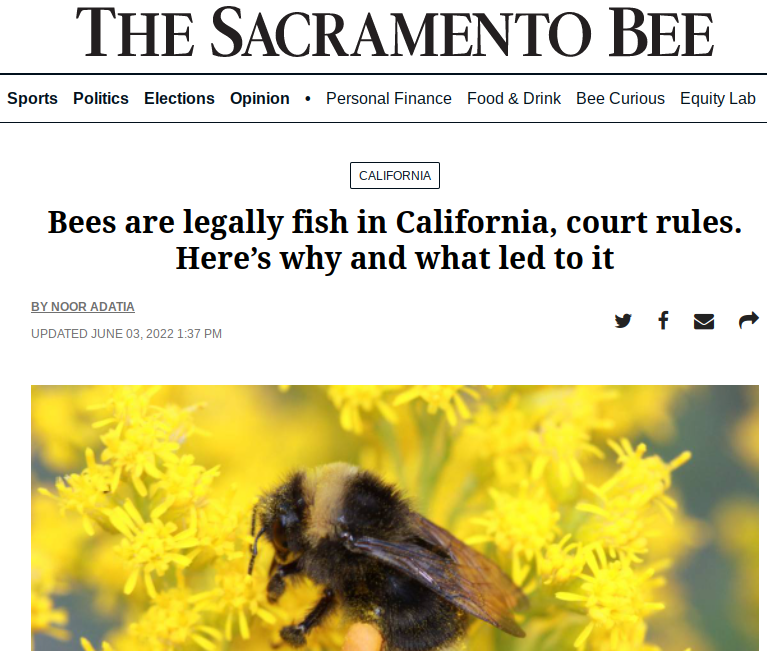
You may have seen this story as it made the rounds this week. The reasoning is actually sound, it’s not just some wacky left coast thing. Three species of bumble bees have been recognized as endangered in California but farmers pushed back against measures to protect them. There is an old law from the 1950’s that protects endangered marine life and it’s wording was later interpreted to mean all invertebrates. 80% of the animals species in the world are insects and they are all invertebrates. So the court recognizing bumble bees as fish means they can be protected under the law and possibly saved from extinction. It makes a good headline – especially in the Sacramento Bee – but the details are much more mundane. It’s just business.
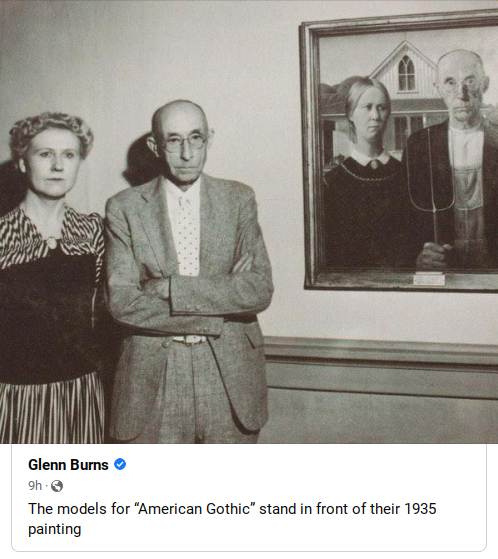
Some people are surprised to learn that American Gothic is less than 100 years old. Grant Wood painted it in the middle of the Great Depression. The real people are neither a married couple nor farmers. Wood used his sister Nan to stand in for the farmer’s wife and their dentist Dr. Byron McKeeby.
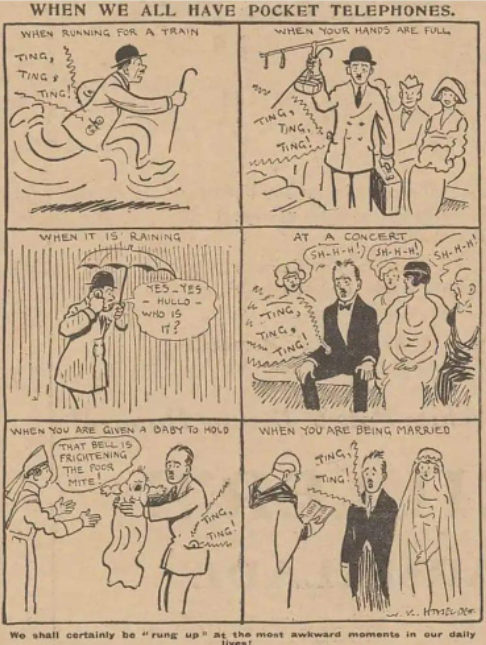
Sometimes we say “they never could have imagined” when actually they did imagine. Nikola Tesla envisioned free electricity being broadcast (which did not happen) along with not only audio signals but pictures and even moving pictures with sound. Before Marconi invented radio, Tesla was already thinking about what we call the internet. There is a black and white film featuring a young Walter Cronkite about the home of the future. Before the microprocessor made home computers practical or affordable, they showed screens throughout the home that allowed users to get instant news, weather and sports updates, display recipes in the kitchen and even help the kids do their homework. The Pocket Telephone: When Will it Ring was written by W.K. Haselden and published in The Mirror in March of 1919. For reference, that makes it 16 years older than American Gothic.
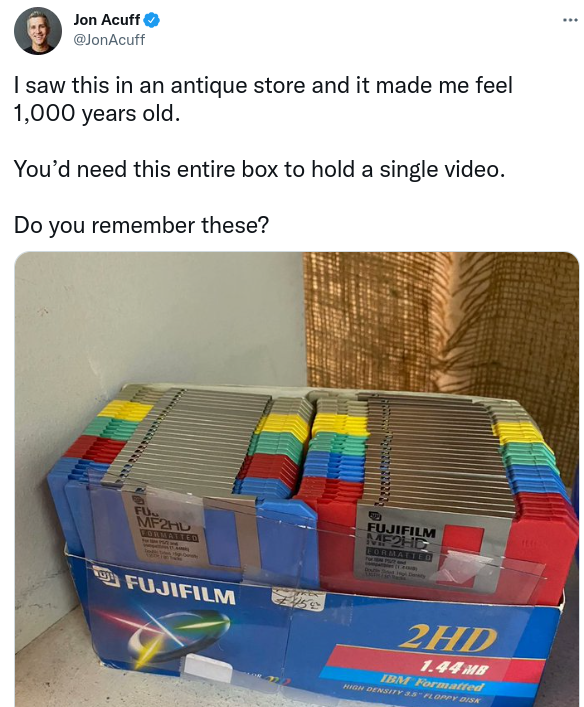
Jon Acuff says he saw these in an antique store. Electronics became antiquated faster than any other category of item, unless maybe it’s fresh fruit. 3.5″ floppy disks were the storage medium of the day when I was in high school. I guess VGA monitors and my first analog cell phone are also antique at this point. I discussed a potential problem last week when it comes to archiving information. Scrolls became obsolete when they started binding books; but we can still read scrolls. We went from magnetic disks to optical drives to flash memory and now cloud storage in a remarkably short period of time. If I were to find the 3.5″ disk that I used in magazine class, I don’t have a drive nor the software to retrieve the files. When we go to band concerts now instead of handing out programs there is a QR code at the entrance to retrieve a pdf of the program. I think people are starting to realize potential hazards of information and data loss. There have been a couple of high profile ransomware cases, one of which affected petroleum pipelines in the US. There is still talk of what a widespread EM pulse attack could do to our economy and defense systems. Tesla had an issue with their network and for about three hours people couldn’t get into their cars using their smartphones… and they don’t come with key fobs. Imagine if our F-18’s couldn’t take off during a planned attack. Like I say, there are people that have recognized potential issues and are working to make important things failsafe.

When a photographer does this on purpose it’s called forced perspective. This unintentional optical illusion is just a happy accident. I have a few examples that I’m going to spread out over the coming weeks.

This does not work with colored Easter eggs.
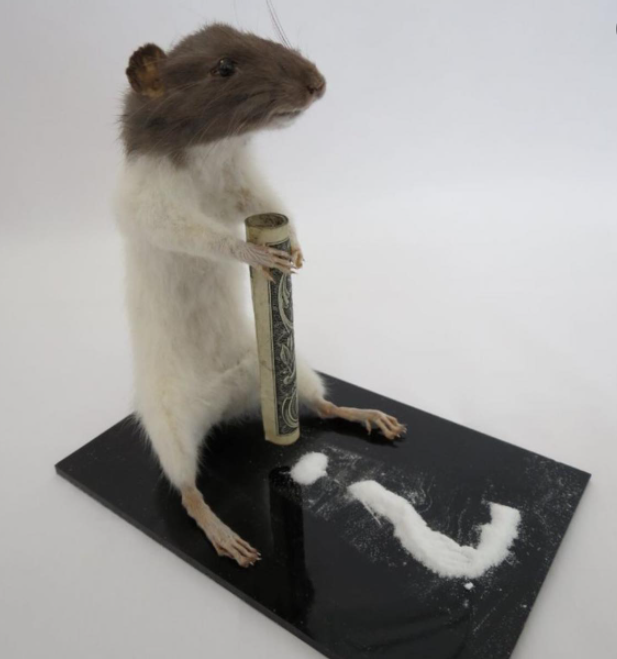
This last bit is long but I believe it’s worth sharing. We often view addiction as a problem but in many cases addictive behaviors are symptoms of other problems. He talks about connection vs. isolation. I just reviewed the book The Great Digital Commission earlier this week which states sometimes social media creates authentic communities but more often creates connected isolation. Here’s something to think about.
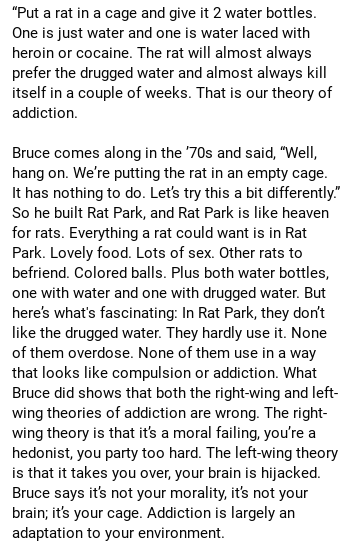
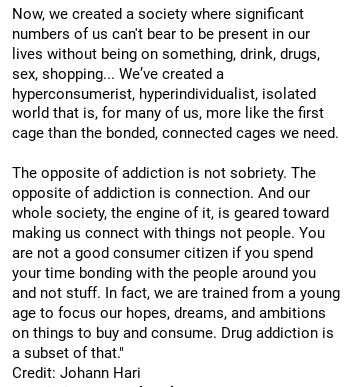
“The opposite of addiction is connection. Our whole society…is geared toward making us connect with things not people.” Now apply that to ministry and evangelism.
 The Master's Table