Hindsight is Still 20/20

Screenshot 2015-11-18 at 2.54.57 PMHave you ever thought of a witty comeback long after it’s too late? We’ve all missed our chance at a laugh out loud one liner or zinger that could have an ended an argument at one time or another. Preachers also have to deal with continuing to critique a sermon long after it’s been preached.

A couple of weeks ago I preached this sermon at Unity Baptist. In summary, Jesus was the light of the world in John 1 but in Matthew 5 said to his followers “You are the light of the world.” The sermon was about being salt and light and how Jesus empowers us to be those things in his absence. There’s nothing wrong with the sermon the way it is. But then just a couple of days ago I came across this verse:

As long as I am in the world, I am the light of the world. John 9:5 

John 1 describes Jesus as the light of the world. Jesus says himself a few chapters later that as long as he is in the world he is the light of the world. Then he tells his followers, that will be conformed to his image and become his hands and feet, they are the light of the world. It would have been perfect. What makes matters worse is that we have been studying John’s Gospel on Sunday nights and read this passage only a few weeks ago.

Hey, you live and learn. By posting this I am sure to remember next time.
Academic Discussion: Paul’s Thorn in the Flesh

It’s been almost two years since we had a series of academic discussions. You can see all of those titles by clicking here. What do I mean by academic discussion? We can present evidence, share our logic and reasoning, but the position we take can be neither proven nor disproven. Such an exercise can hone our analytic or linguistic skills, but at a practical level there is little value if that’s the only type of discussion we are having. I will continue to spend most of my time and energy sharing the Gospel, offering apologetics and encouraging others, but occasionally…

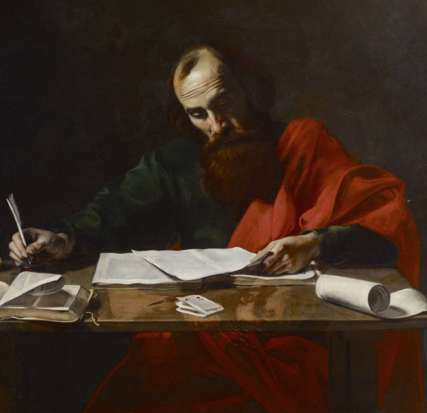
Screenshot 2015-10-30 at 9.36.29 AMThe Apostle Paul refers to a thorn in his flesh in 2 Corinthians 12:7 that he credits with keeping him humble. There has been much debate and discussion as to what this particular thorn was, and even if we are capable of knowing. In the Tyndale New Testament Commentary on Galatians, R. Alan Cole states that there is “no real evidence” that Paul’s trouble had anything to do with his eyes. While there may be no real evidence I think that clues left by Paul combined with modern medical understanding point very convincingly to just such a conclusion. Continue reading

Preaching the Hell Sermon

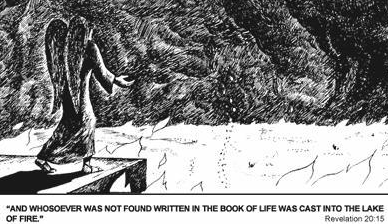
Screenshot 2015-10-08 at 1.39.55 PMI have been the pastor of Unity Baptist Church for one year. (We have an anniversary luncheon coming up this Sunday as a matter of fact.) I have preached 51 of the past 52 consecutive Sunday services without preaching a sermon on hell. It may have come up but was never the subject. The Master’s Table has been online since 2008 and there is not a post with hell in the title. And when I did finally preach that sermon (link here for those interested) it was a message about heaven, hell and an exhortation to share the Gospel. Continue reading

There’s a Reason He Calls Us Sheep

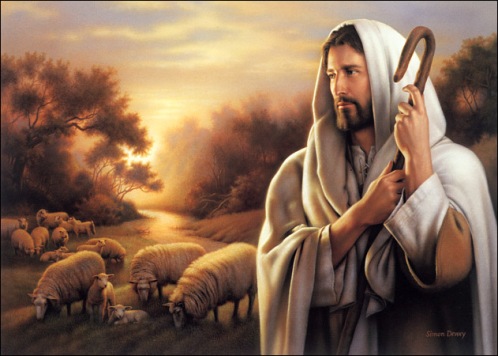
jesus_shepherdPsalm 23 is one of the best known and most often quoted passages in the scriptures. David plainly says “The LORD is my shepherd.” In John 10, Jesus identifies himself as the Good Shepherd. The sheep know his voice and follow him, and he gives his life for the sheep. Isn’t that adorable? Continue reading

Asking for It

And now, O Lord my God, you have made your servant king in place of David my father, although I am but a little child. I do not know how to go out or come in. And your servant is in the midst of your people whom you have chosen, a great people, too many to be numbered or counted for multitude. Give your servant therefore an understanding mind to govern your people, that I may discern between good and evil, for who is able to govern this your great people?” 1 Kings 3:7-9

Solomon was told to ask for anything and the one thing he asked for was wisdom. He was humble enough to realize the task of leadership was too great for him to bear alone and asked God for the wisdom and understanding in order to rule God’s people Israel. Think about the last prayer you prayed to God; what did you ask for? Continue reading

The Rain Falls on the Just and the Unjust

rainIt is a rainy morning in NW Georgia, just like it is in much of the South and just like it has been for many days. As a matter of fact it has rained every single day for the past week. That’s good for the water table and our farmers this summer but rain has never been my personal favorite. Continue reading

He Lives; Now What?

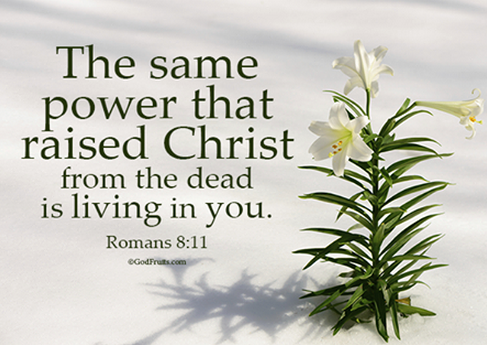
Romans 8 11“I serve a risen savior, he’s in the world today.” Those are the opening words to the hymn He Lives (Alfred Henry Ackley, 1933). Easter Sunday has come and gone, but Jesus is more than alive, he is risen! He was dead and became the firstborn of the resurrection. Jesus told Martha in John 11:25 that he is the resurrection. Death, hell and the grave have been defeated. “O death, where is your victory? O death, where is your sting?” 1 Corinthians 15:55 Continue reading

Satisfying the Crowd

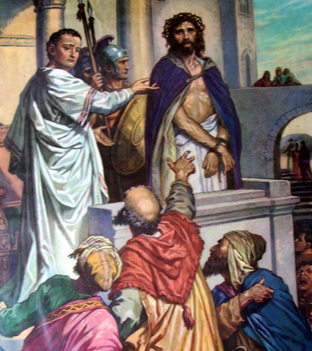
Jesus before PilateAnd Pilate said to them, “Why, what evil has he done?” But they shouted all the more, “Crucify him.” So Pilate, wishing to satisfy the crowd, released for them Barabbas, and having scourged Jesus, he delivered him to be crucified. Mark 15:14-15

Pilate did not want to kill Jesus. Continue reading

Look Up and Live!

bronze serpent The Bronze Serpent
From Mount Hor they set out by the way to the Red Sea, to go around the land of Edom. And the people became impatient on the way. And the people spoke against God and against Moses, “Why have you brought us up out of Egypt to die in the wilderness? For there is no food and no water, and we loathe this worthless food.” Then the Lord sent fiery serpents among the people, and they bit the people, so that many people of Israel died. And the people came to Moses and said, “We have sinned, for we have spoken against the Lord and against you. Pray to the Lord, that he take away the serpents from us.” So Moses prayed for the people. And the Lord said to Moses, “Make a fiery serpent and set it on a pole, and everyone who is bitten, when he sees it, shall live.” So Moses made a bronze serpent and set it on a pole. And if a serpent bit anyone, he would look at the bronze serpent and live. Numbers 21:4-9

So if you were bitten by a fiery serpent, all you had to do was look at the bronze serpent set on the pole in order to live and not die. We are not told how obedient Israel was in this matter but we can safely assume that some people did just that while others failed to believe it would make any difference… and died anyway. Like I say, we don’t know that for certain but we are given many, many examples of incomplete obedience. Now consider the parales: the fiery serpents represent sin. Because of our sin nature from birth we are all “bitten” by it and will die. All one must do to live is look in faith to the Lamb of God lifted up on the tree at Calvary. Look up and live, it’s as simple as that. And just in case it were possible to miss the symbolism of this Old Testament story, consider these words of Jesus:

And as Moses lifted up the serpent in the wilderness, so must the Son of Man be lifted up, that whoever believes in him may have eternal life. John 3:14-15

God Will Provide Himself a Lamb

Abraham, IsaacGenesis 22 tells the story of Abraham sacrificing his son Isaac. For clarity’s sake perhaps we should say almost sacrificing his son. Abraham was willing, able and just about to offer his son Isaac when he was stopped by the Angel of the Lord.

Abraham believed God and that belief was counted to him as righteousness in Genesis 15:6. Isaac had been born to Abraham and Sarah in their old age, so Abraham had no reason to question God’s instructions. Hebrews 11 commends his faithfulness, so great that he believed God could restore Isaac to life. An interesting conversation took place as they hiked up the mountain together. Isaac noted they had wood and fire but asked about a lamb to sacrifice. Abraham said that “God will provide himself a lamb.” When Isaac was spared at the last moment, Abraham saw a ram caught by its horns and sacrificed that as an offering of thanksgiving. He named the place Jehovah-jireh or the LORD will provide.

As we prepare to celebrate the death, burial and resurrection of Jesus Christ it’s hard to miss the parallels. We have in the Genesis account a father that is willing to sacrifice the son that he loves. They walked up the mountain together. And even though Isaac is ultimately spared we see the ram serve as substitute sacrifice. It was guilty of nothing but its blood was poured out. Now consider the Lamb of God who takes away the sins of the world, and recall the words of Abraham; God will provide himself with a sacrifice.