The Discovery of the Short Post

timeI was warned when I started blogging about writing posts that were too long.  Shorter posts stand a better chance of being read.  Well, I’ve recently been trying to get our youth involved in some online discussion on their Facebook page.  I tossed out what I hope will be conversation starters, and realize that I don’t have to say everything I know in order for a post to be good.  Here’s an example, titled Jesus Read the Bible and Prayed:


There are sometimes tough choices to make when deciding how a Christian should act or what one should do in certain circumstances. What’s easy to understand is that we should be imitating the things that Christ did.

We know from the New Testament that Jesus was frequently found in the temple and synagogue reading the Hebrew scrolls. He is the Word of God, and he also read the Word of God. Jesus also spent serious time in prayer. Not just reciting the Lord’s Prayer, but we might say Jesus was hardcore in his prayer time. He often got up well before sunrise to pray, and on occasion prayed all night ’till sunrise. In Gethsemane, he prayed until Luke says his sweat was like great drops of blood.

Sometimes we get the mistaken notion that the closer we get to God, the less we need to pray. The opposite seems to be true; you can’t get closer than Jesus.


The Importance of the Resurrection

Jesus, resurrectionThere was a time I wondered why so much emphasis was placed on the resurrection.  Jesus died on the cross as the all-sufficient sacrifice for the sins of the world.  Even if there had been no resurrection, his sacrificial death would have brought salvation; what could be more important than that?

The blood of Jesus was a more excellent sacrifice than that of bulls, sheep and birds.  His death on the cross brought an end to the temple sacrifice system.  The entire Gospel pivots around the cross.  It is the universal symbol of Christianity.  But the implications of resurrection are equally powerful, a fact that I can now appreciate as well.  Continue reading

Jesus’ Example: Love Your Enemies

Love your enemies and pray for those who persecute you. 

Those are the words of Jesus in Matt 5:44.  The entire sermon on the mount can be read in Matt 5-7, but let’s deal right now with just this one command.  Like everything Jesus taught, he not only gave the instruction but provided us with his example to follow.  Jesus loved his enemies.  Continue reading

On the Other Hand (Jesus is God)

Therefore, just as sin came into the world through one man, and death through sin, and so death spread to all men because all sinned—  for sin indeed was in the world before the law was given, but sin is not counted where there is no law.  Yet death reigned from Adam to Moses, even over those whose sinning was not like the transgression of Adam, who was a type of the one who was to come.

But the free gift is not like the trespass. For if many died through one man’s trespass, much more have the grace of God and the free gift by the grace of that one man Jesus Christ abounded for many.  And the free gift is not like the result of that one man’s sin. For the judgment following one trespass brought condemnation, but the free gift following many trespasses brought justification.  For if, because of one man’s trespass, death reigned through that one man, much more will those who receive the abundance of grace and the free gift of righteousness reign in life through the one man Jesus Christ.  -Romans 5: 12-17

In some ways, Jesus is like Adam. By one man’s transgression, sin entered the world.  And by one man’s righteousness, victory over sin entered the world.  Adam and Jesus are alike in that both are a type of “first man.”  At the same time, they are total opposites if you think about it.  Adam was the first man to sin; Jesus was the first man to live without sin.  Continue reading

In Order to Understand Scripture

reading-bibleThere is a lot of criticism of the Bible in our culture today, and of those who believe in it.  Some of those criticisms may be valid, although many are certainly not.  There are Christians who have trouble responding to these critics, partly because even those believers do not understand what they are dealing with.  And of course a novice student of the Bible, even with the best of intentions, may have difficulty understanding the Bible due the nature of it’s age and form.  In order to understand scripture, there are some things that one must realize first.

1) The Bible will not answer all our questions.  When we look at the Constitution, it is important to try and understand the framers’ intent.  The same holds for the Bible.  No Biblical author was attempting to provide an exhaustive list of every answer to every possible question that would arise. Continue reading

Jesus’ Involvement in Starting the Christian Church

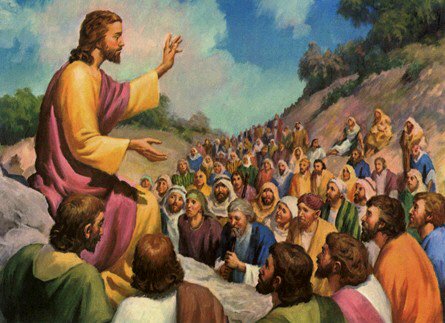
jesus_teaching If we began a study of the first century church, 9 times out of 10 we would begin with Acts chapter 2.  The Holy Spirit comes as promised, and Peter preaches a fiery message proclaiming Jesus is the Christ.  Certainly by the end of Acts 2, we see the first Christian believers come together in an organized way.  But if we back up a just a few chapters, Jesus gives the disciples instructions on what will happen next, going beyond his death, burial and resurrection.

Critics of Christianity, as an organized religion (the Church), even claim that Jesus had no intention of starting a new church or movement of any kind, but rather his followers started one in his name.  To put it mildly, these critics have not studied the Bible.  Continue reading

Father Abraham (A Father’s Day Sermon)

abrahamThere’s a lot of negative things to say about topical preaching, but I know two things: 1) Father’s Day will be one of the most searched terms today on the Internet, and 2) No matter what “topic” I begin with, before the sermon is over I will preach the Gospel. 

“Father Abraham had many sons, many sons had Father Abraham.”  So goes the old children’s song.  While we recognize Abraham as the primogenitor of the Jewish nation, like any member our fallen race he was far from perfect.  One danger of celebrating historic lives is that we elevate a person too high by never mentioning certain shortcomings or character flaws.  Historians have to be careful in their presentation of certain figures, particularly the ones they like.  Continue reading

Can A Person Get Saved Reading the Old Testament?

reading-bibleI certainly teach that the whole Bible is about Jesus.  The Bible, on the whole, is the story of how a holy God relates to a sinful and fallen people.  Jesus is at the center of that story.  You’ve heard all this before.

The question I heard raised this morning is “Can a person get saved only reading the Old Testament?”  II Timothy 3 tells us that all scripture is given by the inspiration of God.  Obviously the New Testament is God-given, and we need to read and study it.  If the Old Testament was sufficient, why would God give us another?  But still, if the gospel is all over the Bible, is there enough there to lead a person to Christ?  And I say, yes it is possible.  Continue reading

History Repeats Itself

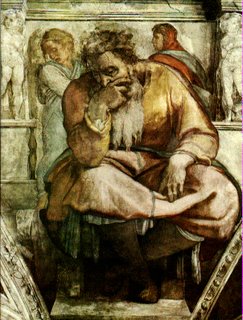
Jeremiah_as_Michaelangelo_Saw_Him“History repeats itself” is actually a terrible misquote.  It leads students to ask questions like “If history repeats itself, why do I have to learn it the first time?”  No, the actually quote is “Those who do not learn history (the past) are condemned to repeat it.”  Google George Santayana.  The point is that if we learn from history, we can avoid making the same mistakes.  Here’s an example of New Testament people not learning their Old Testament history. Continue reading

On Wisdom and Foolishness

A fool’s lips walk into a fight, and his mouth invites a beating.  -Prov 18:6

Earlier this week I indicated that this Proverb was my new favorite Bible verse.  But what is the purpose of such verses in Proverbs?  I have a good friend that is well studied in the scriptures that still has problems with the book of Proverbs.  Proverbs falls into what we call wisdom literature.  The book is a collection of Solomon’s wisdom, basically good advice he wants to leave his children, but the question is how does it fit into the gospel?  Consider these two scriptures:

The fool says in his heart, “There is no God.  -Psalm 14:1

The fear of the Lord is the beginning of knowledge:  Proverbs 1:7

Continue reading