It’s a corny joke and I apologize for repeating it but when we see the word “therefore” in the Bible we need to stop and consider what it’s there for. At the end of Hebrews 5, we find a warning against those that have failed to mature. The writer laments that believers who should be on solid food (of God’s Word) still need to be given milk like infants. So 6 begins with a call to move on to maturity, leaving the elementary things behind.
The end of Hebrews 4 informs us that Jesus is our Great High Priest and then the chapter ends. Hebrews 5 tells us why he is a better high priest than the Levitical priests of the Old Covenant. The high priests called by God to the priesthood were human beings and had the same shortcomings as the people they ministered to. They had their own sins to confess and be forgiven before they could attend to the sins of others. The Christ is God’s own Son and also a priest forever after the order Melchizedek. Abraham was blessed by Melchizedek in Genesis 14 and Abraham gives him a tenth of everything he has. This is centuries before the Law was given to Moses. The Levitical priesthood had not been established and there was no commandment, at least none recorded, to give a tithe. Genesis will not answer all of our questions. There is no recorded beginning nor ending of Melchizedek’s priesthood and this little detail is used to show what kind of high priest Jesus will be. There is no beginning and no end to his priesthood. He does not have his own sins to sacrifice for, and he is not called by God but is God’s own Son. Although he was the only begotten Son, through suffering in his mortal flesh he learned obedience.
The final verses of chapter 5 is a chastisement to an audience that should be eating “spiritual food” as mature believers but must still be given milk as infants. Hebrews will get to comparing Jesus to Melchizedek in a couple of chapters and list more ways in which he is greater.
The key to understanding Hebrews 4 is to have read Hebrews 3. The basic concept presented in chapter 3 is that Jesus is greater than Moses. The chapter ends with God’s people not entering the rest they were promised because of disobedience:
For who were those who heard and yet rebelled? Was it not all those who left Egypt led by Moses? 17 And with whom was he provoked for forty years? Was it not with those who sinned, whose bodies fell in the wilderness? 18 And to whom did he swear that they would not enter his rest, but to those who were disobedient? 19 So we see that they were unable to enter because of unbelief. Hebrews 3:16-19
Moses is perhaps the most significant type of of Christ in the Old Testament. There are many examples of types of Christ given, such as the high priest, the sacrificial lamb, the branch that was thrown in the bitter water at Mara. Moses had a great many things in common with Christ; he led the Hebrews out of slavery in Egypt, gave them God’s Law, and led them through the wilderness to the Promised Land. Some teachers go as far as to point out that Moses was taken out of the water by Pharaoh’s daughter and Jesus was taken up from the waters of baptism by John the Baptist. That might be a stretch… but those things did happen. Jesus frees the Christian believer from slavery to sin, teaches us God’s Law (kept it perfectly so we don’t have to actually), and leads us through this present wilderness we are in toward the promised land of God’s Kingdom.
Click here to read Hebrews 2 at Bible Gateway. You can easily select the translation of your choice at top of the page.
Click here and look for this icon to download audio.
Your Bible probably has little subtitles above sections of chapters that act like road signs describing what happens next or the topics that follow. The wording is often different from one Bible to another and even the places that passages are divided. Even though chapter and verse divisions can sometimes seem arbitrary there is at least agreement about where they go. It is helpful to remember that the original text had no such divisions. Hebrews 2:1 begins with the word therefore so the writer is about to make a point that he’s been building up to. The language of verses 2 and 3 continue this case building rhetoric. To paraphrase: So let’s pay careful attention so what we have heard. The message of angels, described extensively in chapter 1, has been proven reliable. The proof is that those who did not heed their warnings received retribution. In that case (v. 3) how can we neglect so great a salvation? The message of salvation was declared by the Lord, confirmed by eye witness accounts, and further attested by signs and wonders shown by God and by gifts of the Holy Spirit. Continue reading →
Earlier today I started a Bible study on Hebrews. Here is a link if you need one. Would anyone be interested in listening to that Bible study? I’ve been working on this since last night and have edited this post several times in the process. Click the play button on the embedded audio player below to listen to the Bible study. The download button below will not initiate a download but rather link to Google Drive where the file is located. You can click the download icon at the top of that screen ( ) to save the .wav file to your device.
The first two things we would typically do when beginning a study of a book of the Bible is identify the writer and the audience he was addressing. That’s usually easy to do by reading the first paragraph or two. Sometimes we need to add historical context in order to understanding what was happening in the lives of the intended audience. I’m going to try to keep this introduction short and get into Hebrews chapter 1 instead of dedicated a post to it. I don’t know who wrote Hebrews. If you believe the Apostle Paul wrote Hebrews, I’m not going to argue with you. As a well-studied and passionate Pharisee he would have certainly had the background into the Old Covenant. We also see numerous examples in his epistles that relate the ministry of Christ to the Old Testament examples, descriptions of Jesus and Adam as types of first men, and exhortations that that the grace that comes through Jesus Christ is superior to the Law. If you do not believe that Paul wrote Hebrews then I will not argue with you either. In the 13 New Testament epistles written by Paul he clearly identifies himself as the author and the writer of Hebrews is left anonymous. That would be a divergence from his usual style. I will not engage in any debate over the authorship of Hebrews but will defer a statement many Christians would do well to adopt and apply to a variety of topics: the Bible doesn’t speak to that. If it were important for us to know then God would not have allowed that detail to be lost to history. As far as identifying the audience is concerned it is more than suggested by the title. Hebrews is addressed to Jewish believers that have accepted Jesus as the promised Messiah and offers evidence that this was always God’s plan. Continue reading →
I was listening to Fred McCoy this morning and he mentioned that Jesus was a Nazarene, adding that he was not a Nazarite and getting one or two half laughs. I have something of a history with getting those two mixed up so it probably meant more to me than anyone else present.
Students at Oneida Baptist Institute have chapel services 5 days a week Monday through Friday and twice on Sunday. Continue reading →
In addition to the occasional book review (I posted one earlier this week) I have reviewed a couple of Bibles in the last year at the request of Bible Gateway. Regular readers know about the Bible Gateway Blogger Grid and as a partner The Master’s Table posted reviews of The Illustrated Holy Bible for Kids and The Jesus Bible. A few weeks ago Bible Gateway asked Blogger Grid members to review the new website design at Bible Gateway. The new design has since rolled out so if you use that resource or follow our links from here then you have probably seen the changes.
If you are a follower of The Master’s Table, or a former student, or have ever listened to me preach, teach Sunday School or lead a small group of any kind, you know by now that I do not pick up a recent newspaper and use the headlines for talking points about Bible prophesy. During Advent I talk about prophecies of the Messiah being fulfilled by Jesus’s birth and the events surrounding it. During Easter and Pentecost I talk about prophesies Jesus fulfilled during his earthly ministry, his death, burial and resurrection, and the promise we have of his future return. What I have never done is point to earthquakes, volcanoes, war in the Middle East or any other current event while quoting snippets of scripture and saying “See, the Bible says so.” I’ve seen preachers and other church leaders look foolish when Mikhail Gorbachev did not turn out to be the antichrist, Saddam Hussein was not the Beast described in Revelation and the world did not end in 1988 despite the list of 88 reasons that it was going to. Continue reading →



 to download audio.

 The first two things we would typically do when beginning a study of a book of the Bible is identify the writer and the audience he was addressing. That’s usually easy to do by reading the first paragraph or two. Sometimes we need to add historical context in order to understanding what was happening in the lives of the intended audience. I’m going to try to keep this introduction short and get into Hebrews chapter 1 instead of dedicated a post to it. I don’t know who wrote Hebrews. If you believe the Apostle Paul wrote Hebrews, I’m not going to argue with you. As a well-studied and passionate Pharisee he would have certainly had the background into the Old Covenant. We also see numerous examples in his epistles that relate the ministry of Christ to the Old Testament examples, descriptions of Jesus and Adam as types of first men, and exhortations that that the grace that comes through Jesus Christ is superior to the Law. If you do not believe that Paul wrote Hebrews then I will not argue with you either. In the 13 New Testament epistles written by Paul he clearly identifies himself as the author and the writer of Hebrews is left anonymous. That would be a divergence from his usual style. I will not engage in any debate over the authorship of Hebrews but will defer a statement many Christians would do well to adopt and apply to a variety of topics: the Bible doesn’t speak to that. If it were important for us to know then God would not have allowed that detail to be lost to history. As far as identifying the audience is concerned it is more than suggested by the title. Hebrews is addressed to Jewish believers that have accepted Jesus as the promised Messiah and offers evidence that this was always God’s plan.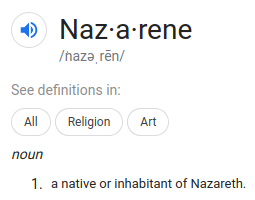


 If you are a follower of The Master’s Table, or a former student, or have ever listened to me preach, teach Sunday School or lead a small group of any kind, you know by now that I do not pick up a recent newspaper and use the headlines for talking points about Bible prophesy. During Advent I talk about prophecies of the Messiah being fulfilled by Jesus’s birth and the events surrounding it. During Easter and Pentecost I talk about prophesies Jesus fulfilled during his earthly ministry, his death, burial and resurrection, and the promise we have of his future return. What I have never done is point to earthquakes, volcanoes, war in the Middle East or any other current event while quoting snippets of scripture and saying “See, the Bible says so.” I’ve seen preachers and other church leaders look foolish when Mikhail Gorbachev did not turn out to be the antichrist, Saddam Hussein was not the Beast described in Revelation and the world did not end in 1988 despite the list of 88 reasons that it was going to.
  The Master's Table