He Will Buy Booze With It

Screenshot 2013-12-08 at 2.02.56 PMYou come to an intersection, stop in a line of cars, and you see him. His clothes are well worn, his hair and beard are unkempt, and his hand scrawled sign reads “Anything helps.” It’s not that you would miss a few dollars, it’s that there is no telling what he will use it for. He may buy alcohol, cigarettes, or even something illegal. These days, not every beggar is really a person in need. Some walk back to their car at the end of the day and drive home, making more in a day than an honest worker.

“But I say to you who hear, Love your enemies, do good to those who hate you, bless those who curse you, pray for those who abuse you. To one who strikes you on the cheek, offer the other also, and from one who takes away your cloak do not withhold your tunic either. Give to everyone who begs from you, and from one who takes away your goods do not demand them back. And as you wish that others would do to you, do so to them. (Luke 6:27-31, ESV)

If there is food in my pantry, gas in my tank, and still cash in my pocket, I give some of it to the guy with the sign. I have been richly blessed beyond what I deserve, materially and otherwise. We are blessed in order to bless others. But what if he buys booze with it? Then he will give account to God for that someday, as we each will for what we did with our time, our talents, and our resources. We have also been blessed with unprecedented access to God’s written word. We will give account for what we did with that as well. “Let brotherly love continue. Do not neglect to show hospitality to strangers, for thereby some have entertained angels unawares.”(Hebrews 13:1-2, ESV)

Academic Discussion: Predestination

TULIPWe started the Academic Discussion series last Friday, and since then have examined issues like the age of the earth and the rapture. Up until now I have played the devil’s advocate so to speak and approached the arguments from both sides. This difference with this topic, predestination as defined by 5 point Calvinism, is that I take a position and feel very strongly about it. Although I have had a few heated discussions, I still believe the issue is ultimately academic.

This page at Calvinist Corner provides an excellent summation of Calvinism at a glance. Arminianism is generally considered to be the opposing view. A more extreme opposing viewpoint would be Pelagianism (which denies original sin and a host of biblical tenants). The reason I consider this argument to be purely academic is that each of these positions considers the nature of God’s salvation. At the heart of the debate is our understanding, or rather defining, of predestination. Did we choose God or did he choose us? Do we have the ability to choose God, or are we in our nature so depraved it is not a choice we could ever make? And why would I even stir this particular pot? Continue reading →

Academic Discussion: The Rapture of the Church

rapture Let’s begin with a note on prophesy. There’s an old saying that hind sight is always 20/20. As we happen to be entering the season of Advent, this is the time of year we look back at the Old Testament prophesies of Messiah. As we are reminded each year that God’s prophesies were fulfilled in the life, death and resurrection of Christ, our faith is affirmed that God is always faithful to keep his promises. Looking back at prophesies fulfilled gives our faith substance that God will continue to honor his Word.

Having said that, I take a rather pragmatic view of prophesied events, particular in relation to the end times. Continue reading →

Advent

advent-wreathThe advent of anything refers to its first appearing. The season of Advent is a time of preparation, waiting for the arrival of Christmas. We celebrate the waiting (perhaps honor is a better word) by examining the Old Testament prophesies, and considering the lessons the shepherds and wise men and teach us still. Lighting the candles of the Advent wreath is a far more time honored tradition than waiting in line for Black Friday deals on Sony’s PS4. Continue reading →

Elvis Presley, King of… Gospel?

Our minister of music sang Who Am I during this morning’s service (the Elvis Presley one, not to be confused with a Casting Crown song of the same title). Elvis was known in the 50’s as the King of Rock and Roll and later in his career simply as “the King.” But despite all of his success in music and movies, all three of his Grammy awards were for Gospel music. He sang Peace in the Valley on one of his historic appearances on the Ed Sullivan Show. Back in the day everyone from Andy Griffith to Dolly Parton also recorded Gospel music. Pat Boone, Willie Nelson and Johnny Cash all have Gospel albums.

Try to Imagine Justin Beiber or Miley Cyrus adding a Gospel tract to their next album.

Believing is Seeing

Screenshot 2013-11-04 at 7.40.27 PMAnd as Jesus passed on from there, two blind men followed him, crying aloud, “Have mercy on us, Son of David.” When he entered the house, the blind men came to him, and Jesus said to them, “Do you believe that I am able to do this?” They said to him, “Yes, Lord.” Then he touched their eyes, saying, “According to your faith be it done to you.” And their eyes were opened. And Jesus sternly warned them,“See that no one knows about it.” But they went away and spread his fame through all that district. (Matthew 9:27-31, ESV)

Seeing is believing refers to the undeniability of events witnessed first hand. In other words, we believe because we see. The two blind men professed their belief that Jesus could heal them, and his response was “According to your faith be it done to you.” Their healing was based on their faith. Thus these men could see because they believed.

Today we walk by faith not by sight (2 Cor. 5:7). Someday our faith will be our sight. Oft quoted Hebrews 11:1 describes faith as “the evidence of things not yet seen.” Without faith those things will never be seen. So for us, like the two blind men, believing will be seeing.

Little is Much

Little is much when God is in it. This is a well-known saying thanks to the Gaither Vocal Band, the Statler Brothers and countless others, and there have been many sermons by the same title. While these exact words are not contained in a verse of scripture, the idea is certainly found throughout the Bible.

Continue reading →

The Law of the Lord

Blessed is the man who walks not in the counsel of the wicked,
nor stands in the way of sinners, nor sits in the seat of scoffers;
but his delight is in the law of the Lord, and on his law he meditates day and night. (Psalm 1:1-2, ESV)

His delight is in the law of the Lord. What delight is there in in the Law? After reading the New Testament, the Apostle Paul in particular, we know the Law does not make us righteous but in fact more guilty. The Gospel is superior to the Law; the Gospel is good news and the Law is bad news right?

It’s just not that simple. Continue reading →

False Fruit

wax fruit Fool’s gold is the common term for iron pyrite. More than a few treasure seekers have been fooled by its appearance. While the appearance is very similar, gold is highly conductive, highly malleable, and has been highly sought after since the beginning of history. Fool’s gold has the look but none of the qualities that give the real thing intrinsic value.

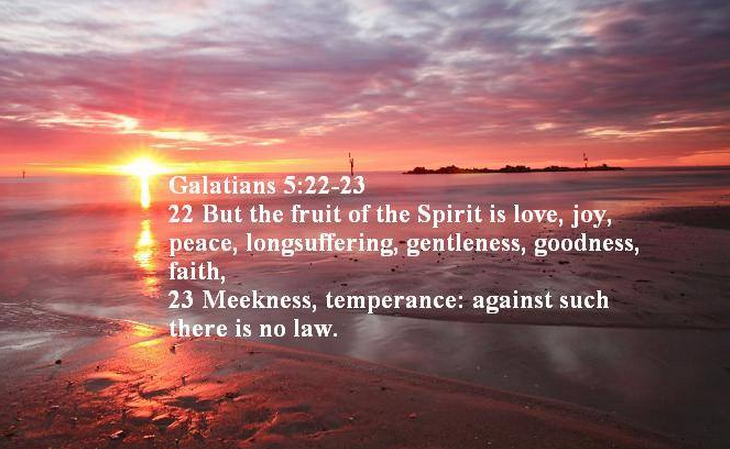
Silk flowers and wax fruit are made to look like the real things. Spiritual fruit can be faked as well. The fruits of the Spirit listed in Galatians 5 are love, joy, peace, patience, kindness, goodness, faithfulness, gentleness and self-control. These will be produced when God’s children live in the Spirit and walk in the Spirit. It is possible to fake the attributes of a godly life for one’s benefit or other selfish motivation, at least for a period of time. You know what they say: You can fool all of the people some of the time, some of the people all of the time, but you can’t fool all of the people all of the time. We cannot, of course, fool God any of the time. He’s sees even the thoughts and intents of the heart. While we may win friends and influence people in this lifetime, each person’s works will be tried by fire on the day of judgement.

–

gal 5

God’s Image – Part 2

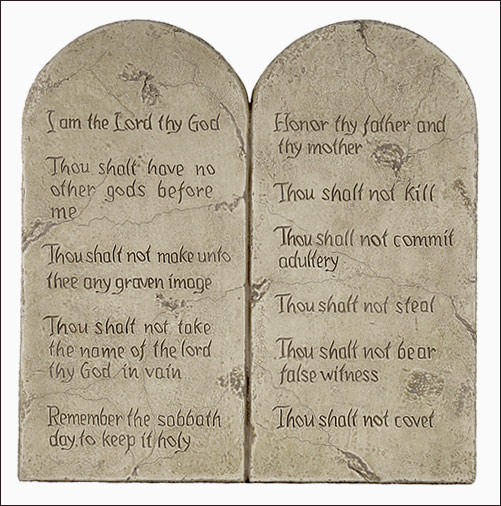
ten-commandmentsIt is worth noting when looking at the Ten Commandments that the first four are about God. The second forbids making an image of anything that is in heaven while the fourth forbids using his name in vain. God is concerned about how his name and image are used before giving commands such as not to commit murder, adultery or theft.

“You shall not make for yourself a carved image, or any likeness of anything that is in heaven above, or that is in the earth beneath, or that is in the water under the earth.” -Exodus 20:4 Continue reading →