Christians and Santa Claus

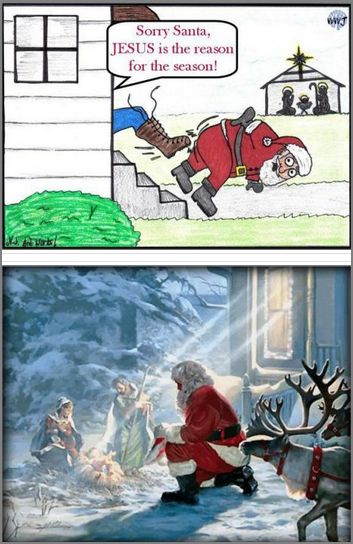
I opened the floor for comments on Santa and got them.  I didn’t go out looking for it, but ran across this sermon outline.  If you’re looking for a scriptural basis that Santa is from Satan, well there it is.  And now for my bit.

Christmas – It’s worth noting to begin with that not all Christians celebrate Christmas.  The Christ mass is Roman Catholic in origin, which is enough to cause some Protestants to avoid it.  Eastern Orthodoxy originally celebrated the day in January, and few countries using the Julian calendar (such as Ethiopia and Russia) still do.  Many of the traditions are clearly not Christian, and some speculate (the history is uncertain) that the December 25th date corresponds to the winter solstice and pagan celebrations.  Tree decorating really was a pagan element that Christians “borrowed” for their own celebration.  The argument can also be made that there is no scriptural command to celebrate Christ’s birth.  Jesus said “This do in remembrance of me” at the Last Supper, but after his birth is recorded in the Gospels there is really no further mention of it.  Only two Gospels record the birth of Christ, Matthew and Luke, but all four record his death, burial and resurrection.  The incarnation is fundamental to Christian theology, but celebrating Jesus’ birth is not. Continue reading
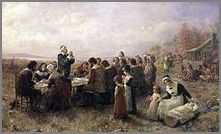
To Whom Are We Giving Thanks?

I was reading a blog post debunking several historical myths about Thanksgiving (original link no longer available).  At one point he has this to say about George Washington:

“George Washington, as the first American president, declared November 26, 1789 as a national day of thanksgiving and prayer, and a few months after his inauguration issued his famous ‘Proclamation Number One’ stating that it was a ‘duty of all Nations to acknowledge the providence of Almighty God.’”

But the last “myth” he identifies is Thanksgiving is a religious holiday, and he reasons this way:

“While some would like to believe that the Thanksgiving holiday is religious, and George Washington did issue a proclamation bringing God into the picture, this is not only an invented holiday, but its correlation with football and rescheduling to enable better economic performance for merchants makes it clear that Thanksgiving is a secular holiday.”

Then who are you giving thanks to?

It has become a tradition at this time of year to list things we are thankful for, but we sort of read off the list without directing our thankfulness in any particular direction.  Perhaps families go around the table and each member takes a turn, which forces children to think about the things they have and teaches a lesson about being thankful.  It is no doubt safer in our politically correct culture for elected officials, public school teachers and others to say “we should be thankful” than to make a religious statement.  But seriously, who are we thanking when we list the things we are thankful for?

George Washington didn’t bring God into the picture.  It is God’s picture, and we should be thankful he included us.

Not to us, O LORD, not to us, but to your name give glory,
for the sake of your steadfast love and your faithfulness!
(Psalm 115:1 ESV)

God’s Will

Psalm 115:3 says “Our God is in the heavens; he does all that he pleases.”  I actually read an argument from an unbeliever last week who quoted that verse and 2 Peter 3:9 about “God’s will that no one should perish.”  His argument was that one or the other must be true, or else this is a case of the Bible contradicting itself.

This is a perfect example of what happens when a verse is snagged from its context.  Read all of Psalm 115.  Verse 3 says that God is in heaven and does all that he pleases.  Verse 16 says “The heavens are the LORD’s heavens, but the earth he has given to the children of man.”  God has given us the liberty to do his will or choose our own.  Most reject God.  Look at the example Jesus gave his followers when he taught them to pray: “your will be done on earth as it is in heaven.”  He later himself prayed “Nevertheless, not my will but yours be done.”  Jesus prayed for God’s will and taught his followers to do the same.  We seek God’s will, and ask for his will to be done.  But on this world, affected by sin and the curse, his will is most often not done.

Why pray for God’s will to be done on earth it it’s not going to be anyway?  God has given the earth to the children of men for now.  Jesus also prayed “your kingdom come.”  When the Kingdom of God has fully come, and death and hell are cast into the lake of fire, God’s will will be done.

Who God Uses, Part II

Look at Who God Uses lists several characters from Bible history, pointing out the characters flaws and shortcomings of each one.  The original post points out that God uses the small, the weak and the broken to do his will and work, but does nothing to explain why.

Consider the nation of Israel.  By the time of Moses, the tribes of Israel were slaves serving the Egyptians.  God brought them out of Egypt with a mighty hand, demonstrating his power by allowing Israel to plunder the wealth of Egypt and destroying Pharaoh’s army in the Red Sea.  He led them to the land of Canaan, providing their needs and defeating their enemies for them.  Israel went from serving Egypt to building an empire of their own.  And all they could say about it was “look what God did for us.”

Ultimately Israel forsook God and worshiped the idols of others nations.  They rejected God and his Law, and as he promised the land was taken from them and given to others.  Our health, our strength, our prosperity, all that we have is a gift from God.  We are responsible for what we do with it, making us stewards of what is God’s rather than the owners of what is ours.  

No one used by God to do great things can really say “Look what I did.”  While I didn’t mean for this to be a Thanksgiving post, it is the perfect opportunity to say “Look what God has done.”  Christ humbled himself on the cross so that God could lift him up.  What greater example could be given?

Look at Who God Uses

I like to build to a point, but I’m going to come right to it.  Through the Bible God calls people into his service that are, for lack of a better term, screwed up.  No one used by God in some great way has their act together.  Consider a few examples; there are many others.

In Genesis 15:6 Abraham becomes the first person of faith.  He believed God, and God counted it to him as righteousness.  He is lauded in Hebrews 11 for having the faith to offer his son Isaac.  But before Isaac was born he father Ishmael by the Egyptian servant Hagar.  He lied twice about his wife Sarah was his sister.  A role model of faithfulness, perhaps not so much for other things. Continue reading

Thanksgiving

Christians do not agree about the celebration of Halloween.  There is some dispute over Christmas.  Let’s embrace Thanksgiving for all its worth.

There is an argument to be made for the Christian roots of Halloween.  The very name is created from the words Hallows Eve, the day before All Saints Day.  But let’s be honest, unless you’re Roman Catholic most American do not celebrate All Saints (or even know what it is).  Would you celebrate Christmas Eve if you didn’t believe in Christmas?  Halloween may also have roots in paganism, and is certainly associated today with the occult and many “non-Christian” activities as well. Continue reading

Worship Numbers

Jesus had many followers.  He often spoke to multitudes of people, and we have identified some members of those crowds previously.  Many came out to hear Jesus because they were curious.  His fame spread quickly in the early days of his ministry.  Some followed Jesus from town to town eager to hear and learn more.  Some of those “following” Jesus were not interesting in learning from him, but were seeking incriminating evidence with which to accuse him.  Among the throng of those listening were people that loved Jesus, hated Jesus, and various levels in between.

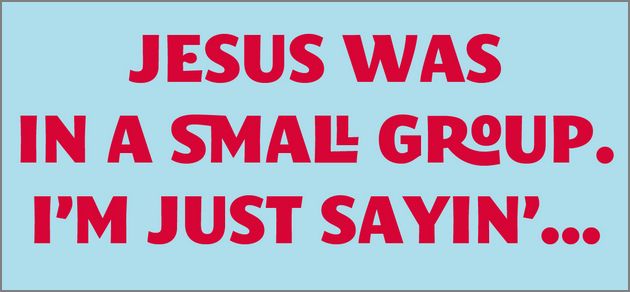
Jesus had many disciples (students) but from a large group he choose 12.  After the crowds went away – or Jesus escaped from them – he would offer explanation or answer questions in a more intimate setting.  Think of it as the difference between the church sanctuary and a small group.   Continue reading

Here’s Our Chance

Today is Halloween, which happens to be one of a long list of things Christians disagree about.  At our house we carve a Jack-o-lantern and hand out candy, relegating the holiday to a children’s event only.  We have good friends that turn off all their lights, go to bed early, and complain that people still knock on their door.  Christians disagree on celebrating Christmas, voting in elections, serving in the military, consuming alcohol, and even the use of caffeine.  How Christians feel about _______ always depends on which one you ask.

Hurricane Sandy may go down in history as the worst weather-related disaster in our nation’s history.  This is our chance to be the body of Christ.  More than teaching rhetoric, Jesus taught his disciples to go and do.   Continue reading

What We Bring to the Table

Paul Wilkinson is the author of Thinking Out Loud and Christianity 201.  Today he is our guest.  (And no, that’s not him in the picture.)

Back on the Labor Day weekend, Clark asked me to consider writing something for his readers here. I was honored, but also confused. What could I possibly bring to The Master’s Table that wouldn’t be the blog equivalent of showing up at Clark’s house and painting graffiti all over his living room walls?  I believe this is part of a larger “table” question we should ask ourselves on a regular basis,

What Do I Have to Bring to the Table?

I don’t do a lot of formal meetings in the course of a year, but when they come up, I like to arrive prepared. If there are multiple people involved, sometimes I will say nothing for the first twenty minutes, looking for the idea that’s being missed, the implication that’s not being considered, the parallel to another situation that’s not being remembered. Then I will interject something that I feel is helpful. I want to make a contribution, not simply nod in agreement or call for the vote. Continue reading

Multitasking Worship

My mother uses her cell phone for one thing, and that is to make and receive calls.  She has no camera, internet or mp3 player.  But let’s be honest, that isn’t how most of us do it.  Most of us are downloading music, texting, instant messaging, uploading pics, and some of us still talk once in a while.  We do business on the way to work.  We listen to audio books while on the treadmill.  Nobody does one thing at a time anymore.

Moses sees the burning bush in Exodus 3, and in verse 3 he says “I will turn aside to see this great sight, why the bush is not burned.”  Moses was doing his job as a shepherd when the sight of the burning bush got his attention.  He then turned aside; he put what he was doing on hold in order to pay attention to this curious sight.  He discovers God in the bush, and for the rest of chapter 3 and 4 does nothing but talk and listen to God. Continue reading