October Baby

October Baby, based on the true story of Gianna Jessen, opens in theaters March 23.  Jessen is the survivor of a failed abortion attempt.  I first learned of her back in 2008, when the Wall Street Journal (of all things) ran her story.  That was the year Barrack Obama ran for president; here’s what I wrote back when.
Tim Challies has written a review after seeing an early screening.  He was “pleasantly surprised” at how much he enjoyed it.  Tim reviews the film, and also analyzes the challenge facing any and every Christian film.

You could watch the trailer at challies.com, but why not click over to Gianna Jessen’s blog and watch it there.  There’s a trailer for the film, and also a behind the scenes sort of thing with Gianna.

Book Review: Revival and Revialism

Michael Spencer was the first person I heard use the word revivalism.  Any type of -ism refers to the belief in or practice of a particular thing.  Some churches live in a revival subculture, where revival meetings, revival services and revival preachers are a regular part of ministry.  I believe Iain Murray has written a book after Spencer’s own heart.

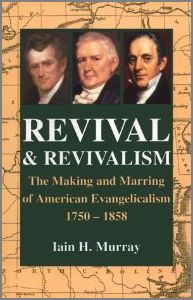
I just read an excellent review of Revival and Revivalism: The Making and Marring of American Evangelicalism, 1750-1858 at the 9Marks blog.  Bobby Jamieson has spent some time with the text; the review is practically a study guide to the actual volume.  Read the full review here.

*The review lists $33 as the price, which is retail.  Amazon has it for $24.09, if you’re interested.

The Read and Share File

I would like to try something new.  Sometimes I’m reading or watching the news, and a statement or comment lights that creative spark and I sit down and crank out a blog post.  At other times I read something in an article or on a blog and think “Oh that’s neat,” then go about what I’m doing.  I don’t feel compelled to write 800 words, but would like to share with my readers those things that have blessed me or twisted my noodle just a little bit.

I’m still working on the concept – and the title – but let’s begin with the Read and Share File and see how it goes.

Daniel Jepsen at his self title blog explains Why I Don’t Preach the Law.  The Apostle Paul points out that the Law is useful, but has limitations.  Namely the Law does not make us righteous.  Jepsen lists shortcomings of preaching the Law rather than sharing the Gospel.

Internet Monk (apparently doing a whole series on wilderness, but I missed the announcement) has this to say about the Wilderness of Life Under the Law.  If all you get from the Old Testament is the Law, you’re missing out.  Abraham was justified by faith before God gave the Law.

Steve Brown of Steve Brown Etc. had published a book, Three Free Sins.  He is in the middle of a very short book tour.  Tons of stuff to read, download and listen to on his blog.

Paul Wilkinson publishes the mother of all link pages every Wednesday.  Here is the special, limited edition Leap Day Link List.

The New Testament Model of Training Leadership

I was reading 10 Attributes of a Humble Leader at Catalyst Space (link here) when I came to this:

“Humble leaders know the vision is bigger and will last longer than they will, so they willingly invest in others, raising up and maturing new leaders.”

You will not find more prominent leaders in the New Testament than Jesus and the Apostle Paul, and this is exactly what they were doing. Continue reading →

SBC Name Change: Update

Will Southern Baptists change their name?  Last week I said the answer was a little yes, a little no.  Literally.

The SBC task force appointed to study the prospects of changing the name recommends adding a tagline, the descriptor “Great Commission Baptists.”  Micah Fries, a member of that task force, has revealed much of what went into making that recommendation.  Read the post in its entirety; here’s an excerpt:

Changing the name to something that sounded good today, but would lose potency and effectiveness over time had little appeal to me. From my perspective, Great Commission Baptists was a great choice, as it did not preserve some of the baggage that comes with a name like Southern Baptist all the while clearly explaining our desire to unite around the Great Commission of our Lord Jesus Christ.  The Task Force came to the unanimous recommendation that ‘Great Commission Baptists’ captures well who we have historically aspired to be and propels us forward to a bright Great Commission focused future.

A discussion of financial considerations is included, as well as a plea to prayerfully consider supporting the recommendation.  Thoughts?  Concerns?  Many feel there are more important issues we could be spending our time and energy on, but that may not happen for a while.

From the Archives: Jesus Was Not Religious

During his lifetime Jesus was an observant Jew.  But doing more and more religious things is not the same as living a life that is being transformed into the image of Christ.  The following was originally published June 22, 2009.

I’ve said before that the problem with religion is that it’s easier than following Jesus.  It is usually a given that something is wrong with us, wrong with the world, perhaps critically or else just a little off, but most people agree that something must be done because all is not right in the world as it is.  Religion, in most cases, offers us the chance to do something.  If we read the right book, say the right things, act right, talk right and treat each others the right way we can “fix” what is wrong.  Religion, as such, is worthless.  But what could I mean that Jesus was not religious?

The religious leaders of his day were the Pharisees, and a careful reading of the Gospels shows that Jesus never really had much good to say about them.  He was always willing to share with anyone seeking to understand the truth (i.e. Nicodemus), but as a group Jesus was most likely to call them hypocrites, false teachers, spiritually blind, and sometimes worse.  Continue reading →

Not Enough Hours in the Day

There are posts filed away that were started and never finished.  I have ideas that never got as far as unfinished posts.  There are things I would like to share that are just never going to happen.  There are just not enough hours in the day for me to blog everything I would like to.

Blue Like Jazz (written by Donald Miller, see also Searching for God Knows What) has been made into a movie.   It opens April 13th.  I saw this a couple of days ago about Barack Obama’s Christianity, and read an interesting article asking “Who is authorized to Baptize?” at SBC Voices.  I wish I could read everything on the Christian blogosphere and link to everything you should read, but for the time being I’ll leave that to Paul Wilkinson (Wednesday Link List) and Jeff Dunn (Saturday Ramblings on Internet Monk).  I rely on those guys to keep me informed.

Maybe I want too much.  Isn’t that always the way?  We’re in full time ministry, raising a two-year-old, and I’m trying to finish a book.  The same book I’ve started three times already, this time making it to chapter six.  Sometimes I daydream about starting a vlog, but I started a Bible Survey website that never got out of Genesis.  I probably don’t need to do more, but focus on doing a better job at what’s already on my plate.  Still, I look at these guys that post 3 or 4 times a day, often more than I do in a week, and think how do they do that?  Must be nice.

What is Ash Wednesday?

Re-posted from March 17, 2009.  The original title was Ash Wednesday, Lent, (and p.s. Mardi Gras)  The only change is the date in line 2.  

Ash Wednesday

Ash Wednesday occurs 46 days before Easter, 40 days if you don’t count Sundays.  This year it fell on February 22nd.  This marks the beginning of Lent, a time of preparation for Holy Week.  At an Ash Wednesday service, part of the ceremony is placing ashes on the forehead as an outward symbol that you will be observing Lent.  During the 40 day period something is given up, anything typically important to the individual, and more time spent in prayer, worship and meditation.  Lent is about preparing ourselves spiritually to observe Holy Week, the days between Palm Sunday and Easter.

Palm Sunday

Palm Sunday is one week before Easter, and celebrates Jesus’ triumphal entry.  Jesus rode into Jerusalem on the back of a donkey to celebrate Passover.  The crowd shouted “Hosanna”, and waved palm branches.  Actual palm branches may be used in a Palm Sunday service, and those branches will be saved until next year, burned, and the ashes used during the Ash Wednesday service mentioned above.  The same Jews shouting “Hosanna” at Jesus’ entry would be shouting “Crucify him” just a few days later.

Good Friday

Continue reading →

You Have to Be a Friend

There’s an old saying that goes “To have a friend, you have to be a friend.” The implication is that if you are friendly others will be friendly toward you. There is no guarantee that if you put yourself out there others will reciprocate. Even if you don’t have a friend, the Christ-like thing to do is be a friend anyway.

Greater love has no one than this, that someone lay down his life for his friends. (John 15:13, ESV) Jesus had 12 chosen apostles and a multitude of followers, but during his trial and crucifixion nearly every single one of them ran away. Jesus was a friend of sinners, healed legions of the sick and afflicted, feed thousands, but when the time came… he was left alone. His mother was there, and perhaps one disciple. Peter denied Jesus three times, and even invoked a curse on himself. After Jesus’ arrest in the Garden of Gethsemane, the rest had fled in fear.

Yet on the cross, Jesus extended mercy even toward the people that were nailing him to the tree. “Father forgive them, for they know not what they do.” We are told to give without expecting repayment, to walk the extra mile (literally) and  to turn the other cheek. Jesus’ final command was to love. We are to have the same mind is us that Christ had. Regardless of what anyone else does or doesn’t do…

You have to be a friend.

The Cross Isn’t Pretty

There’s a little icon on my desktop that represents a trash can.  A real trash can would be showing its age by now, but my icon always looks exactly the same.  It never gets filthy, never dents, never smells, and the lid always closes no matter how much “trash” is inside.  The icon represents a trash can, but a real trash can isn’t pretty.  So it is with the cross.

We wear crosses of gold and silver about the neck, carve them into our church pews, paint them in our artwork and place them above our church buildings.  As an icon, the cross represents Christianity.  But our images have no splinters, rusty nails, nor do they drip with the blood of the slain.  The image of the cross is meant to remind us that the broken body of Christ was hung on the tree.  Our communion wafers are perfect little squares, and the wine/juice tastes sweet, but the body of the Lord was broken and his blood poured out.  Flesh was ripped away by the whip.  Blood and sweat mingled and dripped to the ground.  The air was ripe with the smell of blood and the stench of death.  The cross was an instrument of torture and execution.

I’m not suggesting we do away with the symbols.  It is our nature to forget, and we must be reminded of what God has done.  Rainbows actually are beautiful, but they remind us of mercy in the face of judgment.  Baptism represents death of the old man and rebirth of the new.  Passover reminded the Jews of what God had done for them, just as communion does for us today.  Our hope is in the resurrection, made possible by the crucifixion.  We must remember what God has done.  But remember as well… it wasn’t pretty.