Mother’s Day 2011

Happy Mother’s Day

I talked to my mother yesterday, but will not see her on this Mother’s Day.  She called to say my card arrived and that she enjoyed the Easter pics of her granddaughter.  Her birthday is in a couple of weeks, and we’ll get there in plenty of time for that.

Here’s the Mother’s Day sermon I posted 2 years ago.

Last year I did Instead of  a Mother’s Day sermon.

The latter is certainly not “light” on theology.  I will preach a variation of that post this morning.  Here’s a funny video for moms.  Enjoy your day 🙂

Jesus Broke Bread

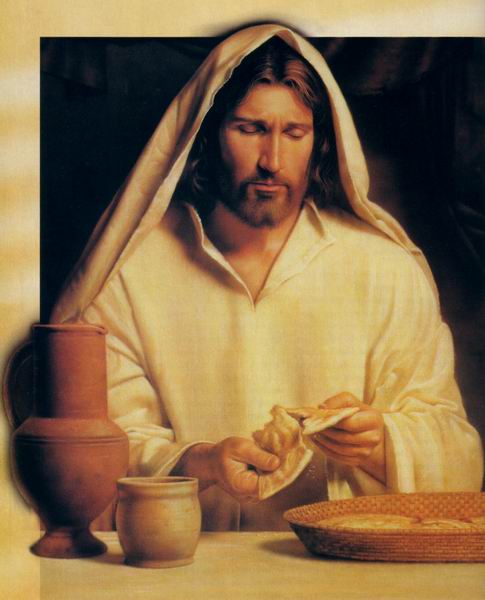
Jesus is often referred to as “braking bread.”  He blessed bread and broke it at the feeding of the five thousand, and again for the four thousand.  He broke bread at the Last Supper, and finally in one of the post-resurrection appearances.  That’s when they recognized him, as he broke bread, then he vanished from their sight!

So what’s up with breaking bread?  Hebrews in the Old Testament had swords and daggers, and we know there were skilled craftsmen in Israel.  Jesus himself was a carpenter; obviously they had the ability to slice bread.  It’s not that Jews couldn’t slice bread, they simply did not slice their bread.  Thanks was given to God before food was eaten, and bread was probably offered at every meal.  There may not be a command from God to not cut through bread, but there actually were rules about cutting stones for the alter of sacrifice.  The Temple was made of all sorts of carefully worked materials, but the alter was put together with stones that no tool had worked.  Beams, doors, cup, bowls, candle holders, et. al. were cut, carved, beaten into shape, etc.  But the alter was carefully fitted together using stones in their “original” God-given shape.  Breaking bread, especially right after thanking God for it, reminded the Jews were their meals really came from.  It would have been disrespectful to cut their bread with tools.

Our communion wafers are uniform in shape and size; they come out of the box that way.  They go together well with the little 3 oz plastic cups we use.  The bread and the cup remind us that Jesus’ body was broken and his blood spilled.  The symbol would work just as well with Oreo’s and Kool-Aid.  But if you really want a feel for the disciples at that first last supper, try baking a loaf and passing it around.  Each believer could tear off their own piece.  You could go the distance and dip your bread into wine grape juice rather than sipping it.  Just remember what is important – Jesus body was broken.  What we need is a savior.

Every Saga has a Beginning

Today is Easter Sunday.  Lent bagan 40 days ago, Palm Sunday was last week, 2 days ago was Good Friday.  Holy Week is about the end of Jesus’ ministry on earth.  Not too long ago – it’s been about 4 months – we celebrated the beginning of his life on earth.  Do you remember that story?

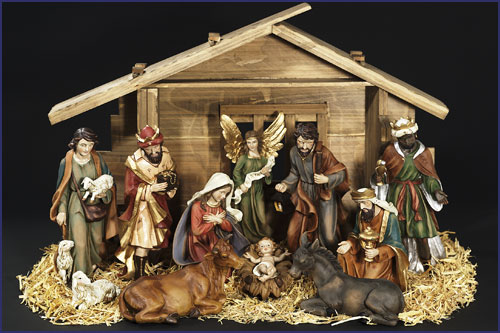
Joseph and Mary traveled to Bethlehem, to be counted in the Roman census and taxed.  Baby Jesus was laid in a manger, shepherds came and worshiped, and the wise men traveled from afar.  They followed the star and brought gifts fit for a king.  Jesus was presented with gold, frankincense and myrrh.  Gold makes sense; no one would mind getting that present.  Frankincense is an incense, a sweet perfume.  It’s actually a resin, made from the bark of a tree.  Myrrh is very similar, but bitter.  It’s most common use in the first century was anointing the dead.  Gold is an awesome gift, perfume maybe, but… you wouldn’t give a newborn embalming fluid.

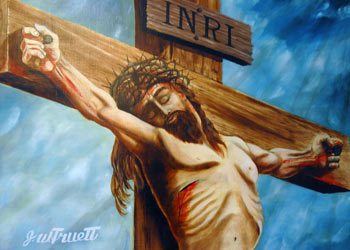
Once you know how the story ends, the beginning makes more sense.  In literature, it’s called foreshadowing.  Jesus was born to die.  He came to be a sacrifice.  The unusual gift brought by one very wise man reminds us what is really important about Christmas.  The gifts that were given to Jesus pale in comparison to the gift of Jesus.  Throughout his ministry Jesus understood his mission, even when his followers could not.  The disciples were told plainly that the Son of Man must suffer many things, be rejected by men, even that he must die.  Jesus told them, more than once, that he would rise again.  Eventually they were afraid to ask.

The real story of course begins before the incarnation and does not end with the crucifixion.  Today is Easter, the celebration of Jesus’ resurrection.  That still isn’t the end of the story.  Jesus wasn’t just resurrected; he is the resurrection.  The story of God’s coming kingdom isn’t over yet.
It’s Friday; Sunday’s Coming

Vocals are S.M. Lockridge, images from The Passion of the Christ

The Last Supper

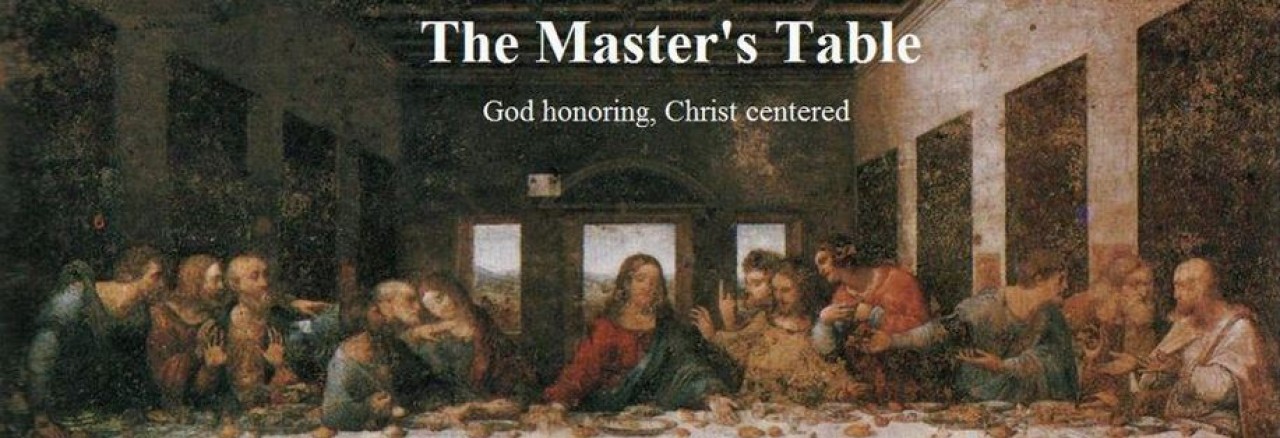
The banner at the top of this page is da Vinci’s portrait of the Last Supper.  Renaissance Christians knew that Jesus and his disciples were not white with brown hair and blue eyes.  They would not have been sitting in chairs at a table either.  Despite the cultural “anomalies” the most important things are still visible; Jesus broke bread and passed the cup.  That, after all, was the point.

This is Holy Week, the final days leading up to the crucifixion of Jesus.  On Easter Sunday we celebrate the resurrection, but these days between Palm Sunday and Good Friday are about remembering the last precious days that Jesus had with his closest followers.  This would be the last time they celebrated Passover together, and Jesus still had a lessor or two he wanted to share.  During the course of the meal, he gets up from the table and removed his outer robe.  He then ties a towel around his waist, kneels on the floor, and begins washing the disciples feet.  We know what happens to our own feet during the summer months, going about in sandals or flops.  Imagine wearing sandals everyday and walking everywhere you went.  He then asks if they understand why.  Jews did not wash feet; feet are unclean, both literally and religiously to the Jews.  He was their Master and Lord (and maker of heaven and earth) but he was humble like a servant.  If he then, he explains, is willing to wash their feet they should each be doing the same.  It is not a literal command to wash feet, but a lesson about humility and service to others.

Jesus broke bread to remind his followers that his body was broken.  The fruit of the vine in the cup reminds us that his blood was poured out.  He said that without taking part in his body and blood we had no part in him.  But if we receive the one he sends – the Holy Spirit – then we receive him.   And if we receive him, we receive the one who sent him – God the Father.  The Hebrews had been celebrating Passover since they were brought out of Egypt.  When the death angel saw the blood of the sacrifice it “passed over” that home, sparing the first born.  Jesus takes the elements of that meal, and gives them new meaning for his followers.  He is the Lamb of God that takes away the sins of the world.  When God sees the blood of Jesus on our hearts, his judgement will pass over.

Tim Hawkins & Ergun Caner

Tim Hawkins is playing this weekend in Lexington, KY at Northeast Christian Church.  I’ve seen a couple of his DVD’s and an old episode of Bananas.  Tim mixes stand-up comedy with parody rock and pop tunes.  He is classified as a “Christian comedian” but admits to not knowing exactly what that means.  For $15 you get a good solid two hour show.

Ergun Caner is preaching a weekend revival at Manchester Baptist Church in Manchester, KY.  Before Liberty Baptist Seminary, before the book Unveiling Islam, “Butch” Caner was the Youth Minister at MBC.  Tim Hawkins is a comedy by vocation, but I swear that Caner is just as funny.  He preached the Gospel from Galatians 6, and I enjoyed tonight just as much – and laughed just as hard.

One is a comedian, one is a professor of theology.  They both love God, life and family, and prove that God has a sense of humor.  He gave them warped minds and they’re using ’em.

Weather, Economy, and the Apocalypse

The price of gas has passed $4 in many places, and some are predicting $5 across the country by Memorial Day.  The Consumer Price Index has risen 2.7% just this year.  Thunderstorms and tornadoes are occurring with incredible frequency in the United States, and it’s hard to miss the global increase in earthquake, tsunami and volcano activity.  So am I ready to predict the end of the world?  I suggest not starting an office pool.

The Apostle Paul expected the return of Christ in his lifetime.  You can almost feel a change in his attitude by the time of his final letters.  There is a noticeable “policy shift” if you know what to look for.  Throughout the ages people have predicted the day and date for the end of the world.  Statistically they have been wrong 100% of the time.  Are wars in the Middle East and earthquakes a sign the end is near?  Yes.  But in a greater sense, the end is always near.  The return of Jesus Christ is imminent; that means nothing else has to happen before his return takes place.  That doesn’t mean it will be this weekend – or this decade – however.  If I board a non-stop flight in Atlanta, then my arrival in (your favorite city here) is imminent.  The plane will not be landing anywhere else first.  The next stop will be at our destination.  What we know for certain by reading the scriptures is that Jesus’ return will come like a thief in the night.  What we know for certain is that we cannot know for certain when it will be.

Things will get worse before they get better.  Ralph Sexton Jr. predicted in the late 70’s that the price of a loaf of bread would be over $1.  People laughed.  When Israel became a nation in 1947 that was as good as handwriting on the wall for many Christians.  Yet Jesus did not return the next day.  Mikel Gorbachev turned out not to be the anti-Christ.  The 91′ Gulf War was not the beginning of Armageddon.   The collapse of the Soviet Union meant that it was neither Gog nor Magog (though not everyone agrees).

Today there are earthquakes and storms.  There are wars and rumors of war.  The end is near.  And if Christ tarries his coming another hundred years – or thousand – the end will near then too.  Don’t go around saying stuff that will make all Christians look silly this time next year.  Love your kids, read your Bible, share the Gospel – and go on with your life.  I wouldn’t recommend selling your house just yet.

Gideon Sunday and Mark 4

Today was Gideon Sunday, at least where we live.  I wrote about the work done by the Gideon’s International last year.  I’ve also written before about sowing gospel seeds, based on the parable in Mark 4.  Just this morning I noticed a strong correlation between the two. Continue reading

Blessings and Curses: Deuteronomy 28

The last of the five books of Moses, Deuteronomy wraps some things up and reviews some others.  He knows that he will not be entering the Promised Land, and wants to encourage the Children of Israel one last time to remember God and keep his commandments.  Chapter 28 is in two parts; first the blessings for obedience followed by a list of curses for disobedience.

The first 14 verses of Deuteronomy 28 list the blessings for obedience.  In short, God will bless the land allowing it to flow with mild and honey.  Crops will fill their barns, grapes will fill their winepresses, children will be born and the nation will live in peace from their enemies.  They will be high and mighty over the other nations of the world.  Many more verses, 15 – 68, detail the curses God will bring for disobedience.   Continue reading