Special Effects of Biblical Proportion

We live about an hour away from a big church that puts on a very good passion play each year.  We took a group of students to see it earlier this week.  I have some experience with drama, mostly on the technical side (sound, lights, set construction).  There are some special effects that work well even in amateur theater  to help the audience suspend their disbelief.  This particular passion play uses a silk screen and shadows to show Jesus being scourged; a little bit of technical effect combined with good acting really sell the scene.

Movies have a whole other dimension of effects available, and today it is hard to tell what is real and what isn’t.  Watching a play or film during Holy Week adds to our understanding by providing visual stimulation.  We can read the story, discuss it, and even share it with others, but seeing and hearing the dramatization can still add to our experience.  There are times when the Bible itself seems to have a flair for the dramatic and God uses some special effects of his own to drive the point home.  After displaying his power and wonders in Egypt, the Hebrews cross the Red Sea on dry land and see Pharaoh’s army crushed by the same water.  Mount Sinai shook and smoldered when God descended onto it.  No other biblical display was greater than on the day of Jesus’ crucifixion.  Continue reading
Holy Week: Three Prayers of Jesus

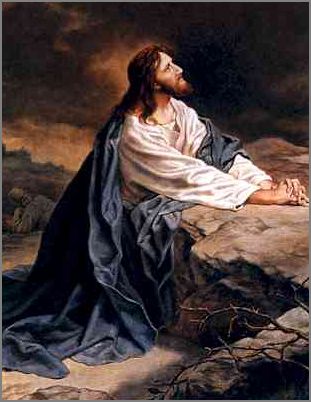
When Jesus taught his followers how to pray, he gave them a simple formula (such as in Matthew 6).  We often called this the Lord’s Prayer, but Model Prayer or even Disciples’ Prayer would be more descriptive.  Here are three prayers Jesus himself prayed during Holy Week.

The High Priestly Prayer (John 17) This entire chapter is a prayer spoken by Jesus that we call the High Priestly Prayer.  The writer of Hebrews goes to great lengths to detail the ways Jesus acts as our high priest, continuously going into God’s presence and making intercession on our behalf.  His prayer in John 17 casts Jesus in the role of High Priest, bridging the gap between man and God, between the unholy and Most Holy.  Jesus has only a few days left on earth at this point in the story, and is about to take his place at God’s right hand.  Jesus prayed for his followers of that day and all that would ever believe and follow in the future.  Jesus literally prayed to God for us. Continue reading

The Appearance of Victory

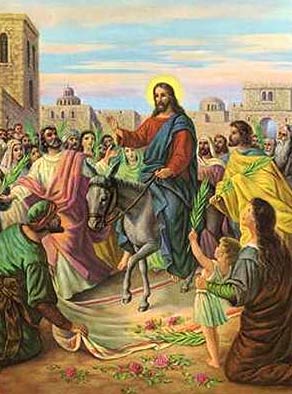
It looked like Jesus’ finest hour when he entered Jerusalem.  Our Palm Sunday service, also called Passion Sunday by some, is a celebration of Jesus’ triumphal entry.  The crowd shouted “Hosanna” and also “Blessed is he who comes in the name of the LORD.”  Hosanna means either save us now or more simply save now.  They waved palm branches, a symbol of victory, and spread coats on his path.  Many expected Jesus to claim the throne, and some had even tried to take him by force and place him there.  The Jewish leaders didn’t like it, but they feared the crowd more than God.  Jesus certainly looked victorious on that day.

By the end of the week, the same crowd was shouting “Crucify him.”   Followers of Jesus were hard to find by Friday afternoon.  Good Friday seemed to be Jesus’ ultimate demise, the polar opposite of just a few days earlier.  The chief priests and Pharisees must have thought the Jesus movement was over for sure as the few friends he had left put him in the tomb.  Of course we know that Easter (Resurrection Sunday) and the day of Pentecost are coming soon, but Palm Sunday appears to be a great day of victory while the cross looks like defeat.

Try to keep these things in mind.  The world often has their winning and losing backwards.  When missionaries are persecuted, when pastors are arrested for reading the Bible in public places, when states approve gay marriage, or abortion rights are expanded: don’t be too quick to accept defeat.  The same is true for events that we may perceive as victories.  Political leaders and court systems of the modern world have no more real power than they did in the first century.  The same Jesus that ascended in Acts 1 will return the same way.  He will not be a helpless baby at his second coming.  Despite appearances, the real victory was over death, hell and the grave.

“Sorrow may last for the night, but joy comes in the morning.”  Psalm 30:5

Holy Week Review

Palm Sunday is on April 1 this year, Easter will be April 8.  That final week of Lent is referred to as Holy Week, and should be a special time in the lives of believers.  Here are some Holy Week posts from years past; they may not be new, but are still good.

The “Triumphal” Entry is about Palm Sunday, the first day of Holy Week.  The same Jews shouting Hosanna at the beginning of the week will be shouting Crucify him by the end of the week.

Who Framed Jesus? was a documentary shown by Discovery 2 years ago, but the same thing happens on t.v. and magazine covers every year.  This post generated a frenzy of comments that are also a blast to read.

The Last Supper is about Jesus’ final Passover and the beginning of communion.  And on the same night he washed the disciples’ feet.

Is Jesus the Sheep, or the Shepherd?  This rather short post is one of the most read ever on The Master’s Table.

The Resurrection is the most celebrated event in Christianity, but here’s a thought: Jesus Died.  Jesus is God; have you ever thought that all the way through?

He Cannot Save Himself, the original post and He Cannot Save Himself, a poem for Good Friday.

It’s Friday, Sunday’s Coming  Sermon by S.M. Lockridge, with scenes from The Passion

And finally The Importance of the Resurrection.

What is Ash Wednesday?

Re-posted from March 17, 2009.  The original title was Ash Wednesday, Lent, (and p.s. Mardi Gras)  The only change is the date in line 2.  

Ash Wednesday

Ash Wednesday occurs 46 days before Easter, 40 days if you don’t count Sundays.  This year it fell on February 22nd.  This marks the beginning of Lent, a time of preparation for Holy Week.  At an Ash Wednesday service, part of the ceremony is placing ashes on the forehead as an outward symbol that you will be observing Lent.  During the 40 day period something is given up, anything typically important to the individual, and more time spent in prayer, worship and meditation.  Lent is about preparing ourselves spiritually to observe Holy Week, the days between Palm Sunday and Easter.

Palm Sunday

Palm Sunday is one week before Easter, and celebrates Jesus’ triumphal entry.  Jesus rode into Jerusalem on the back of a donkey to celebrate Passover.  The crowd shouted “Hosanna”, and waved palm branches.  Actual palm branches may be used in a Palm Sunday service, and those branches will be saved until next year, burned, and the ashes used during the Ash Wednesday service mentioned above.  The same Jews shouting “Hosanna” at Jesus’ entry would be shouting “Crucify him” just a few days later.

Good Friday

Continue reading

Every Saga has a Beginning

Today is Easter Sunday.  Lent bagan 40 days ago, Palm Sunday was last week, 2 days ago was Good Friday.  Holy Week is about the end of Jesus’ ministry on earth.  Not too long ago – it’s been about 4 months – we celebrated the beginning of his life on earth.  Do you remember that story?

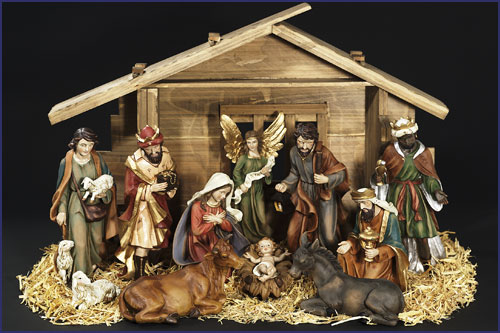
Joseph and Mary traveled to Bethlehem, to be counted in the Roman census and taxed.  Baby Jesus was laid in a manger, shepherds came and worshiped, and the wise men traveled from afar.  They followed the star and brought gifts fit for a king.  Jesus was presented with gold, frankincense and myrrh.  Gold makes sense; no one would mind getting that present.  Frankincense is an incense, a sweet perfume.  It’s actually a resin, made from the bark of a tree.  Myrrh is very similar, but bitter.  It’s most common use in the first century was anointing the dead.  Gold is an awesome gift, perfume maybe, but… you wouldn’t give a newborn embalming fluid.

Once you know how the story ends, the beginning makes more sense.  In literature, it’s called foreshadowing.  Jesus was born to die.  He came to be a sacrifice.  The unusual gift brought by one very wise man reminds us what is really important about Christmas.  The gifts that were given to Jesus pale in comparison to the gift of Jesus.  Throughout his ministry Jesus understood his mission, even when his followers could not.  The disciples were told plainly that the Son of Man must suffer many things, be rejected by men, even that he must die.  Jesus told them, more than once, that he would rise again.  Eventually they were afraid to ask.

The real story of course begins before the incarnation and does not end with the crucifixion.  Today is Easter, the celebration of Jesus’ resurrection.  That still isn’t the end of the story.  Jesus wasn’t just resurrected; he is the resurrection.  The story of God’s coming kingdom isn’t over yet.

It’s Friday; Sunday’s Coming

Vocals are S.M. Lockridge, images from The Passion of the Christ

The Last Supper

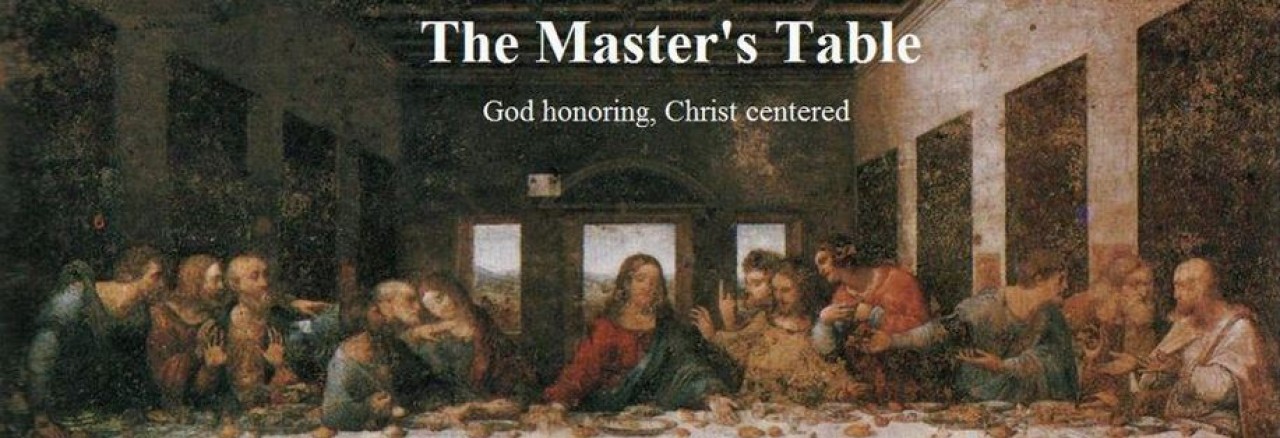
The banner at the top of this page is da Vinci’s portrait of the Last Supper.  Renaissance Christians knew that Jesus and his disciples were not white with brown hair and blue eyes.  They would not have been sitting in chairs at a table either.  Despite the cultural “anomalies” the most important things are still visible; Jesus broke bread and passed the cup.  That, after all, was the point.

This is Holy Week, the final days leading up to the crucifixion of Jesus.  On Easter Sunday we celebrate the resurrection, but these days between Palm Sunday and Good Friday are about remembering the last precious days that Jesus had with his closest followers.  This would be the last time they celebrated Passover together, and Jesus still had a lessor or two he wanted to share.  During the course of the meal, he gets up from the table and removed his outer robe.  He then ties a towel around his waist, kneels on the floor, and begins washing the disciples feet.  We know what happens to our own feet during the summer months, going about in sandals or flops.  Imagine wearing sandals everyday and walking everywhere you went.  He then asks if they understand why.  Jews did not wash feet; feet are unclean, both literally and religiously to the Jews.  He was their Master and Lord (and maker of heaven and earth) but he was humble like a servant.  If he then, he explains, is willing to wash their feet they should each be doing the same.  It is not a literal command to wash feet, but a lesson about humility and service to others.

Jesus broke bread to remind his followers that his body was broken.  The fruit of the vine in the cup reminds us that his blood was poured out.  He said that without taking part in his body and blood we had no part in him.  But if we receive the one he sends – the Holy Spirit – then we receive him.   And if we receive him, we receive the one who sent him – God the Father.  The Hebrews had been celebrating Passover since they were brought out of Egypt.  When the death angel saw the blood of the sacrifice it “passed over” that home, sparing the first born.  Jesus takes the elements of that meal, and gives them new meaning for his followers.  He is the Lamb of God that takes away the sins of the world.  When God sees the blood of Jesus on our hearts, his judgement will pass over.

The “Triumphal” Entry

Several well known statements are found in Psalm 118:1-25: “His steadfast love endures forever,” “this is the day the LORD hath made,” “the stone the builders rejected has become the cornerstone,” and even others still.  Verse 25 reads “Save us, we pray, O LORD” in the ESV; “O LORD. we beseech thee, save us now!” in the King James.  The Hebrew word rendered in English as save now is hosanna.

All four Gospels tell the story of Jesus’s triumphal entry.  Palm Sunday is our celebration of Jesus entering Jerusalem for the last time to observe Passover with his disciples. Continue reading

Who Framed Jesus?

I can tell that Easter is near.  Every year about this time, several television specials and news magazines focus on the fact that Christians still believe in Jesus even though they should not.  In about a week, expect Time Magazine (or its equivalent) to run a cover story on how/why the resurrection could not have possibly taken place.  Predictably, they will claim Jesus either 1) did not die  2) stayed dead, or 3) was never alive in the first place.  Each year, several media outlets predict an end to Christian faith, despite the fact that each year there are still billions of Christians around the world. Continue reading