The Gospel of the Old Testament

Matthew, Mark, Luke and John are the Gospels in that they tell the story of the life of Jesus.  Jesus preaches in Mark 1 “repent and believe in the gospel.”  More than those four books, gospel means good news.  Jesus died for our sins; he is the way, the truth and the life; he brings the New Covenant, and we are no longer under the Law; all things things are part of the gospel message.  Paul says the Law is bad news; it cannot make us righteous, only more guilty.  But there is more to the Old Testament than the Law, and it’s not all bad news.

The Bible has many stories and characters, but only one message.  (Have you read this?)  The Old Covenant was about keeping the Law and bearing the mark of circumcision.  Paul has many analogies about the difference between the Law and the Gospel; the Gospel brings life, the Law only brings death.  But my point is that there is plenty of good news in the Old Testament as well.  It is part of God’s message. Continue reading

Eyes Are NOT the Window to the Soul

“Eyes are the window to the soul.”  It’s a well known phrase, and so old that no one really knows the source.  It’s very poetic, just not scriptural.

Jesus, in Matthew 12:34, says that “out of the abundance of the heart the mouth speaks.”  What is really inside of a person comes out of their mouth.  You will know the tree by the fruit it bears.  That’s a more reliable indicator than a person’s eyes.  He says in v.35 ” The good person out of his good treasure brings forth good, and the evil person out of his evil treasure brings forth evil.”    In Matthew 15 Jesus is responding to the accusation that his disciples eat without washing their hands.  He says what gets eaten goes into the stomach and is later expelled; it’s what comes out of a person mouth, not what goes in, that defiles.  What comes out of the mouth shows us what a person is really made of. Continue reading

Lord of History

When God speaks to Moses from the burning bush, he knows that Pharaoh will not let the Hebrews go “unless compelled by a mighty hand.”  God has a series of signs and wonders in store for Egypt.  There comes a point when Pharaoh would have been willing to let them go and we’re told that God hardened his heart, because he was not done demonstrating his power.  It was all part of God’s plan.

I did not intend to preach a sermon featuring 9/11 on the 10th anniversary.  I decided to use text from Genesis 15, when God met with Abram (not yet Abraham) and renewed his covenant to make of him a great nation.  God explains that it will not happen right away; as a matter of fact it will not happen for another 400 years.

Then the Lord said to Abram, “Know for certain that your offspring will be sojourners in a land that is not theirs and will be servants there, and they will be afflicted for four hundred years.  But I will bring judgment on the nation that they serve, and afterward they shall come out with great possessions.  Gen. 15:13-14

Continue reading

Life in Mordor, My “Other” Other Blog

I blog religion and theology on this site, The Master’s Table.  My Other Blog is filled with YouTube clips, funny pictures and random entries on life, sports, television shows I’m watching and the weather.  (Everybody blogs about the weather…)

I occasionally join Mike F. and Joe Derbes in a group project titled Life in Mordor.  My latest contribution is The Gospel According to Allegory.  Check out some Mike and Joe stuff while you’re there; comments and link love would be greatly appreciated.

A Royal Priesthood

If you’re a follower, online or in real life, you know how I feel about the Old Testament: everything is a metaphor.  The nation of Israel, sacrificial system, temple, alter, high priest, exodus from Egypt, brass serpent, passover, circumcision, etc. are all symbolic of what Christ does in the New Testament.  You’ve probably heard me say (or at least read) that Moses leading the Hebrews through the wilderness is a portrait of Jesus leading us through this present wilderness.  They were marching toward the “promised land” and so are we.  Abraham was willing to offer his son Isaac… you get the point.  Is there an analogy left that I could possibly make?  Why yes, yes there is.

But you are a chosen race, a royal priesthood, a holy nation, a people for his own possession, that you may proclaim the excellencies of him who called you out of darkness into his marvelous light.  –1 Peter 2:9

We – all Christians – are priests.   Continue reading

The Star Trek Sermon

I’m a Trekkie.  I don’t think it’s ever come up here before, but I make no apologies for being a big fan.  I don’t have a Star Fleet uniform or anything, but do enjoy most of the series.  The original Star Trek aired on NBC from 1966 – 69.  That series made social and political commentary, sometimes dealing with very controversial issues, but in a sci-fi setting.  Gene Roddenberry wanted to share his vision for a better world, a world of peace and racial equality, not just entertain an audience.  There was always a “moral of the story” but some people were so entertained they were unaware of being educated.

Each Trek series has at least one character wrestling with the idea of being human.   Continue reading

The Gospel 360

There are 360 degrees in a complete circle.  Relating your conclusion to the introduction when making a speech is a good way to tie everything up neatly.  If you finish your career the way you started, or move back home after relocating many times, we say you have come “full circle.”  Jesus begins and ends his ministry on earth the same way – sharing the Gospel. Continue reading

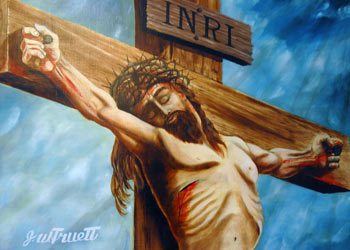
The Foolishness of the Cross

Paul wrote to the Corinthians “For the preaching of the cross is to them that perish foolishness; but unto us which are saved it is the power of God.”  (1 Cor 1:18, KJV)

This is one of those occasions where I prefer the King James translation.  The ESV uses word of the cross instead of preaching, and chooses folly over foolishness.  The meaning is unchanged.  For those of us that have been Christians for many years, or perhaps in church our whole lives, we worship at the foot of the cross.  We sing hymns about the cross, decorate our churches with images of the cross; we glory in the crucified savoir.  Paul reminds us to never loose sight of the fact that to the world, to the unsaved, to those hearing the gospel for the first time – it sounds foolish. Continue reading

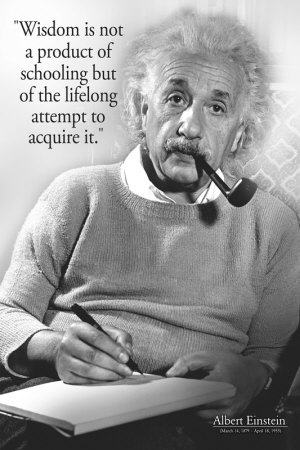
Pursuing Wisdom

In the first Psalm, David contrasts the ways of the righteous and the wicked.  In the first chapter of Proverbs, Solomon does the same thing between the wise and the foolish.  He goes on to encourage his sons (and by extension all readers) to pursue wisdom.

David was a poet and a musician.  He not only wrote songs and played instruments, but he made trumpets for the temple musicians.  In Biblical times the Psalms were sung.  Think of this book as their hymnal.  Solomon was David’s son, and world renown for his wisdom.  The book of Proverbs is a collection of wisdom sayings, some perhaps written by Solomon himself and others collected.  In both cases, righteousness and wisdom must be pursued.  One must seek after them, like walking down a path.  There is more than one path, and we must think about which we are choosing. Continue reading

Every Saga has a Beginning

Today is Easter Sunday.  Lent bagan 40 days ago, Palm Sunday was last week, 2 days ago was Good Friday.  Holy Week is about the end of Jesus’ ministry on earth.  Not too long ago – it’s been about 4 months – we celebrated the beginning of his life on earth.  Do you remember that story?

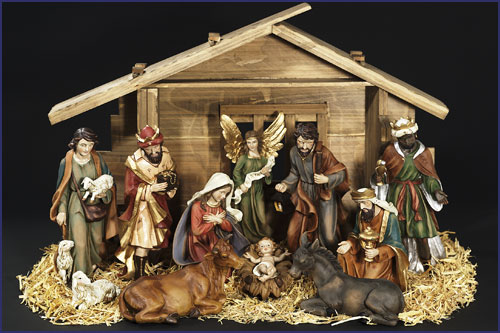
Joseph and Mary traveled to Bethlehem, to be counted in the Roman census and taxed.  Baby Jesus was laid in a manger, shepherds came and worshiped, and the wise men traveled from afar.  They followed the star and brought gifts fit for a king.  Jesus was presented with gold, frankincense and myrrh.  Gold makes sense; no one would mind getting that present.  Frankincense is an incense, a sweet perfume.  It’s actually a resin, made from the bark of a tree.  Myrrh is very similar, but bitter.  It’s most common use in the first century was anointing the dead.  Gold is an awesome gift, perfume maybe, but… you wouldn’t give a newborn embalming fluid.

Once you know how the story ends, the beginning makes more sense.  In literature, it’s called foreshadowing.  Jesus was born to die.  He came to be a sacrifice.  The unusual gift brought by one very wise man reminds us what is really important about Christmas.  The gifts that were given to Jesus pale in comparison to the gift of Jesus.  Throughout his ministry Jesus understood his mission, even when his followers could not.  The disciples were told plainly that the Son of Man must suffer many things, be rejected by men, even that he must die.  Jesus told them, more than once, that he would rise again.  Eventually they were afraid to ask.

The real story of course begins before the incarnation and does not end with the crucifixion.  Today is Easter, the celebration of Jesus’ resurrection.  That still isn’t the end of the story.  Jesus wasn’t just resurrected; he is the resurrection.  The story of God’s coming kingdom isn’t over yet.