Jesus Suffered: Hebrews Chp 2

I am preaching through the book of Hebrews, and expect to post on Hebrews many times in the weeks ahead.  While Hebrews looks a little like a letter (epistle) in many ways it is more like a sermon.  That makes it really easy to preach.
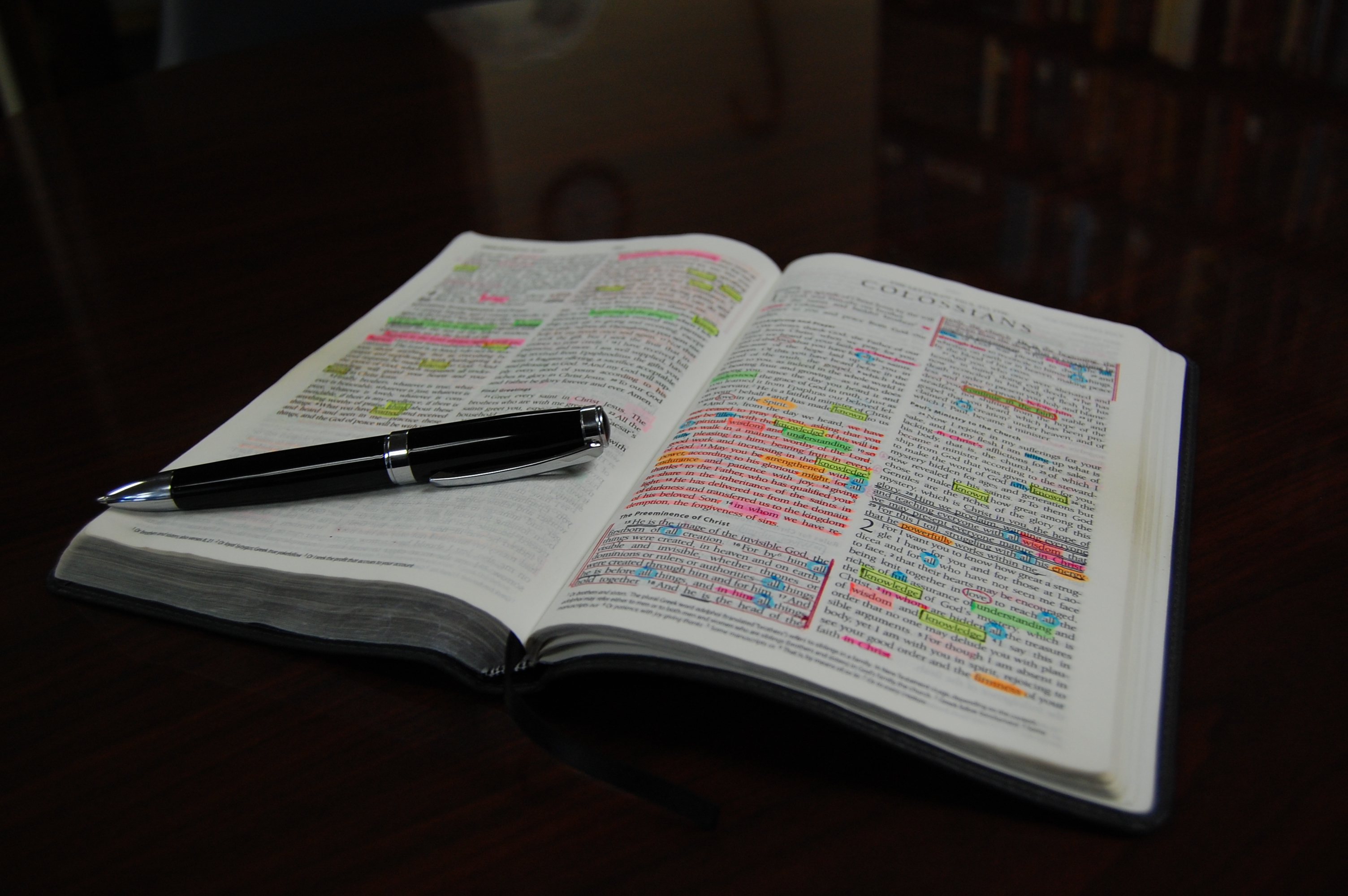
I recommend reading Hebrews 2.  When I preach this sermon, I read most of it as the text; it isn’t long.  The writer of Hebrews contends that Jesus tasted death for everyone, and that his suffering has made him the perfect founder of our salvation.  Because of it he is not ashamed to call us brothers. Continue reading

The Symbol is Not the Thing

I don’t normally come home from church and blog my pastor’s sermon.  I know some people do.  I am making an exception.  The following is my take on the Sunday a.m. service preached by Ken Bolin of Manchester, KY.

I Samuel 4:1-11

Luke 22:14-23

In I Samuel, the Israelites confuse the Ark of the Covenant for what the Ark represented, namely the presence of God.  They wrongly assumed carrying the Ark into battle would protect them. Continue reading

God Sent His Son – Hebrews 1

I am about to start a sermon series on the book of Hebrews, and will endeavor to share those messages here.  Hebrews ties together the Old and New Testaments by showing how Jesus is carrying forward into the church age the work started by God among the Hebrew people.  Written to a Jewish audience, the letter to the Hebrews strives  to prove that Christianity is the continuation of Judaism, and not something else entirely.  If you have ever questioned why a Christian should read or study the Old Testament, this book will be an eye-opener.  Quite simply, most of what God was doing in the Old Testament was meant to help us understand the work of Christ in the New. Continue reading

Abraham Lincoln, Martin Luther King, and the Kingdom of God

Lincoln, King and the Kingdom: what’s the relationship?  I’ve always wondered who in the government decided to put Alcohol Tobacco and Firearms (ATF) together.  Although my students will tell you that sometimes I get a little preachy when I teach history, I’ve always tried to not lecture history from the pulpit.  This time, I’m going to ask that you indulge me just a little bit.

It’s always around this time of year that my American History class studies the Civil War.  It just so happens that right in the middle of that, my wife and I visited D.C. over the Christmas break.  I stood on the steps of the Lincoln Memorial, and looked across the reflection pool toward the Washington Monument.  The words of the Gettysburg Address are carved into Lincoln’s memorial in 12″ letters.  It’s hard not to come back and say something about it. Continue reading

Christmas Card Theology

What if everything we knew about Christmas came from studying the pictures on our Christmas cards?  Even if you never pick up a Bible, there’s a lot to learn from the cards we send around each year.  Here’s a list of some that I’ve noticed:

  • Mary and Jesus are both white.  I’ve even seen Jesus with red hair, and lots of it.  Way too much for a newborn.
  • Angels are beautiful women.  They basically look like super models in choir robes.  OR
  • Angels are 6 year old children.  They’re cute, and plump, and sometimes play musical instruments.
  • There were 3 wise men.  There were exactly 3 wise men, no more, no less.  Two of them were white, one was black.  AND THEY WERE AT THE MANGER.
  • The manger was in a shelter made of wood with a straw roof.  There were no other buildings of any sort for several miles in any direction.

These are a few of the things we learn when we get our theology from Christmas card images.  Assuming of course that your cards have anything about Jesus on them at all.  I’m going to leave it at this.  Check out the first couple chapters of Matthew and Luke before asking stupid any questions.

Building on the Rock

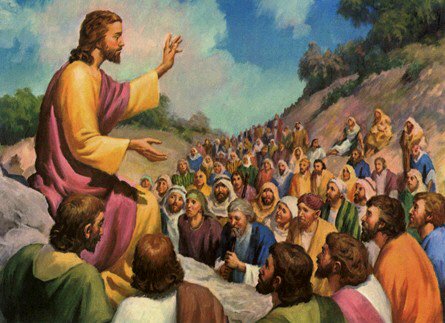
jesus_teachingAs Jesus finishes the Sermon on the Mount (Matt. 5-7) he offers some practical advice concerning his teachings.  He says that anyone who hears his words and does them is like a wise man that built his house on a rock.  Do we all know what happens next?  The rain fell, the floods came, and the winds blew, but the house did not move.  To not heed the word of Jesus is to be the foolish man who build his house on the sand; great was the fall of it.  Continue reading

The Importance of the Resurrection

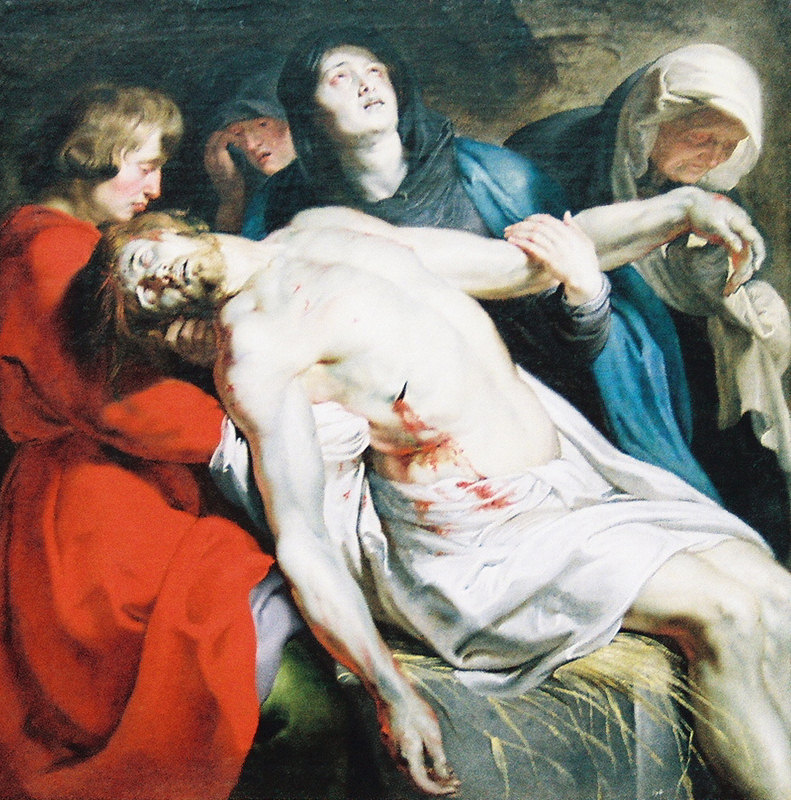
Jesus, resurrectionThere was a time I wondered why so much emphasis was placed on the resurrection.  Jesus died on the cross as the all-sufficient sacrifice for the sins of the world.  Even if there had been no resurrection, his sacrificial death would have brought salvation; what could be more important than that?

The blood of Jesus was a more excellent sacrifice than that of bulls, sheep and birds.  His death on the cross brought an end to the temple sacrifice system.  The entire Gospel pivots around the cross.  It is the universal symbol of Christianity.  But the implications of resurrection are equally powerful, a fact that I can now appreciate as well.  Continue reading

Parable of the Sower (Fling the Gospel)

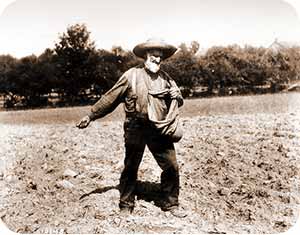
sowing_seedsIn Mark chp 4, one of the parables Jesus shares is the Parable of the Sower.  If you didn’t just click the link to Mark 4, it may be that you know this parable well.  I hope you either know this story already, or at least take the time to read it now.  After telling this particular parable, Jesus goes on to explain its meaning.  The seed is the gospel, and what happens illustrates many things that could happen to those who hear the gospel shared.  What I want to foucs on for a moment is exactly what Jesus meant by “went out to sow.” Continue reading

On the Other Hand (Jesus is God)

Therefore, just as sin came into the world through one man, and death through sin, and so death spread to all men because all sinned—  for sin indeed was in the world before the law was given, but sin is not counted where there is no law.  Yet death reigned from Adam to Moses, even over those whose sinning was not like the transgression of Adam, who was a type of the one who was to come.

But the free gift is not like the trespass. For if many died through one man’s trespass, much more have the grace of God and the free gift by the grace of that one man Jesus Christ abounded for many.  And the free gift is not like the result of that one man’s sin. For the judgment following one trespass brought condemnation, but the free gift following many trespasses brought justification.  For if, because of one man’s trespass, death reigned through that one man, much more will those who receive the abundance of grace and the free gift of righteousness reign in life through the one man Jesus Christ.  -Romans 5: 12-17

In some ways, Jesus is like Adam. By one man’s transgression, sin entered the world.  And by one man’s righteousness, victory over sin entered the world.  Adam and Jesus are alike in that both are a type of “first man.”  At the same time, they are total opposites if you think about it.  Adam was the first man to sin; Jesus was the first man to live without sin.  Continue reading

Discussions That Are Academic

debateThere are some discussions/debates that are purely academic in nature, meaning that they have no real bearing on anything practical.  Is Superman strong enough to beat up the Incredible Hulk?  It doesn’t matter who wins the debate, there is no practical application for the results.  Continue reading