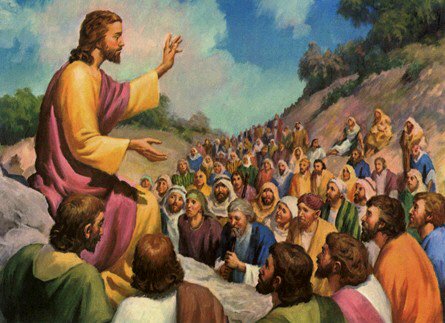
 Jesus gave many different analogies of what the Kingdom of God is like. In Matthew 25 we read the parable of the talents. After he finishes this parable, he goes on to describe the final judgement. Earlier in chp. 25 is the parable of the wise and foolish virgins, which teaches us to always be prepared. We do not know the day and hour of his return; but he will return. The parable of the talents is a lesson to believers to take good care of what has been entrusted to them. Continue reading
Category Archives: Theology
Does anyone know who Jesus is?
I was watching this video on Who Jesus Is and one thought in particular came to mind. It shouldn’t surprise us that many people have no idea who Jesus is, or even that they don’t know exactly what they believe. Ask the typical person on the street about Jesus, and you’ll always get answers like “He was a pretty cool guy,” or “He was a wise teacher, but he’s not my savior,” or maybe even “I don’t believe there was any such person.” Most people believe he existed, but not that he was the Son of God or even that he meant to start Christianity. But like I said, we shouldn’t be surprised by any of these answers. Continue reading
The Greatest Commandment
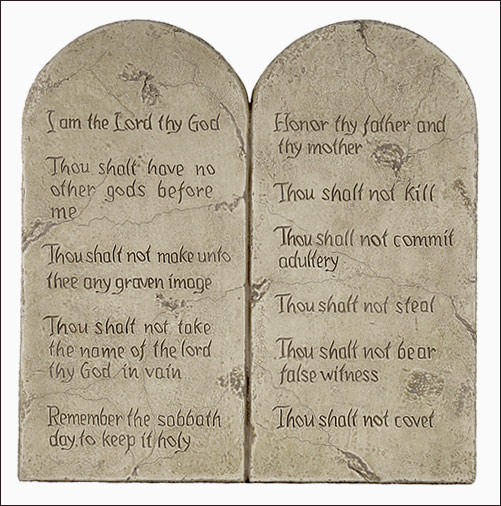 In the Old Testament, God gave Moses the Law so that the Hebrews could be His people and He could be their God. Most people are familiar with the 10 Commandments, but there were many others. You can read page after page in Leviticus and Deuteronomy about what to do if your bull accidentally kills one of your neighbors sheep and other such unlikely events. Many laws were simply about calling the Hebrews out to be different from the culture they lived in. Every now and then, some well-meaning Bible teacher wanders into the Levitical law and comes out preaching a sermon about how God does not want us to eat catfish. Some people make the argument that it’s all impossible to understand, and that we could never keep all of the law. That conclusion would be exactly the correct one to reach. Continue reading
Pornography and Masturbation
Mark Driscoll, of Mars Hill Church in Seattle, is publishing a book online about pornography and masturbation. Each week a new chapter is added, which you can read online and/or download a PDF. The first five chapters are already available at Porn Again Christian, where you can also read a table of contents that lists the dates of upcoming chapters. Continue reading
A Scriptural Perspective on Economic Collapse and Financial Bailout
 We live in the richest nation on earth. It may be borrowed money, and we may be about to pay the piper for it, but Americans are simply the wealthiest society ever in history. We currently consume over half of the world’s natural resources. The poverty line in the United States is higher than the per capita income of many nations. My dog drinks cleaner water than about half of the world’s children. We spent more money last year on ice cream than NASA spent in the entire space program. That is the beauty of capitalism. The revenues generated go back into fueling the system. Carl Marx predicted capitalism would destroy itself, but you see, greed makes it work. Our greed drives us to work harder, put in more hours, educate ourselves to get higher positions, etc. And what do we do with all of that additional hard-earned cash? WE SPEND IT, creating jobs and providing increasing salaries for our friends and neighbors. So what went wrong? Continue reading
New Page: The Best Of…
I set out to make a short list of essential posts, my list of personal and reader favorites from all the material found on The Master’s Table. Writing a “short list” almost proved too great a task for me. The new page “Best Of” is sort of an anthology of my work here on this blog. I don’t expect anyone to go back and read each post, but the 18 posts listed almost form a working theology of everything I believe. Some of these probably deserve a repost, and I will actually be looking over some of them as I prepare sermon material in the near future.
Mom’s Buttermilk Biscuits (Romans 8:28 style)
 Here’s a very good post from back in the day (April 2008) when my blog didn’t have any readers. The premise is that understanding Romans 8:28 is a lot like making biscuits. This is kinda’ like shopping for groceries; don’t read this if you’re already hungry.
“And we know that for those who love God, all things work together for good, for those who are called according to his purpose.” (ESV) Continue reading
Was Jesus a Radical?
The simple answer is yes. Jesus was radical in his ministry and teachings. He questioned the rulers of the Jewish faith, he threw people out of the temple, he pronounced woe to the scribes and Pharisees, he performed healings and miracles on the Sabbath, his disciples did not fast, and even ate without washing their hands. His whole Sermon on the Mount turned the Jewish traditions and laws seemingly upside down. The simple answer is that Jesus was a radical; however, I don’t believe it’s that simple. Continue reading
I Hate Theology.
No, I’m not saying that I hate theology. “I Hate Theology” is the title of an essay that has been reposted at Internet Monk, and I got the chance to read for the first time. This is a link to the original post, here is an excerpt that gets to the heart of the message:
I hate this, and I am not ashamed to say so. Christ didn’t call theologians, he called disciples. Let’s follow Jesus, not just talk about the two natures. He didn’t establish a seminary or a library, but a church, which is a pretty down and dirty business that does a lot more than just stare at its confessions in wondrous rapture and awe. He didn’t give the great debate assignment, but the great commission. We’re on mission with a God who is doing great things in history. Or are we? Some of us are theologizing about ministry so much that we appear to be undermining ministry itself. It’s a great commission to make disciples of all nations, not a great commotion about who can be more literal about the elements of the Lord’s Supper.
I’ve written a lot lately about being the salt and the light, and I’m probably not done yet. This is what iMonk is saying; you can debate and discuss all the things that ministry should be and do, but then someone still has to do them. Discussing the salt of the earth and being salty are not the same thing. Jesus actually mentions this. Telling someone to go their way and be fed is not the same as feeding them.
This is just one point iMonk makes in his essay. You really should read the whole thing, and don’t get mad too quickly. It might not be what you think it is (the whole book by its cover sort of thing). I listen to a lot of preachers, I read lots of blogs. Very few things you hear or read are worth putting into practice in your everyday life. I’m suggesting this is one of them.
Who Does God Call?
 In the first chapter of Mark (I happen to be leading a study of Mark) Jesus begins to call his first disciples. Jesus had many followers, but from those he called out 12 to be his “inner circle” if you will. In verses 16-20 he calls first Simon (Peter) and Andrew, then James and John. All 4 of these men were fishermen. This was not the most respected vocation in first century Israel. Fishermen worked long hours, spent a lot of time away from home and family, and they, well to be honest, stank. Fish stink, guys that spend a lot of time with them also stink. It was hard work, and while you could make a living at it, a fisherman would never really “be somebody.”
In Mark chp. 2 Jesus calls Levi (Matthew). He was a tax collector. He may have had more education than a fisherman, and would have definitely had more money. Most were crooked however, so he still would not have had a lot of friends. If he did, they were also crooks and/or tax collectors. We don’t know as much about some of the other disciples. Luke was not one of the 12, but he was obviously hanging around. Remember that Jesus had other followers and students besides the 12. If Luke was not following Jesus from place to place during his ministry, we know for sure that he was very much involved in the formation of the early church. Luke was physician. This was a guy that was not only educated, he would have been respected in the community. So what am I getting at?
God calls all types of people into his service. There is not a Christian type, but he invites all types to become Christian, then uses whatever they bring with them to the table to further his kingdom and spread the gospel. In Luke 8, we find out that many women were not only following Jesus, but supporting his ministry financially. Luke does not neglect to list some names for us. And just to top off the list, one of the first miracles performed by Jesus was healing Simon’s mother-in-law (Mark 1). There’s only one way to get a mother-in-law; it’s a small detail, but we learn that Simon was married. God calls into his service the educated and the illiterate; the single and the married; men and women; those respected by the community and those disrespected. God is not interested in our ability, but in our availability.
One more thing: Go back to Exodus chp 3 and see what happens when God calls someone who is not interested. After God speaks to Moses from the burning bush, Moses’ first response is “Who am I to go before Pharaoh?” God answers he will be with him. In chp 4 Moses questions if the people will believe God spoke to him. Moses complains he is not a good speaker. He finally comes right out and asks God to please send someone else. By this time God is angry with Moses. We are the body of Christ; he has already done the hard stuff. We need to be willing to respond when he calls us. And there is no one that he cannot use, no matter how many excuses we can come up with. Let’s be the salt and the light people.
 The Master's Table
