Romans 8:28 -or- Mom’s Buttermilk Biscuits

buscuits“And we know that for those who love God, all things work together for good, for those who are called according to his purpose.” (ESV)

That’s not exactly how I first memorized that verse 20 years ago in the KJV, but it’s close. Romans 8:28 is one of those verses that can easily be misunderstood and/or wrongly interpreted. What does the verse not say? It does not say everything that happens will be good. It does not say that. All things that happen work together for good. It’s not the same thing. Some things that happen in life are great. We can see the blessing in them right off. Some things are painful, traumatic, or sorrowful, and we rely on God to know what he’s doing and see us through. Most days fall into the category of ordinary. They just get lumped into the pile of just another day. But God uses every event – good, bad, and whatever – to our ultimate benefit. Think of Romans 8:28 like baking biscuits. Continue reading

Expositional Preaching

Internet Monk has brought up an archived article about correctly reading and interpreting scripture. Magic books, grocery lists and silent messiahs gives 3 examples of how scripture can be misused in a sermon or lesson. It’s a good read, and I recommend it. As I looked over it again, and the comments, I found that I had commented twice in the thread. One of them apparently just after I had finished a book on expositional preaching. A good expository sermon is one where the text is read, a few minutes is given to exegesis, and then application is made. Reading my own comments from 2005 reminded me of how strongly I once believed in this. I didn’t have a blog at the time, and good exposition fits well into the theme of Clark Bunch’s Weblog*. Here is the bulk of that comment: Continue reading

The Difference Jesus Makes

We could list many things Jesus makes a difference in: finances, vocation, plans for the future, etc. I want to point out the difference Jesus makes in us.

Paul writes in 2 Corinthians 5:17 “If anyone is in Christ, he is a new creation. Old things are passed away, behold the new has come.” (ESV) When a person comes to faith in Jesus Christ, he or she is just not the same person anymore. I don’t often use the term conversion, but that’s what happens. Saving knowledge of Christ changes our mind, heart and spirit from what they were into something… new. Look up the third chapter of Colossians. Verses 1-17 are about this new self. Verse 2 says to “set your mind on things that are above…” When we change from old self to new self, other people will be able to see a difference. It might not be Christian people, either. It could be that old friends notice the difference in attitude, action and speech. Continue reading

Isaiah 1

I just read a very good (if not somewhat lengthy) post here on Isaiah Chp. 1. I’ve preached more than once on this text. It’s a harsh reprimand for people that “play church” by doing all the churchy things, but not worshiping in spirit and in truth. If you’ve been reading my weblog, you know how I feel about that. Isaiah mentions all the things they’re doing; the stuff God commanded. But the problem is they have innocent blood on their hands. They live in their sins, and act out the motions, but are not changed people inside. God (through Isaiah) finally tells them to stop doing evil, and learn to do good. Jesus quotes Isaiah when he says “this people love me with their lips, but their heart is far from me.” In Deuteronomy, God says to “circumcise your hearts.” Replace everything in the Isaiah 1 list with singing hymns, praise and worship choruses, powerpoint slides, taking collection, etc. Jesus talked to the Samaritan woman about worshiping in spirit and in truth. Isaiah says that true religion is to visit the widow and the fatherless, an idea echoed in the New Testament. Worship is an outward extension of what’s inside of us, not something we can rehearse until we get it right.

Ben Stein’s Expelled

Ben Stein has a movie coming out April 18th titled “Expelled: No Intelligence Allowed” which criticizes the way proponents of intelligent design has been laughed off, discriminated against, or ignored. Many Christians are optimistic this will open doors to discussions of intelligent design, creation, and theism or at least get people asking the right questions. I don’t know if this secular movie creates an opportunity for sharing the gospel or not, but many think it will. It at least challenges closed minded thinking that any idea other than evolution is laughable and that the book on that subject has long been shut. Here is an excerpt of a letter from Chris Bougie sent out to campus ministry leaders everywhere:

The evangelistic opportunity we're referring to will
be created by the release of the cutting-edge,
controversial documentary by the well-known and
brilliant Ben Stein.   Continue reading 

Sowing Gospel seeds

I’ve written before about gardening, and I’m getting excited because it’s almost that time. I enjoyed the hours last summer I put in, but reaping the harvest was also nice. Ministry is not always like that. There are times we see immediate results, or perhaps see results of our efforts at length, but not always. I teach at a Christian school, and some of our students will leave us soon and never return. Many will graduate, and keep in touch for a while. After a year or two of college they get busy with new friends and activities, and that’s the normal way it should be. Some of our students will simply not return to us next year, either enrolling in public school or in some cases, a different private school. At any rate, in most cases we will not see the end result of our work in ministry. I am definately not the same person I was in high school, and realize that our students today are not the mature adults that (we hope) they will grow into. Paul said that he plants, another waters, but it is God who gives the increase. Our job is to sow the seeds of the Gospel, then let nature take it’s course. Sometimes we will see immediate fruit from our labor. Other times the “fruit” doesn’t come about until years later. We’ve all heard stories of an adult, perhaps with children of their own, introducing themselves as Sunday school or youth group members from decades past. In Jesus’s parable of the sower, he talks a lot about the type of soil, but seems to automatically assume that good seed is being sown. In his example, good seed is a given. When we sow good seeds of the Gospel message (and live the life that bears witness of the Gospel) it is not up to us to make the seeds grow. We can’t artificially speed up the maturation process. In my garden, I know the number of days each fruit or vegetable is expected to take to reach maturity. God’s time table often does not follow our guidelines, so instead of making demands, we really need to just move on planting seeds. The Bible teaches that the Word will not return void. We sow in the faith that the one who created seeds, soil, sun and rain knows what he’s doing.

Christ as foolishness

Is it logical/illogical to believe/not believe in God?

The Bible itself, ladies and gentlemen, says that based on logic, reason and science, it is foolishness to believe in the cross of Christ. Is it logical to believe that one man dying on a Roman cross as thousands of others did can make a bit of difference what happens to me when I die 2,000+ years later? No. Do I believe it makes a difference? I’m betting my afterlife on it.

Paul’s letter we call I Corinthians says that the preaching of the cross is foolishness.  That’s a little KJVish, but it still comes out “folly” in the ESV.  It’s okay, it means foolish.  It actually says in Chp 1 v. 18 “…folly to those who are perishing, but to us who are being saved it is the power of God.”  We know that it sounds a little foolish to believe in the power of the cross; it’s because God designed his plan of salvation that way.  To “confound the wise of the world.”  Verse 21 says “For since, in the wisdom of God, the world did not know God through wisdom, it pleased God through the folly of what we preach to save those who believe.”  Saving knowledge of Christ requires a faith outside of reasoning and logic.  If we could prove through geometric proofs and scientific findings that God is real, exists, created and maintains the universe, then anyone open to reason would have to believe it.  Never gonna’ happen, folks.  Because in God’s plan, he’s looking for the faithful; people faithful to Him no matter what, including when having faith doesn’t make sense.  Verse 27: “But God chose what is foolish in the world to shame the wise; God chose what is weak in the world to shame the strong.”  Christ’s death on the cross looks like defeat to the world; logic tells you that Christ’s work is done, his ministry cut short on Calvary.  But in Christ’s weakness, the plan of God for salvation was carried out.  If Jesus had appeared to Pilate with a fanfare of trumpets and flashes of lightning and said to his face “I told you so,” he would have had no choice but to believe.  God never leaves us with no choice.  He will save those of faith, and the unfaithful who rely on their own understanding will perish.

I think it’s reasonable to believe that God might exist, and based on my own research and experience, I believe the Christian God of the Bible is the right one (thanks internet monk).  It is illogical to say that no god could possibly exist.  But at some point the debate over reason and logic no longer applies, as the God of the universe exists beyond our ability to reason or even imagine.

He cannot save himself.

So also the chief priests, with the scribes and elders, mocked him, saying, “He saved others; he cannot save himself. He is the King of Israel; let him come down now from the cross and we will believe him. Matthew 27:41-42 (ESV)

As Jesus hung on the cross, obedient to the Father’s will even to the point of death, the crowds and the accusers still mocked him. Matthew goes on to say that the thieves acted this same way. In Luke’s account, one of them even says to him “Are you not the Christ? Save yourself, and us.” I am drawn to that statement “He cannot save himself.” Yes, he could.

The night before, in the Garden of Gethsemane, Jesus prayed to God the Father. He knew what lie ahead, and he wrestled through blood, sweat and tears as he prayed. Even while he was tempted not to go forward with God’s plan (being tempted is not a sin) he prayed for the Father’s will to be done. Jesus could have saved himself that night, by not waiting for the guards to come and arrest him. He had foretold that Judas would betray him. Jesus knew when and where, and awaited the arrival of the Roman soldiers and his betrayer. He had escaped angry mobs before, but did not this time. Not because he could not, because God did not will it.

At the beginning of his ministry, Jesus was tempted by Satan. In all three instances, what was being offered was an easy way out. Jesus had been fasting, so in his hunger he was tempted to turn stone into bread. He responded with scripture. He was tempted to throw himself from a high place, and thus summon legions of angels. He again quoted scripture, responding with God’s truth. Satan offered Jesus the kingdoms of this world if he would fall down and worship him. All three cases were the easy way out. If he would just accept Satan’s offer, he could reign right now, not years later after hard work and death on the cross. He was offered a short cut, not the long, slow plan that God had designed. He was offered instant gratification, a temptation we Americans know all too well. Jesus, however, took the long, slow, hard way that God had designed to bring salvation to mankind. Remember when Peter drew his sword in the garden, cutting off one man’s ear? Jesus response to “Get behind me Satan!” makes sense when you think about how Peter was offering an easy way out. That was what Satan had offered three times. Taking up the sword, battling their way out of the garden, Jesus could have saved himself. But that was not what he came to do. He came to die.

Jesus could have saved himself and come down from the cross – but it would have cost the lives of every Christian believer that has been since. The Bible clearly teaches that he came into the world to save sinners. He was offering himself as a sacrifice. He came to save us, not himself. He plainly states that no one can take his life, but that he gives it freely. His life was the ransom for many, the price of our redemption. Those same accusers that mocked him with “He cannot save himself,” Jesus was dying to save. He prayed a prayer of intersession for the very people crucifying him that day. “Father forgive them, for they know not what they do.” Christ led by example; he didn’t just tell us to love our enemies, and pray for those who use us. He did it himself with his dying breath.

I can’t stand to be mocked. I’m one of those people that has to always prove that I am right. Jesus example on the cross only illustrates how far each of us fall short of righteousness. He perfectly lived out the commands to love others, to think more of others than of self, to pray for those who use, and to bless those that curse. I could never have been that righteous in those circumstances I’m sure. None of us could. It’s a good thing we don’t have to; Christ did it for us. He is our righteousness.

Holy Week

How many people will sit in churches on Easter Sunday and listen to a good sermon about the crucifixion of Jesus?  Don’t get me wrong; if you’ve read my previous posts, it’s certainly a good thing to hear the crucifixion being preached in the pulpit of any church.  Not every church in America has that anymore, Easter Sunday or otherwise.  But most every Christian that celebrates Easter is also familar with Palm Sunday.  Nearly as many know about Good Friday.  This entire week between Palm Sunday and Easter is known in many traditions as Holy Week, but it is not celebrated by as many Christian worshipers as it once was.

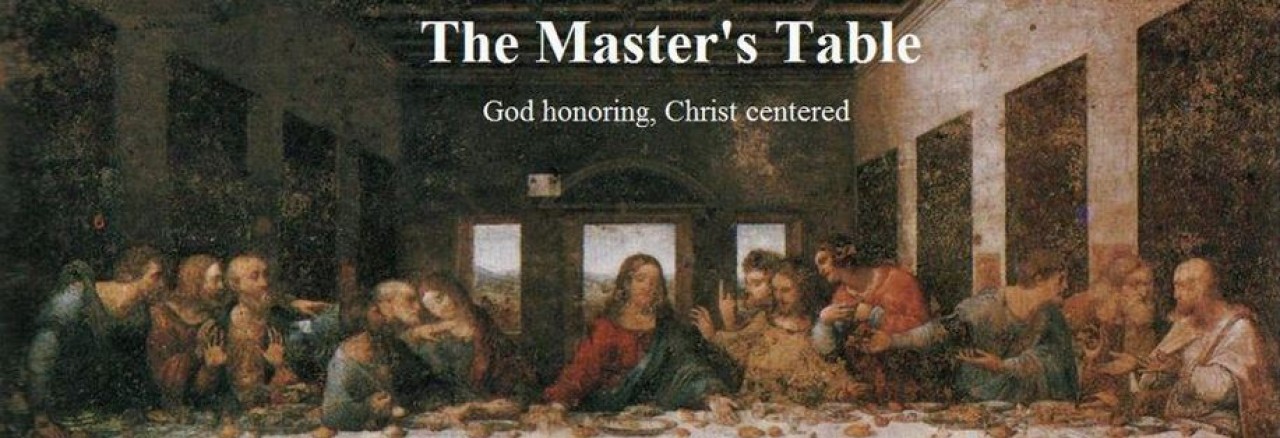
Palm Sunday reenacts the triumpful entry, the day Jesus rode into Jeruselum to shouts of “Hosanna,” or in effect “Hallelujah!”  Many were expecting him to proclaim himself Messiah, take the throne, and begin his reign as the king of the Jews.  By the end of the week, many of those same Jews who cried Hosanna would cry out “Crucify him” before Pontius Pilate.  On the Christian calendar, each day of this week has a title and special significance.  It was during this week that Jesus shared what we now know as the last supper with his disciples.  He took the Passover meal, the rememberance of how the sacrifice lamb saved the Hebrews while in Egypt from God’s judgement, and gave it new meaning.  He told his followers to still break the bread and take the cup, but to do it in rememberance of him.  This was the week that he washed the disciples feet as a lesson of humility and servanthood.  And in the Garden of Geseminee he was betrayed by Judas Iscariot.  He was tried falsely by Pilate, and crucified on what we know as Good Friday.  All of these events before Easter Sunday, though leading up to that climax.

See, what I’m saying is that Easter isn’t about the crucifixion of Jesus.  Easter celebrates the resurrection of Jesus from the dead.  Holy Week is the time to remember his last supper, lessons in the vineyard, final words to his followers, and the events of his death and burial.  Saturday is the time to be sad; it seems evil has triumphed, Death has been victorious, the disciples are scattered, and Mary is mourning the death of her son.  On Sunday, it all changes.  The captive of Death is set free, Jesus rises in newness of life, and hope is given that as Jesus is raised so shall those of us who die in Christ be raised.  Easter celebrates the resurrecting power of God, who made all things in the universe which obey Him.  Easter Sunday is about hope, life, redemption, reward, and in short all things being made new.  Many others before and after Jesus claimed to be the Messiah, but he is the only one sitting at the right hand of God who ever lives to make intercession.

I know why it happens.  Many marginal Christian believers will come to church that day who will not be back until either Christmas or perhaps next Easter.  The pressure is on to get the Gospel out while the chance is there.  But the rest of us need to remember that Easter is not about the end of life, but the beginning of resurrected life.  It is the time to celebrate, and it’s why we meet on Sunday and not the Old Testament Sabbath.  Be gloomy on Saturday, but don’t forget that joy comes in the morning.  (And if you know about sunrise service, joy comes very early in the morning.)

The Problem with Religion

The problem with religion is that it’s easier than following Jesus. I know the title is a little misleading, and perhaps a few disappointed atheists are hitting the back button right now. And to keep this essay manageable, let’s deal only with the religion of Christianity being easier than Jesus, not all of the religions, although I think the same premise is still true.

How can I say that Christianity is not the same as following Jesus? Because there are huge churches and many very popular pastors and leaders in this country promoting the Christian religion while almost totally ignoring Christ. When sermons are preached on even Palm Sunday and Easter that do not mention sin, the cross, the blood, or even the fact that Jesus died, then we are not teaching the Gospel that Paul instructed us not to leave. His goal was to know Christ and Him crucified (1 Cor. 2:2) and nothing else was that important. The shed blood of Jesus Christ is the most important thing we have to share with the world we live in, and for the most part the church in the United States is not teaching Christ and His crucifixion.

A good sermon series on marriage is beneficial from time to time to help couples understand the Biblical precepts of marriage. A youth group that meets on a regular basis, attends concerts, and makes trips together gives kids and teen-aged youth healthy alternatives to being on the street, roving the mall, or cruising. But if thousands of members are involved in hundreds of activities, and they never hear about how Christ died to save sinners we have failed to do God’s work. A million activities offered to the community only make the Church a social gathering. A long list of rules to follow, or principles for living will only create legalism. Legalists are very religious; just look at the Pharisees in Jesus’s day. But Jesus reprimanded them for keeping the letter of the law while missing the spirit of the law.

I’ll probably make enemies quick if I start naming names, but let me throw out just 2 that illustrate the point I’m making. John Piper is known for being radically God-centered. He teaches that the very existence of the universe points towards a God that deserves honor and glory. Piper’s ministry is so God-centered that I am challenged to live up to its standards. Now consider the ministry of Joel Osteen. I’m not making a personal attack on his character; he seems like a great guy. But in his church, his interviews on television and in print, his televised program, and his books (best sellers on the New York Times list) there is little glory and honor directed toward Jesus. It’s motivational. It makes you feel great about yourself. But what each individual is meant to do is reflect God’s glory, and there is less and less of that teaching in our world.

John the Baptist, after Jesus began his public ministry, said that “He must increase and I must decrease.” The problem with religion is that it’s often about what we can do for ourselves, not about what Christ can do in us or through us. When the rich young ruler told Jesus he had kept all the commandments from his youth, Jesus said he must sell all that he had and follow. When it came time to deny self and rely totally on Jesus Christ, he left very sad. You see he came to Christ with religion – Here’s what I did. What he needed was Christ. The bad news for “religious” people, is that it doesn’t matter what you’ve done; it will NEVER be enough. The good news is (the Gospel message) is that Christ has already done it. We can’t do it, but we don’t have to. Jesus Christ did enough on Calvary to satisfy God, which is good for us because we never could anyway.

Jesus said some things in His ministry that even he described as hard. Jesus I think was testing the rich young ruler to give up depending on what he had made and depend entirely on Him. Jesus said on one occasion that one must hate even father and mother to be his followers. Rather than explain to a congregation example by hyperbole, it is easier to teach 5 principles for better finances or 10 steps to a happier you. It is easier to be religious, to attend church service, to follow a long list of rules, than to follow Jesus and be conformed to His image. To tell someone they must take up their cross, or die daily, those things are hard. It is easier to teach tithing 10% than honoring God with all you have. Religion is easier than Jesus.