There shall come forth a shoot from the stump of Jesse,
and a branch from his roots shall bear fruit.
2 And the Spirit of the Lord shall rest upon him,
the Spirit of wisdom and understanding,
the Spirit of counsel and might,
the Spirit of knowledge and the fear of the Lord.
3 And his delight shall be in the fear of the Lord.
He shall not judge by what his eyes see,
or decide disputes by what his ears hear,
4 but with righteousness he shall judge the poor,
and decide with equity for the meek of the earth;
and he shall strike the earth with the rod of his mouth,
and with the breath of his lips he shall kill the wicked.
5 Righteousness shall be the belt of his waist,
and faithfulness the belt of his loins.
-Isaiah 11:1-5
Chapter 11 begins with another prophecy that Messiah will come and another identifier, that he will be a descendant of Jesse (David’s father, making him heir to the throne of David). The next several verses tell us about his reign. Continue reading
 Every year during Advent we look at a few of the Old Testament prophecies concerning the Messiah. I try to make sure to vary the scriptures each year, from Genesis, Deuteronomy, Psalms, Hosea, Jeremiah and others, not just revist the well-known, often quoted ones found in Isaiah. There is more detail and description of the Messiah than the fact that he will be born but let’s start at the beginning.
  Here is
  Why do you believe what you believe? Are you Baptist, Methodist or Presbyterian and more importantly why or why not? Are these things you thought through systematically or do you still go to the same church as your parents? Within your denomination, are you conservative, liberal or moderate? What are your thoughts on election (Romans 8 not Sanders vs. Biden)? These questions are rhetorical, something to think about, but the one I really want to address today is this: Are your answers to these questions today the same as they would have been 10 or 20 years ago? How many iterations of systematic theology did you go through to get where you are today?
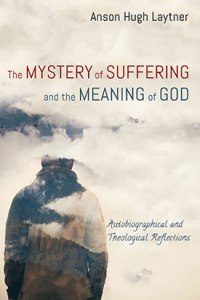 Anson Hugh Laytner is a retired Jewish rabbi. One’s initial reaction might be “This is not Christian theology.” Firstly, Laytner anticipates a Jewish and Christian audience. He describes himself as a skeptical but spiritual person thus the intended audience may go beyond Christian or Jewish to include anyone struggling with questions and looking for answers. More to the point in this context, Christian theology grew out of Hebrew history, ritual, literature and Jewish theology in the first century. Laytner is aware of the relationship. As he begins a section describing Radical Monotheism he mentions the Tanakh and then inserts in parenthesis “the Jewish Bible, similar to the Christian Old Testament.” The search for meaning and understanding is practically universal among people everywhere and Laytner’s process may benefit any reader wrestling with the same issues.
 A short Facebook exchange this morning led me to search The Master’s Table for references to hell. The only post with hell in the title was a link to a sermon on the Unity website. Here is the full text of that sermon, preached at Unity Baptist Church on October 4, 2015. The scripture text is
 The Master's Table