Full of God

The goal of Christians is to be conformed to the image of Christ.  The reason we ask “What would Jesus do?” is to put ourselves in the right frame of mind to be Christ-like in our decision making (Philippians 2).  We know from reading the Gospels and the letters of Paul that we are to think like Christ, to have the heart and mind of a servant, to be humble, to love as Christ loved, and so forth.  Like John the Baptist we must make less of ourselves and more of Christ.  Realizing that we can never become perfectly like Christ, the goal is to continuously work at it.  As we get closer and closer, others should be able to see Christ in us.  They were called Christians first at Antioch why?  Because the followers of Christ at Antioch sounded and acted like the one they were following.

Ephesians 3 mentions one way to be Christ-like, which I had never noticed before.  Read Colossians 1, noting verse 19 that says “For in him [Christ] all the fullness of God was pleased to dwell…”  Jesus was incarnate deity, the person of God robed in a body of flesh.  One aspect of Jesus Christ is that he was full of God.  Now look at Ephesians 3, a short chapter in which Paul reveals the mystery of the Gospel.  In particular:

For this reason I bow my knees before the Father, from whom every family in heaven and on earth is named, that according to the riches of his glory he may grant you to be strengthened with power through his Spirit in your inner being, so that Christ may dwell in your hearts through faith—that you, being rooted and grounded in love, may have strength to comprehend with all the saints what is the breadth and length and height and depth, and to know the love of Christ that surpasses knowledge, that you may be filled with all the fullness of God.  -Ephesians 3:14-19 ESV

There are many things we can choose to fill ourselves with; Paul says we should be full of God.

Unanswered Prayer

One of the very first things I do each day is read Our Daily Bread.  Actually, I follow along while listening to Les Lamborn read it to me.  Earlier this week I was disappointed when I took issue with their theology for the first time.  While it’s no big surprise you get misguided theology from listening to country music (I thank God for unanswered prayers) I expected more from Our Daily Bread.  The devotions printed/posted by RBC Ministries are from a collaboration of authors.  Anne Cetas wrote the daily devotion for June 10th; here’s an excerpt:

One of my biggest struggles is unanswered prayer. Maybe you can relate. You ask God to rescue a friend from addiction, to grant salvation to a loved one, to heal a sick child, to mend a relationship. All these things you think must be God’s will. For years you pray. But you hear nothing back from Him and you see no results.

Read the entire post here.   Continue reading →

The Read and Share File

The Six Commandments?  A federal judge suggests that public displays of the 10 commandments can be made constitutional by removing the four that directly mention God or the Sabbath.  More here.

Tim Challies comments on The State of Preaching. Notice what he says about the Gospel.

Ridley Scott (director of Alien and it’s prequel Prometheus) says he plans to direct a Moses film. Scott is skeptical of all religion, calling it “the source of all evil.”

Chaplain Mike, of Internet Monk, takes a break from reformed theology and reminds us he has a sense of humor in Signs You May Have Hit the Wall.

I enjoy celebrating a good *blogiversary, and  Tall Skinny Kiwi just turned nine. 

It’s apparently been around for a while, but I just saw the Blue Like Jazz trailer this weekend (before watching MIB3).

…

*There is some disagreement on spelling.  I prefer blogoversary, the same way we spell blogosphere.  Blogiversary uses the letter i presumably to look more like anniversary; I used the same spelling in this post that Andrew used.  I’m probably overthinking it, one of the marks of a good blogger.

The Internet for Church Update

This article, from May 16, describes how email, blogging and social media are useful to the church.  I suggested these are tools, resources, that we cannot afford to ignore in a world that increasing connects this way.

Grey Matter Research and Consulting released this information on May 30, providing many useful stats to support my conclusions, such as:

In the past 30 days:

  • 21.5 million adults have visited the website of their own place of worship
  • 10.4 million adults regularly attend worship, but visited the website of a place of worship other than their own
  • 1.6 million adults do not attend worship services regularly, but visited the website of a place of worship

The numbers are more impressive when viewed over the past 6 months and then the past year.  The bottom line: 17 million Americans who do not attend church regularly have visited a church website in the past year.  Props to Paul Wilkinson (Thinking Out Loud) and his Link Lists for the insight.

Note: this is an update to a previous entry.

When the Church Does Not Understand the Gospel

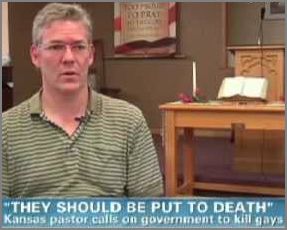
We’ve all seen the same news stories, right?  A pastor in North Carolina (Charles Worley) suggests we put all the “gays” inside an electric fence, provide food and water, and wait for them to die out.  Another pastor in Kansas sites Old Testament scripture that homosexuals should be stoned to death.  And then there’s the kid with the questionable song lyrics, but let’s leave him to his parents.  In the first place he is a minor; secondly, and more importantly, he is probably a reflection of his parents’ world view and has not yet developed his own.

The internet can give a national or even global voice to writers, preachers, etc. that are in otherwise obscure places (such as myself).  What I think we’re really dealing with in the North Carolina story is culture shock.  Fundamentalist preachers in the Carolina’s, Georgia, Alabama, Mississippi, Tennessee, Kentucky and so forth probably say a hundred things every week that would shock people, including Christians, from other backgrounds.  I can only imagine what would happen if journalists in New York started listening to every fundamentalist, Pentecostal, charismatic or even Southern Baptist sermon from below the Mason-Dixon line each week. Continue reading →

The Read and Share File

This is the Read and Share File, where I share with my readers what I have been reading.  This past week has been busy, this week will continue to be, and I haven’t read much.  But here are a few things:  

When Jesus and his disciples were criticized for not washing their hands, Jesus uses the opportunity to explain what really defiles a person.  It is not what goes into a person (Mark 7) but what comes out a person.  Luke’s version of this story says “Out of the abundance of the heart the mouth speaks.”  This post from Theologigal has a lot to say about what’s in a person’s heart.

Tall Skinny Kiwi lists 10 things he sees happening the the church that I don’t see happening here (in the United States).  It’s about smaller stages in churches and entering people’s homes.  And the Gospel.

Mitt Romney acknowledges that while Mormons and evangelicals have different faiths, the two can work together.  More at Baptist Press.  

At reading the title The Theology of the Chocolate Sampler, I thought something like “Free will allows us to choose each piece, but what’s inside has been predestined.”  Gary Shogren doesn’t go there (thus writing a much better post).

The Internet – Email, Blogging, Social Media – for Church

Chances are that if you were in the “blogging is a waste of time” camp you wouldn’t be reading this one right now.  While I may be preaching to the choir, what I plan to do is share my reasoning on how the Internet is a tool that can be used by churches to support their ministry, build community and share the Gospel.

I have personal friends in real life that have deleted their Facebook accounts because they are a waste of time.  “There’s nothing but junk on there” was the reasoning.  I know Christians that lament having wifi and DSL in their home because it distracts them from studying scripture.  Unplugging your internet is much worse than evangelicals who tossed out their t.v. sets in the 80’s.  Television only works one way; the Internet is a two way street. Continue reading →

Reading 2 Timothy

By modern standards, 2 Timothy 1:8-12 is something of a run-on sentence.  I am going to break my own rule and quote only a portion of the complete thought:

“…who saved us and called us to a holy calling, not because of our works but because of his own purpose and grace…”  2 Tim 1:9

That is the verse I quoted to the church the night I announced my call to preach, and still one of my favorites in all of scripture.  I have just finished reading 2 Timothy, and like Reading 1 Timothy will be sharing some of the more prominent passages.  The format is a little different, and I will be sharing more of my own comments. Continue reading →

Reading 1 Timothy

Timothy was a young pastor being mentored by the Apostle Paul.  Half the books of what we call the New Testament were letters written by Paul, many of them to specific churches (Ephesus, Corinth, Galatia, etc.) but some to individuals, such as Timothy, Titus and Philemon.  1 and 2 Timothy could almost be thought of as early “minister manuals” but there are also instructions for selecting deacons, supporting widows, and to all believers to practice godliness.

1 Timothy is a mere six chapters.  Here is a link to 1 Timothy 1 at ESV Bible.  If you click “listen” a disembodied voice will even read it to you.  At the end of chp 1 simply click “1 Timothy 2” to go on.  Bible Gateway has many different English versions.  (I would rather folks read any version of the Bible than not read at all.)  Below are some of my favorite passages, but I highly recommend the entire book, which can be read in a matter of minutes.  *emphasis in bold are my own

  • The saying is trustworthy and deserving of full acceptance, that Christ Jesus came into the world to save sinners, of whom I am the foremost. But I received mercy for this reason, that in me, as the foremost, Jesus Christ might display his perfect patience as an example to those who were to believe in him for eternal life. To the King of the ages, immortal, invisible, the only God, be honor and glory forever and ever. Amen.  (1 Timothy 1:15-17 ESV) Continue reading →

The Read and Share File

Image is unrelated, but is something I read this week.

Culture war, church culture, shallow Christianity, need for the Gospel – they’re all featured in this post on Internet Monk.

Praying in Jesus’ Name – John Piper offers four “filters” for how to do it right.  Here is a 3 minute clip; you can watch, listen to, or download the full sermon at this link.

This article at 9Marks is interesting, but will perhaps apply to only a very few readers.  Marcus Glover writes a list of ways aspiring pastors can serve their wives now.  Huh?  Once you become a church pastor, there are some things you will miss.  Make sure to engage in those now.

Obama has come out in support of gay marriage.  He supported gay marriage as a state senator, but changed his position to run for U.S. Senate.  So he is now changing back to his original position, in support of gay marriage.  So: why does Obama evolve but Romney flip-flops?  Both men, like many politicians, have changed their views over their political careers.

I recently added Steve Brown etc. to the blogroll, and am anxious to link something.  Here is the latest post, an update to what’s known as the watchmaker argument.  Dr. Rana, author of the post, has a PhD in biochemistry and is the vice president of research and apologetics at Reason to Believe.  The post includes links to that site, as well as Dr. Rana’s recent appearance on Steve Brown’s radio show.

Tall Skinny Kiwi recently insisted he and his family are not living in a commune.  Watch this local news report about Justin Duckworth (not your ordinary bishop) and decide for yourself.

Faith by Hearing is an aggregator of audio resources, including audio books, podcasts and sermons.  Kind of like a blog, but also featuring an extensive and growing collection of audio material.  The archives are divided by topic, speaker, faith tradition and other classifications.  Faith by Hearing is a treasure trove that simply must be explored to fully appreciate.