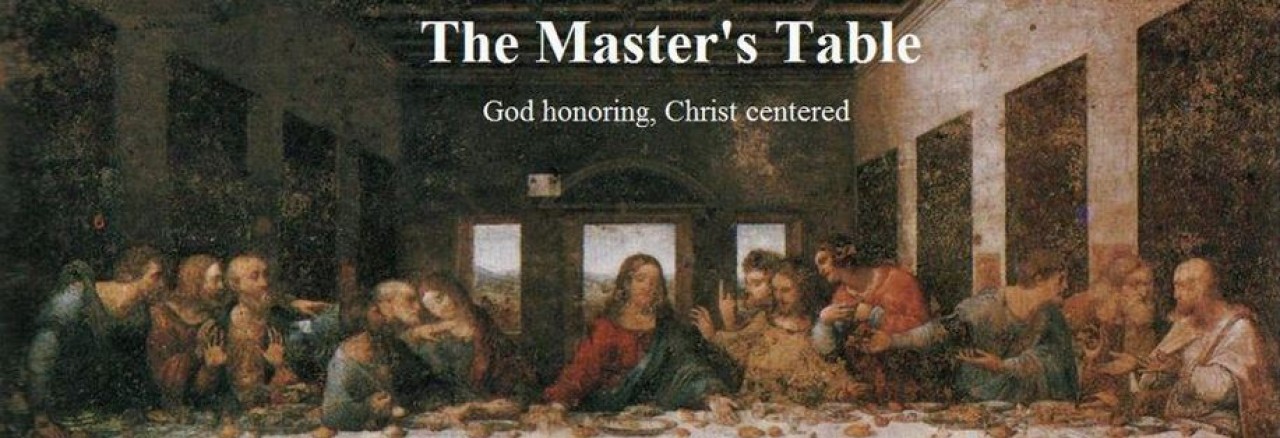
 In the first chapter of Acts, Jesus told the Apostles to wait in Jerusalem for the promise. He then ascended to Heaven to sit at the right hand of God the Father. In Acts 2 they were gathered in one place and the Holy Spirit filled the entire house. Each one filled with the Spirit began to speak in tongues, and they went out into the streets of Jerusalem. This event is known as Pentecost and is still celebrated 50 days after Easter Sunday. Some in the crowd that day objected that the Apostles were merely drunk and Peter responded with a turning point sermon in the history of the church.
Tag Archives: Christianity
Six Years at the Table
 Every cool title I could think of (The Gospel Truth comes to mind) had already been taken and I initially settled for a very generic Clark Bunch’s Weblog. The first post (titled First Blog, whoops) was March 4th, 2008. Over the next few days I published what I considered foundational articles which describe what I believe. Those were way too long; I actually wrote them out on paper, in long hand, before typing them in. Those were the first wobbly steps on a new path. It’s all about the journey.
Happy Monday

Yep, it’s that time of week again. Hopefully it’s nothing a few scripture posters and some funny animals can’t fix. Try to think of it as Post Sunday, Sunday 2.0, or maybe pre-Tuesday. And it that doesn’t work, have a Happy Monday!
Imagine/ Reimagine
 John Lennon’s Imagine is a beautiful song. It has more than a meaningless catchy hook; the music, the molody, the lyrics are beautifully composed. It’s one of those songs that has stood the test of time and continues to move audiences today. (Here’s a link if you must.)
I mentioned it is not meaningless, right? The song is beautiful to listen to but it’s the substance that should offend Christian sensibilities. If an angry atheist were shouting on the street corner that there is no God, we would certainly notice. Perhaps argue with him. But Imagine shares the same message – that without religion the world would be a better place – in a much more palatable form. I enjoy hearing the song even though I disagree with it’s philosophy. Many have probably heard it without listening to it. “Imagine there’s no heaven.” I’d rather not.
I submit for your approval Reimagine.
…
Blogger Flagrant Regard (his first name is Martin, but that’s all I know) has taken what we like about Imagine but asks the listener to do the opposite. Realize there is a heaven to gain, a hell to shun, and that Calvary makes all the difference. Hear the Gospel of Jesus Christ and realize that he is not the problem but the solution. The Gospel is Good News; it is the cure and not the disease.
Please read the backstory in the author’s own words. Props to our friend Paul for sharing.
Christians and Santa Claus
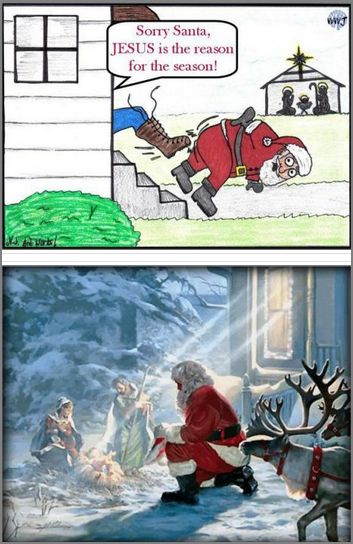 I opened the floor for comments on Santa and got them. I didn’t go out looking for it, but ran across this sermon outline. If you’re looking for a scriptural basis that Santa is from Satan, well there it is. And now for my bit.
Christmas – It’s worth noting to begin with that not all Christians celebrate Christmas. The Christ mass is Roman Catholic in origin, which is enough to cause some Protestants to avoid it. Eastern Orthodoxy originally celebrated the day in January, and few countries using the Julian calendar (such as Ethiopia and Russia) still do. Many of the traditions are clearly not Christian, and some speculate (the history is uncertain) that the December 25th date corresponds to the winter solstice and pagan celebrations. Tree decorating really was a pagan element that Christians “borrowed” for their own celebration. The argument can also be made that there is no scriptural command to celebrate Christ’s birth. Jesus said “This do in remembrance of me” at the Last Supper, but after his birth is recorded in the Gospels there is really no further mention of it. Only two Gospels record the birth of Christ, Matthew and Luke, but all four record his death, burial and resurrection. The incarnation is fundamental to Christian theology, but celebrating Jesus’ birth is not. Continue reading
What We Bring to the Table
 Paul Wilkinson is the author of Thinking Out Loud and Christianity 201. Today he is our guest. (And no, that’s not him in the picture.)
Back on the Labor Day weekend, Clark asked me to consider writing something for his readers here. I was honored, but also confused. What could I possibly bring to The Master’s Table that wouldn’t be the blog equivalent of showing up at Clark’s house and painting graffiti all over his living room walls? I believe this is part of a larger “table” question we should ask ourselves on a regular basis,
What Do I Have to Bring to the Table?
I don’t do a lot of formal meetings in the course of a year, but when they come up, I like to arrive prepared. If there are multiple people involved, sometimes I will say nothing for the first twenty minutes, looking for the idea that’s being missed, the implication that’s not being considered, the parallel to another situation that’s not being remembered. Then I will interject something that I feel is helpful. I want to make a contribution, not simply nod in agreement or call for the vote. Continue reading
Asleep at the Wheel
 We hear a lot these days about texting and driving, but there’s a million ways to not pay attention to the road. You could be talking to a person in the car with you, changing the radio dial, reading; I saw a guy on I-75 in Atlanta shaving with a cordless razor. Have you ever driven on auto pilot? Perhaps you’re deep in thought or just daydreaming, then suddenly realize where you are. If you drive a route routinely you do it without really thinking about it. That will become a problem if something non-routine happens, like a car suddenly breaking or kids running out in the road. Drivers don’t have to be drunk or texting to be zoned out.
1 Peter 5:8 says “Be sober-minded; be watchful. Your adversary the devil prowls around like a roaring lion, seeking someone to devour.” Not living in a drunken stupor is not enough, we have to watchful. We must be vigilant. In chapter 1 Peter tells us to prepare our minds for action. Riding a motorcycle requires more presence of thought driving a car; a few seconds on autopilot could be the end of your trip. Riders are trained to watch further down the road in order to anticipate problems, as well as be aware of what’s going on behind them on the road.
The Church can’t function on auto pilot. Continue reading
Auto Ichthus
 The Ichthus (also Christian fish, Jesus fish) is a symbol of Christianity from the early days of the church. In short, “ΙΧΘΥΣ (Ichthys) is an acronym for ‘Ίησοῦς Χριστός, Θεοῦ Υἱός, Σωτήρ’, (Iēsous Christos,Theou Yios, Sōtēr), which translates into English as ‘Jesus Christ, God’s Son, Savior’ “. -Wikipedia; more here. The symbolism is still used today on everything from youth group t-shirts to church websites. A common usage is the auto decal ichthus, and it is the pro’s and con’s of this phenomenon I wish to examine here.
Some Christian leaders do not believe a public declaration of faith is necessary. If we live our lives as “people of the book” then others will see there is a difference in us. If you arrive early for work, aren’t stealing the office supplies, and take responsibility for your own mistakes, then you may very well stick out like a sore thumb. The argument is that if we as Christians conform to the image of Christ, and walk circumspectly of the world, then we don’t need Christian t-shirts, auto emblems nor anything else to announce our presence. If we need to wear signs identifying ourselves as Christian, maybe there’s a problem. Continue reading
Christians Response to Gay Advertising
 Over the weekend I got a rather feisty comment on my Ellen DeGeneras post from February (link). The commenter railed on Christians that would still shop at JC Penny after they “actively supported this!” I thought the article was clear that what the retail chain supported was buying more stuff; they sell lots of women’s clothing and DeGeneras is a public iconic figure that wears women’s clothing and probably knows a thing or two about shopping. Mr. Smith, in his comment, used words like faggot, queers, and terms such as “the homos” and suggested we would talk about his language while ignoring the depravity around us. Which does beg the question: What should the Christian response be to the proliferation of homosexuality in our culture? Continue reading
What is the Gospel?
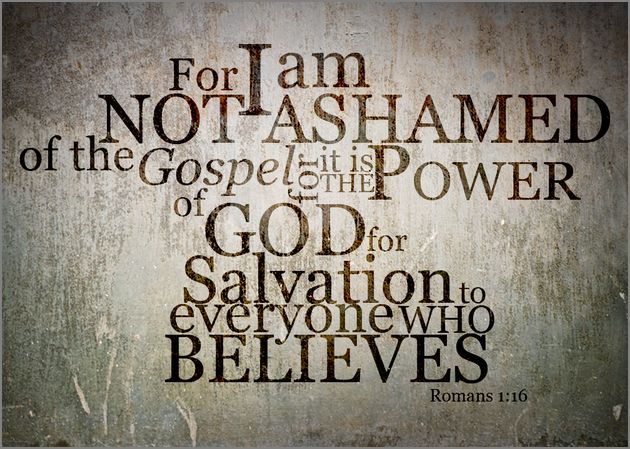 The goal of the Master’s Table is to be God honoring and Christ centered. The importance of living Christ-centered Christian lives is stressed on the About page, explaining Christ should be at the center of everything Christians do. Perhaps you’ve heard me say (and by heard I mean read) that the Bible is about Jesus. The Bible tells one story, of how a holy God relates to a sinful, broken and fallen people. At the center of the that story is Jesus.
I talk a lot about the Gospel. I attempt to preach the Gospel in every single sermon, regardless of where in the Bible the sermon begins or what the “topic” is. I have endeavored to not only share the Gospel but also explain what it is, what the word means, and why it is important for Christians to keep hearing it. Of all the things the church has to offer, the Gospel is what the world needs to hear. Continue reading
 The Master's Table