 You may have noticed a new look at Bible Gateway. More changes are currently in beta and the look and functionality will soon be revised again. Like WordPress and many other sites, Bible Gateway is adapting to take greater advantage of social media. Everything is now cross-promoted across multiple outlets; which brings me to my Blogger Grid announcement. Continue reading
Category Archives: Bible
You’re Right, I Must be an Idiot
Don’t you love it when non-Christians, atheists, gay-rights activists, etc. reference the Bible and tell you that you’re reading it wrong? “Most of the Old Testament was negated and set straight by Jesus” and “You go out and stone a bunch of people, I’ll be living to please Jesus in the meantime” are on the list of things I’ve been told. I was told “the Old Testament pretty much doesn’t matter anymore” and the evidence for this claim was Jesus responding to the question about the greatest commandment. Kudos for knowing Jesus’ answer to that question; Love the Lord you God with all your heart, soul, mind and strength. A second is just like it, love your neighbor as yourself. This was an example of Jesus setting things straight.
The problem is that Jesus responded by quoting the Old Testament. Continue reading
Did Noah Preach?
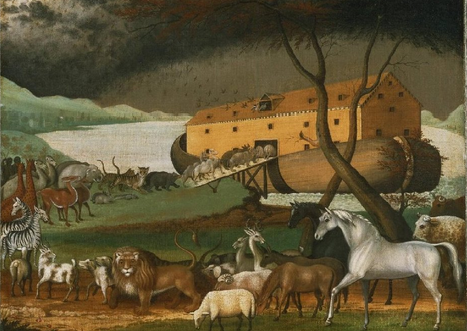 I was reading Jon Bloom this morning at the Desiring God blog. The title of the post is The Folly of what Noah Preached and it compares the message preached by Noah to the New Testament sermons of which Paul said “For the word of the cross is folly to those who are perishing, but to us who are being saved it is the power of God.” (1 Corinthians 1:18 ESV) He draws a parallel between Noah’s sermon to repent and get on the ark and our sermon to repent and believe in the Gospel of Jesus Christ. In both cases judgement was announced and a plan of salvation offered.
Desiring God is one of the few blogs I read that does not allow readers to comment. So here is my comment: I can’t find evidence that Noah preached any such sermon. It’s just not in the Bible. Bloom’s post is based on Hebrews 11:7 which reads: Continue reading
The Funny Thing About Propitiation
 “Propitiation means the turning away of wrath by an offering. In relation to soteriology, propitiation means placating or satisfying the wrath of God by the atoning sacrifice of Christ.” Charles C. Ryrie
One of things I like about the ESV is that it doesn’t necessarily do away with all of the old sounding words. Some words, like propitiation, are good words to use and the modern reader may need to look up a definition or two as necessary. The KJV uses propitiation three times, once in Romans and twice in 1 John. The NIV does not use this word all, in the case of Romans 3:25 calling Christ the “sacrifice of atonement.” Continue reading
What Shall We Do?
 In the first chapter of Acts, Jesus told the Apostles to wait in Jerusalem for the promise. He then ascended to Heaven to sit at the right hand of God the Father. In Acts 2 they were gathered in one place and the Holy Spirit filled the entire house. Each one filled with the Spirit began to speak in tongues, and they went out into the streets of Jerusalem. This event is known as Pentecost and is still celebrated 50 days after Easter Sunday. Some in the crowd that day objected that the Apostles were merely drunk and Peter responded with a turning point sermon in the history of the church.
Christmas Scriptures
 There are many well-known passages of scripture that make their way onto Christmas cards and into sermons this time of year. Prophesies of Isaiah and Micah foretelling the Messiah are common, and the birth of Jesus is recorded in the gospels of Matthew and Luke. While Christmas celebrates the birth of the Christ child, there’s a lot more going on than just a birthday. The incarnation is about God robing himself in flesh. Emanuel is God with us, and the New Testament has much more to say about the incarnation than it does the night it happened.
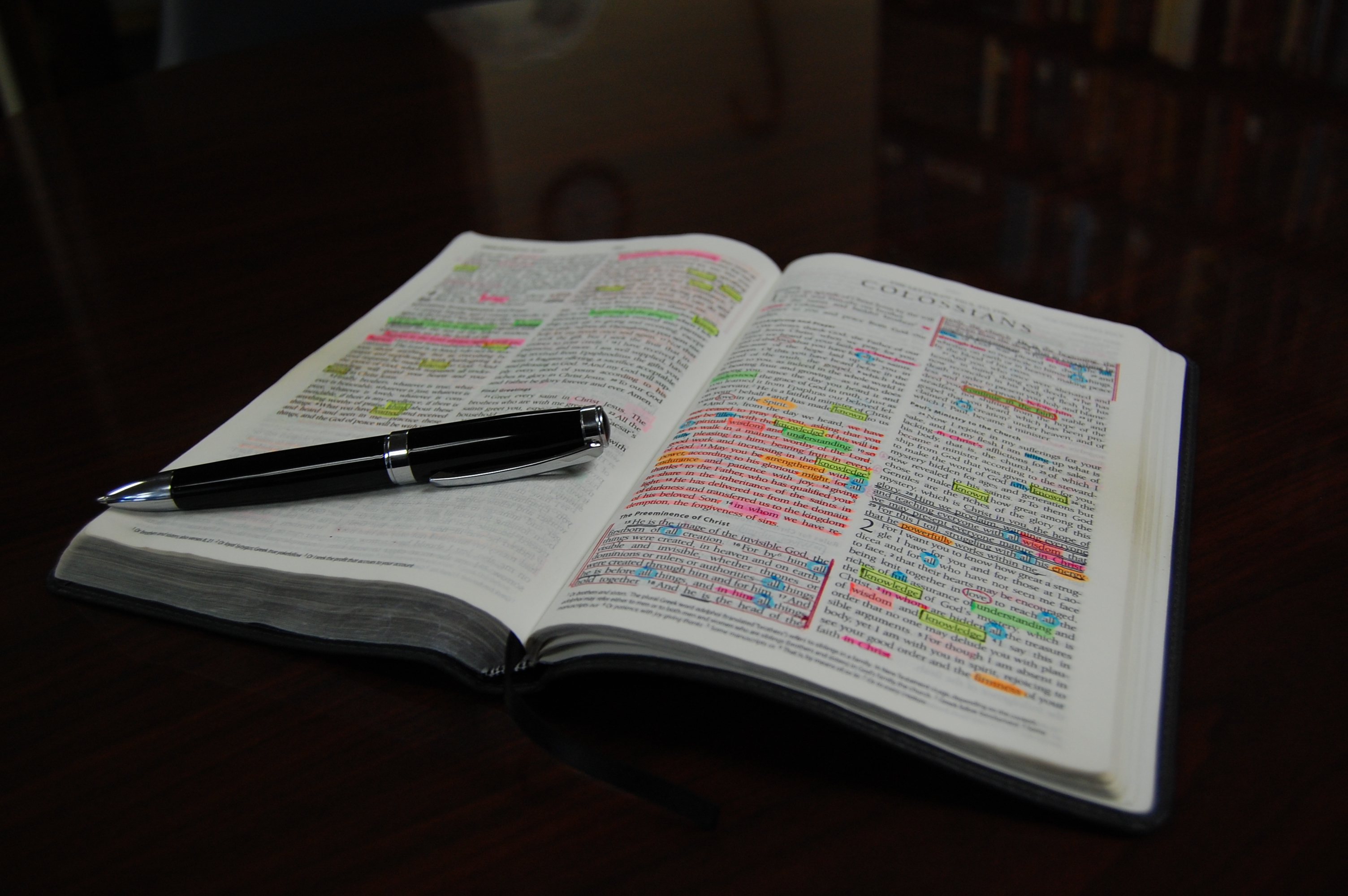
He is the image of the invisible God, the firstborn of all creation. For by him all things were created, in heaven and on earth, visible and invisible, whether thrones or dominions or rulers or authorities—all things were created through him and for him. And he is before all things, and in him all things hold together. And he is the head of the body, the church. He is the beginning, the firstborn from the dead, that in everything he might be preeminent. For in him all the fullness of God was pleased to dwell, and through him to reconcile to himself all things, whether on earth or in heaven, making peace by the blood of his cross. (Colossians 1:15-20, ESV)
Academic Discussion: The Rapture of the Church
 Let’s begin with a note on prophesy. There’s an old saying that hind sight is always 20/20. As we happen to be entering the season of Advent, this is the time of year we look back at the Old Testament prophesies of Messiah. As we are reminded each year that God’s prophesies were fulfilled in the life, death and resurrection of Christ, our faith is affirmed that God is always faithful to keep his promises. Looking back at prophesies fulfilled gives our faith substance that God will continue to honor his Word.
Having said that, I take a rather pragmatic view of prophesied events, particular in relation to the end times. Continue reading
Believing is Seeing
And as Jesus passed on from there, two blind men followed him, crying aloud, “Have mercy on us, Son of David.” When he entered the house, the blind men came to him, and Jesus said to them, “Do you believe that I am able to do this?” They said to him, “Yes, Lord.” Then he touched their eyes, saying, “According to your faith be it done to you.” And their eyes were opened. And Jesus sternly warned them,“See that no one knows about it.” But they went away and spread his fame through all that district. (Matthew 9:27-31, ESV)

Seeing is believing refers to the undeniability of events witnessed first hand. In other words, we believe because we see. The two blind men professed their belief that Jesus could heal them, and his response was “According to your faith be it done to you.” Their healing was based on their faith. Thus these men could see because they believed.
Today we walk by faith not by sight (2 Cor. 5:7). Someday our faith will be our sight. Oft quoted Hebrews 11:1 describes faith as “the evidence of things not yet seen.” Without faith those things will never be seen. So for us, like the two blind men, believing will be seeing.
Little is Much
Little is much when God is in it. This is a well-known saying thanks to the Gaither Vocal Band, the Statler Brothers and countless others, and there have been many sermons by the same title. While these exact words are not contained in a verse of scripture, the idea is certainly found throughout the Bible.
The Law of the Lord
Blessed is the man who walks not in the counsel of the wicked,
nor stands in the way of sinners, nor sits in the seat of scoffers;
but his delight is in the law of the Lord, and on his law he meditates day and night. (Psalm 1:1-2, ESV)
His delight is in the law of the Lord. What delight is there in in the Law? After reading the New Testament, the Apostle Paul in particular, we know the Law does not make us righteous but in fact more guilty. The Gospel is superior to the Law; the Gospel is good news and the Law is bad news right?
It’s just not that simple. Continue reading
 The Master's Table