Number 666

Screenshot 2013-05-22 at 10.04.10 PMThe Master’s Table has been online since May of 2008, and this is post # 666. For the biblical back story on the number 666 you will want to review Revelation 13. All of chapter 13 describes the first and second beast, and the final verse, 18, cites 666 as the number of the beast, being the number of man. If seeing the number freaks you out (say $6.66 change out of a 10 dollar bill, or a blog with 666 posts) then consider the following.

Continue reading

For Us or For All?

torah scroll Some of Jesus’ teachings were meant for multitudes of followers, while at other times he taught only his disciples. There are some occasions we cannot be sure who he was talking to, nor if he meant the present time or prophesied of future events. Did you know that sometimes the Apostles wondered about the same things?

Peter said, “Lord, are you telling this parable for us or for all?” And the Lord said, “Who then is the faithful and wise manager, whom his master will set over his household, to give them their portion of food at the proper time? Blessed is that servant whom his master will find so doing when he comes. Luke 12:41-43 Continue reading

Does That Mean Denominations?

Screenshot 2013-04-08 at 8.41.09 AMBear with me for a moment. I have not consulted the biblical commentaries nor even my ESV Study Bible notes, and I haven’t searched the Christian blogosphere for other opinions. I’m going to toss this out there and see what comes back. In Luke 9 Jesus was talking about the least and greatest, and then…

John answered, “Master, we saw someone casting out demons in your name, and we tried to stop him, because he does not follow with us.” But Jesus said to him, “Do not stop him, for the one who is not against you is for you.” (Luke 9:49-50, ESV) Continue reading

Jesus Preached the Gospel, and Then Some

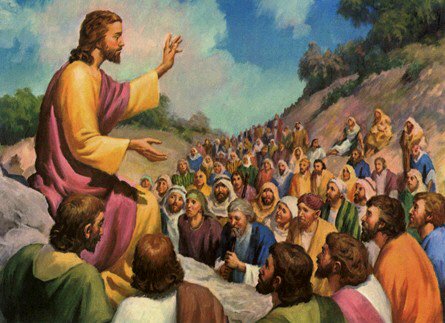
jesus_teachingIn Mark 1 (also Matthew 4) Jesus began his public ministry. Before healing the sick or calling disciples, Jesus preached his first sermon:

Now after John was arrested, Jesus came into Galilee, proclaiming the gospel of God, and saying, “The time is fulfilled, and the kingdom of God is at hand; repent and believe in the gospel.” (Mark 1:14-15, ESV)

Jesus preached the gospel. Gospel is one of those words we borrowed from Greek when translating the scriptures. It means good news. You can easily recognize Christians that share the gospel by one simple test: is what they are sharing good news? At the first opportunity, Jesus preached the Gospel. He did not preach a four part message series on having a happy marriage or managing a successful business. The Bible has a lot to say about marriage, business, raising children and so forth. But those things are not of the most importance. Where Jesus spent the balance of his time and energy was on spreading the gospel. Continue reading

Prophetic Words – Part 2

Gamaliel's CouncilWhen they heard this, they were enraged and wanted to kill them. But a Pharisee in the council named Gamaliel, a teacher of the law held in honor by all the people, stood up and gave orders to put the men outside for a little while. And he said to them, “Men of Israel, take care what you are about to do with these men. For before these days Theudas rose up, claiming to be somebody, and a number of men, about four hundred, joined him. He was killed, and all who followed him were dispersed and came to nothing. After him Judas the Galilean rose up in the days of the census and drew away some of the people after him. He too perished, and all who followed him were scattered. So in the present case I tell you, keep away from these men and let them alone, for if this plan or this undertaking is of man, it will fail; but if it is of God, you will not be able to overthrow them. You might even be found opposing God!” So they took his advice. (Acts 5:33-39)

Continue reading

Whose Side Are You On?

When Joshua was by Jericho, he lifted up his eyes and looked, and behold, a man was standing before him with his drawn sword in his hand. And Joshua went to him and said to him, “Are you for us, or for our adversaries?” And he said, “No; but I am the commander of the army of the LORD. Now I have come.” And Joshua fell on his face to the earth and worshiped and said to him, “What does my lord say to his servant?”
(Joshua 5:13-14 ESV)

First, notice that the angel Joshua encounters is not a beautiful woman in a choir robe. Armor-clad soldiers is one of the things History’s The Bible got right.

Secondly, notice he doesn’t say he is on Joshua’s side. He is the commander of the army of the LORD, and Joshua is his servant. Where do we get the idea that God is ever on our side? We don’t even have a side. If you recall, it is later Joshua who says to the nation of Israel “Chose this day whom you will serve… But as for me and my house we will serve the LORD.”

The New ESV Bible .org

The English Standard Version of the Bible from Crossway Publishers has been and continues to be my translation of choice. All scripture references on this website (that have links attached to them) link to the ESVBible.org website and if you have a habit of following those you will notice a change. Continue reading

Real Victory

The next day the large crowd that had come to the feast heard that Jesus was coming to Jerusalem. So they took branches of palm trees and went out to meet him, crying out, “Hosanna! Blessed is he who comes in the name of the Lord, even the King of Israel!”
-John 12:12-13

On Palm Sunday we celebrate Jesus’ entry into Jerusalem for the last time. All four Gospels record what is known as the triumphal entry. By the end of the week the crowd had turned, and those shouting “Hosanna” would shout “crucify him.” The triumphal entry appeared to be Jesus’ finest hour and the crucifixion appeared to be his greatest defeat.  Things are not always as they appear. Christians recognize that Jesus’ most important work was done on the cross, as he humbly submitted to the will of the Father. Continue reading

The Bible, Part 3

Bible, on HistoryI’m still watching the Bible on History. My simple prayer before it began was that it not be stupid. It certainly isn’t stupid; the film is well made, filmed on location and for the most part tells the Bible story. I understand that some things must be left out and others abbreviated.  I understand dramatic license when adapting a story into a screenplay. And yet with each installment I find myself wondering why deviate from scripture when there is no need? Some details we might wish for are simply not found in the text, but why change those that are? For those of us that know the biblical account the film recreates, the differences are at times pretty bold. Continue reading