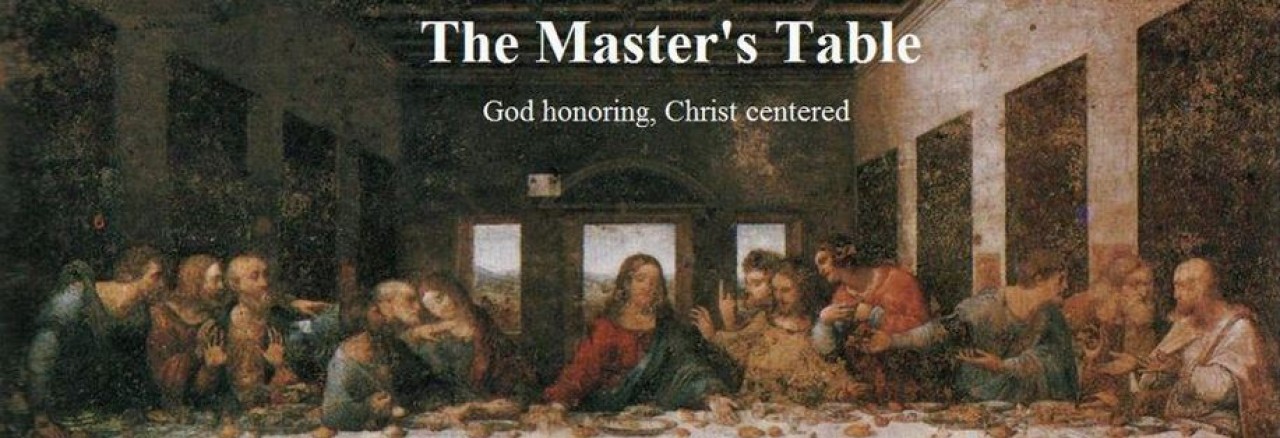
 One side of the debate says that the sinner’s prayer is not found in scripture. Okay, I’ll give you that. But you loose me on the premise that nowhere is such a prayer commanded nor implied anywhere in the New Testament. The Apostle’s Creed is not found in scripture, but that is the statement of faith regularly made by many believers. Each claim is based on scriptural truth. Below is the sinner’s prayer text, followed by several statements quoted directly from scripture. Continue reading
Category Archives: Bible
The Illusion
 I grew up in the 80’s. Before David Blaine and Chris Angel there was David Copperfield. Over the course of several prime time specials he made the Statue of Liberty disappear, walked through the Great Wall of China and escaped from Alcatraz. Part of his appeal came from his sense of humor and showmanship on stage, but people tuned in to see the “magic.” The magic of course was really illusion; he wasn’t really sawed in half on stage. But you know what they say – Seeing is believing.
It is so easy to believe what we see. Illusion, special effects and camouflage all depend on it. That very fact can also get us into trouble at times. We had to see bacteria with a microscope before germ theory really caught on, and there’s an ever-present warning in your side mirror not to believe exactly what you see (objects are closer than they appear). We all know there is more going on than can be seen. Wind, gravity, magnetism, microbes, radiation, DNA and so on cannot be seen, but we either perceive their effects through other senses or else detect them with scientific devices. The earth appears flat, and the sun seems to move across the sky from east to west. Our understanding is no longer limited to what we can see with our eyes; but the tendency to do so will always be there. Continue reading
The Ten Commandment Problem
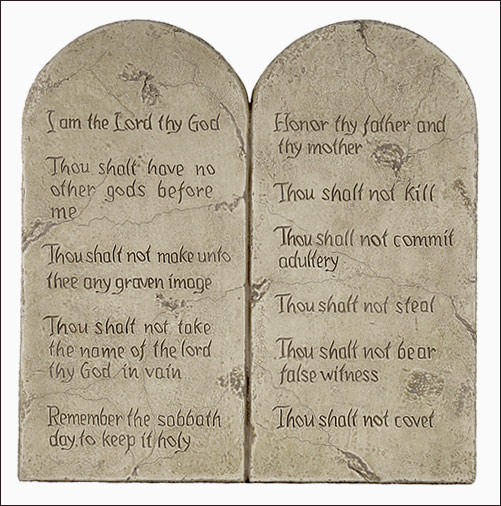 Normally I talk about the commandments being problematic in relation to our ability to keep them. God knew Israel, and all mankind for that matter, would fail to keep the Law. What we need is an all sufficient savior. The commandments have a purpose, but they cannot make a person righteous. Think of them as a ruler used to measure how far we fall short. Jesus told the Pharisees they kept the letter of the Law but did not understand the spirit of the Law. Paul calls the Law a burden we are not able to bear. Moses was the first person to break all ten commandments; wait for it…
Chaplain Mike of Internet Monk points out a different kind of problem. Counting the Commandments is about how different traditions number the list. Continue reading
Keep Blowing that Trumpet
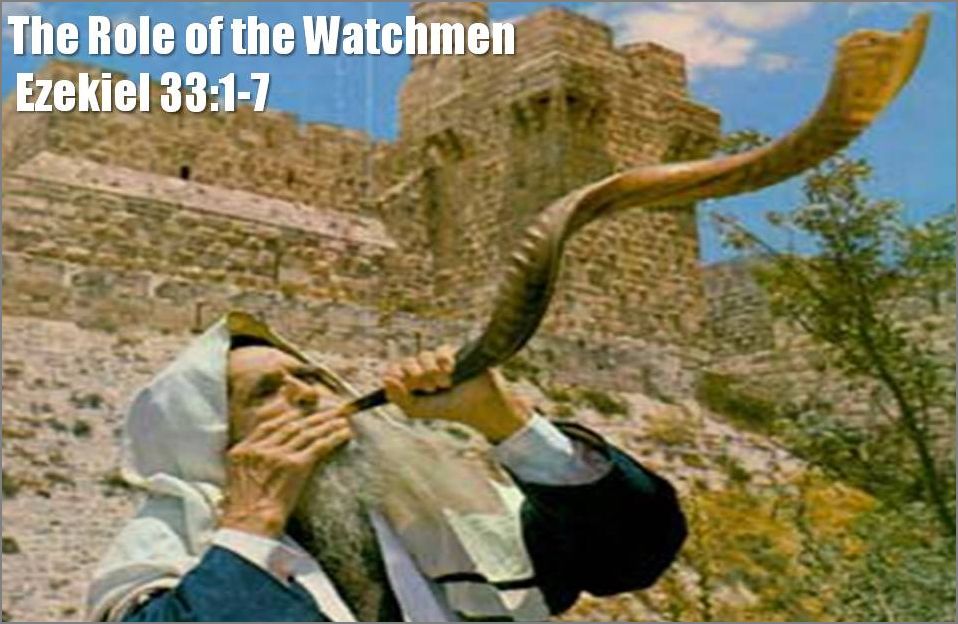 In Ezekiel 33, God describes to Ezekiel the role of the watchmen. If he sees the sword (enemy armies) coming, and blows the trumpet, then each person that hears the warning is responsible for heeding the warning or not. If the watchmen does not blow the trumpet, then he is responsible for the loss of life. Ezekiel, as the prophet of God, is identified as Israel’s watchmen and encouraged to keep blowing his trumpet. Figuratively speaking.
By the end of the chapter, God encourages Ezekiel to keep proclaiming the Word even though it seems no one is responding. Everyone is exciting about coming to listen, but no one actually does what he says. God actually says it’s like listening to a singer that plays his instrument well; Israel listens, but takes no action. In the same way, we must keep blowing our trumpet. Share the Gospel. Call the lost to repentance. Invite friends, family and neighbors to church. Most will not respond. Some will politely decline, a few will “think about” or say they will try. A few people will speak up and discourage us. In our changing culture, you may encounter active protest. You may be called a bigot, a hater, a hypocrite or be accused of judging. Keep blowing that trumpet. If we warn the world that judgement is coming – and Ex 33:33 reminds us it is – then each is responsible for how he or she responds.
Sharing the Gospel is an act of love, not hate. Warning others that God is a righteous judge is not judging others. All of us that know that have received the Gospel are called to share it with others. No matter what happens, keep blowing that trumpet.
If I say to the wicked, O wicked one, you shall surely die, and you do not speak to warn the wicked to turn from his way, that wicked person shall die in his iniquity, but his blood I will require at your hand. But if you warn the wicked to turn from his way, and he does not turn from his way, that person shall die in his iniquity, but you will have delivered your soul. (Ezekiel 33:8-9 ESV)
Jesus Had Feelings Too
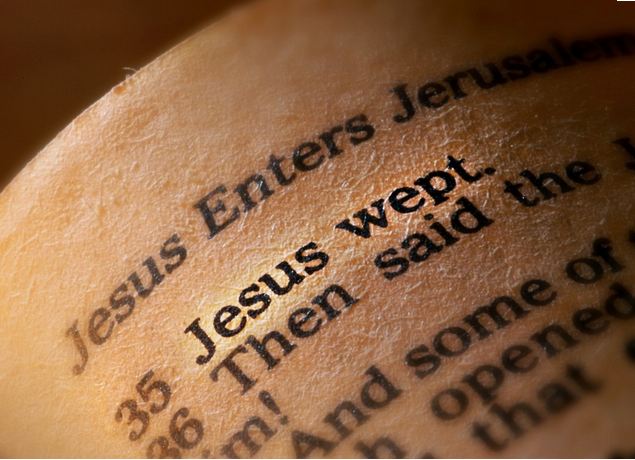 John 11:35, famously the shortest verse in scripture, says that Jesus wept. I once heard a preacher say there is no verse about Jesus laughing. We can get out on thin ice when we start identifying the litany of things not specified in scripture. Although the word trinity is not in the Bible, the concept of the trinity is definitely scriptural. Jesus had much to do in a very short period of time, and the demands of ministry were often overwhelming. In John 11 he wept at the tomb of Lazarus. Jesus lamented that Jerusalem did not repent, agonized during the final hours before his arrest and betrayal, and at other times seemed to display almost violent anger. Is there evidence to suggest that Jesus also experienced the other end of the human spectrum of emotions? Jesus was surrounded by so many that rejected the Gospel, but a careful study of scripture reveals he didn’t mope around like all hope was lost. Continue reading
Asleep at the Wheel
 We hear a lot these days about texting and driving, but there’s a million ways to not pay attention to the road. You could be talking to a person in the car with you, changing the radio dial, reading; I saw a guy on I-75 in Atlanta shaving with a cordless razor. Have you ever driven on auto pilot? Perhaps you’re deep in thought or just daydreaming, then suddenly realize where you are. If you drive a route routinely you do it without really thinking about it. That will become a problem if something non-routine happens, like a car suddenly breaking or kids running out in the road. Drivers don’t have to be drunk or texting to be zoned out.
1 Peter 5:8 says “Be sober-minded; be watchful. Your adversary the devil prowls around like a roaring lion, seeking someone to devour.” Not living in a drunken stupor is not enough, we have to watchful. We must be vigilant. In chapter 1 Peter tells us to prepare our minds for action. Riding a motorcycle requires more presence of thought driving a car; a few seconds on autopilot could be the end of your trip. Riders are trained to watch further down the road in order to anticipate problems, as well as be aware of what’s going on behind them on the road.
The Church can’t function on auto pilot. Continue reading
True or False: Man Cannot See God and Live
 I’m going to consider this question in order to illustrate two important truths that should apply to other questions. I have heard entire sermons on Exodus 33:20, in which God says to Moses “you cannot see my face, for man shall not see me and live.” Some elevate the idea of dying at the sight of God to one of the great doctrines of our Christian faith. If your paradigm is that no man can see God and live then you run into problems with other passages of scripture when men do see the face of God. So here come two important lessons.
1) The Bible does not contradict itself. The Bible is the Word of God. At essence it conveys one single message, that of how a holy, righteous God deals with a sinful, fallen, broken humanity. Many apparent conflicts are the result of not understanding historical or cultural context. Bible students must learn something of history, Hebrew poetry, and the language of analogy. Continue reading
Was the Serpent in the Garden of Eden Satan?
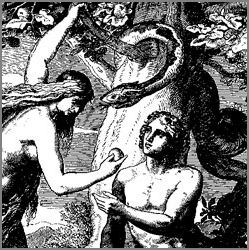 Most people believe that Satan appeared in the Garden of Eden as a serpent and tempted Eve to commit sin. Some point out, however, that the Genesis account does not directly identify the serpent as Satan, and others will actually argue against the serpent being Satan. So am I knowing and willfully opening this potential Pandora’s box? Oh yeah.
I suggest beginning with a read of Genesis 3. In verse 15, God speaks of enmity between the seed of the serpent and the seed of the woman. This makes little sense if God is speaking to a mere serpent. But if the seed of woman is a veiled reference to the Son of Man, i.e. Jesus who is the Christ, then this is the first prophesy of the Messiah. Continue reading
Full of God

The goal of Christians is to be conformed to the image of Christ. The reason we ask “What would Jesus do?” is to put ourselves in the right frame of mind to be Christ-like in our decision making (Philippians 2). We know from reading the Gospels and the letters of Paul that we are to think like Christ, to have the heart and mind of a servant, to be humble, to love as Christ loved, and so forth. Like John the Baptist we must make less of ourselves and more of Christ. Realizing that we can never become perfectly like Christ, the goal is to continuously work at it. As we get closer and closer, others should be able to see Christ in us. They were called Christians first at Antioch why? Because the followers of Christ at Antioch sounded and acted like the one they were following.
Ephesians 3 mentions one way to be Christ-like, which I had never noticed before. Read Colossians 1, noting verse 19 that says “For in him [Christ] all the fullness of God was pleased to dwell…” Jesus was incarnate deity, the person of God robed in a body of flesh. One aspect of Jesus Christ is that he was full of God. Now look at Ephesians 3, a short chapter in which Paul reveals the mystery of the Gospel. In particular:
For this reason I bow my knees before the Father, from whom every family in heaven and on earth is named, that according to the riches of his glory he may grant you to be strengthened with power through his Spirit in your inner being, so that Christ may dwell in your hearts through faith—that you, being rooted and grounded in love, may have strength to comprehend with all the saints what is the breadth and length and height and depth, and to know the love of Christ that surpasses knowledge, that you may be filled with all the fullness of God. -Ephesians 3:14-19 ESV
There are many things we can choose to fill ourselves with; Paul says we should be full of God.
When the Church Does Not Understand the Gospel
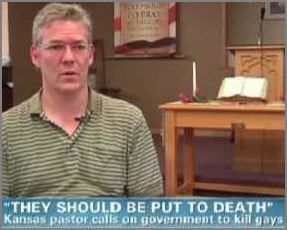 We’ve all seen the same news stories, right? A pastor in North Carolina (Charles Worley) suggests we put all the “gays” inside an electric fence, provide food and water, and wait for them to die out. Another pastor in Kansas sites Old Testament scripture that homosexuals should be stoned to death. And then there’s the kid with the questionable song lyrics, but let’s leave him to his parents. In the first place he is a minor; secondly, and more importantly, he is probably a reflection of his parents’ world view and has not yet developed his own.
The internet can give a national or even global voice to writers, preachers, etc. that are in otherwise obscure places (such as myself). What I think we’re really dealing with in the North Carolina story is culture shock. Fundamentalist preachers in the Carolina’s, Georgia, Alabama, Mississippi, Tennessee, Kentucky and so forth probably say a hundred things every week that would shock people, including Christians, from other backgrounds. I can only imagine what would happen if journalists in New York started listening to every fundamentalist, Pentecostal, charismatic or even Southern Baptist sermon from below the Mason-Dixon line each week. Continue reading
 The Master's Table