The Foolishness of the Cross

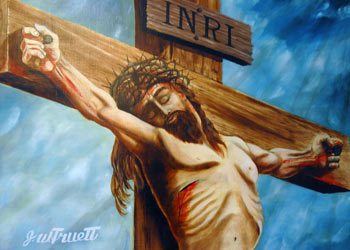
Paul wrote to the Corinthians “For the preaching of the cross is to them that perish foolishness; but unto us which are saved it is the power of God.”  (1 Cor 1:18, KJV)

This is one of those occasions where I prefer the King James translation.  The ESV uses word of the cross instead of preaching, and chooses folly over foolishness.  The meaning is unchanged.  For those of us that have been Christians for many years, or perhaps in church our whole lives, we worship at the foot of the cross.  We sing hymns about the cross, decorate our churches with images of the cross; we glory in the crucified savoir.  Paul reminds us to never loose sight of the fact that to the world, to the unsaved, to those hearing the gospel for the first time – it sounds foolish. Continue reading

Pursuing Wisdom

In the first Psalm, David contrasts the ways of the righteous and the wicked.  In the first chapter of Proverbs, Solomon does the same thing between the wise and the foolish.  He goes on to encourage his sons (and by extension all readers) to pursue wisdom.

David was a poet and a musician.  He not only wrote songs and played instruments, but he made trumpets for the temple musicians.  In Biblical times the Psalms were sung.  Think of this book as their hymnal.  Solomon was David’s son, and world renown for his wisdom.  The book of Proverbs is a collection of wisdom sayings, some perhaps written by Solomon himself and others collected.  In both cases, righteousness and wisdom must be pursued.  One must seek after them, like walking down a path.  There is more than one path, and we must think about which we are choosing. Continue reading

Jesus Broke Bread

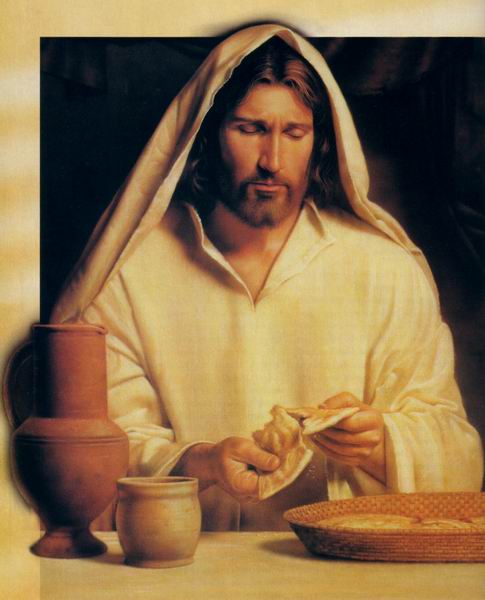
Jesus is often referred to as “braking bread.”  He blessed bread and broke it at the feeding of the five thousand, and again for the four thousand.  He broke bread at the Last Supper, and finally in one of the post-resurrection appearances.  That’s when they recognized him, as he broke bread, then he vanished from their sight!

So what’s up with breaking bread?  Hebrews in the Old Testament had swords and daggers, and we know there were skilled craftsmen in Israel.  Jesus himself was a carpenter; obviously they had the ability to slice bread.  It’s not that Jews couldn’t slice bread, they simply did not slice their bread.  Thanks was given to God before food was eaten, and bread was probably offered at every meal.  There may not be a command from God to not cut through bread, but there actually were rules about cutting stones for the alter of sacrifice.  The Temple was made of all sorts of carefully worked materials, but the alter was put together with stones that no tool had worked.  Beams, doors, cup, bowls, candle holders, et. al. were cut, carved, beaten into shape, etc.  But the alter was carefully fitted together using stones in their “original” God-given shape.  Breaking bread, especially right after thanking God for it, reminded the Jews were their meals really came from.  It would have been disrespectful to cut their bread with tools.

Our communion wafers are uniform in shape and size; they come out of the box that way.  They go together well with the little 3 oz plastic cups we use.  The bread and the cup remind us that Jesus’ body was broken and his blood spilled.  The symbol would work just as well with Oreo’s and Kool-Aid.  But if you really want a feel for the disciples at that first last supper, try baking a loaf and passing it around.  Each believer could tear off their own piece.  You could go the distance and dip your bread into wine grape juice rather than sipping it.  Just remember what is important – Jesus body was broken.  What we need is a savior.
Gideon Sunday and Mark 4

Today was Gideon Sunday, at least where we live.  I wrote about the work done by the Gideon’s International last year.  I’ve also written before about sowing gospel seeds, based on the parable in Mark 4.  Just this morning I noticed a strong correlation between the two. Continue reading

Kings of Israel – Saul

The Old Testament nation of Israel was ruled over by only three kings, after which time 10 of the tribes broke from Judah.  Sometimes Judah and Israel were at war with each other, sometimes not, and each had a long line of kings that forgot God most of the time.  But for a brief period Israel expanded its borders, defeated its enemies, and had a king on the throne like all the other nations.  They thought they were winners. Continue reading

Reading More, Posting Less

For the past several weeks I have been reading the Bible more.  A lot more.  I started Genesis at the beginning of January and am now in II Samuel.  I do not read through the Bible each year – that could be a long discussion right there – but decided to this year.  I’ve read the whole Bible in King James and NRSV, but up to this point have not done a straight through read of the ESV.  That has been my preferred translation of choice for reading, preaching and teaching since being introduced to it in 2003, but I’m a little ashamed to say that I have not yet read the entire thing.  Well, by God’s grace I’m working on it.  At my present rate I should finish in 10 months, not 12, but anything could happen.  I prefer reading ahead to catching up.

So the good news is I’m reading the Bible, and having a great time doing it.  The bad news, as far as this blog is concerned, is that I’m writing less.  It’s okay though.  At least I think it’s okay.  Internetmonk.com has a team of authors posting daily and there’s a list of good blogs in my blogroll, some of which haven’t quit yet.  I hate it when a good blog stops.  The Master’s Table has not stopped; it has, at least for the time being, slowed down.

Easter is coming up in a few weeks.  Daylight Savings Time started this morning.  It’s a good time to be in church.  I’m starting a three part sermon on kings of Israel today, and will be posting on Saul (hopefully) this afternoon.  If you’re a follower, hang in there.  Graduation is now just a few weeks away, and during the summer I should have more time to read and write.  God has blessed and is blessing; just thought I would pass that along.

Blessings and Curses: Deuteronomy 28

The last of the five books of Moses, Deuteronomy wraps some things up and reviews some others.  He knows that he will not be entering the Promised Land, and wants to encourage the Children of Israel one last time to remember God and keep his commandments.  Chapter 28 is in two parts; first the blessings for obedience followed by a list of curses for disobedience.

The first 14 verses of Deuteronomy 28 list the blessings for obedience.  In short, God will bless the land allowing it to flow with mild and honey.  Crops will fill their barns, grapes will fill their winepresses, children will be born and the nation will live in peace from their enemies.  They will be high and mighty over the other nations of the world.  Many more verses, 15 – 68, detail the curses God will bring for disobedience.   Continue reading

Where is God?

Where is God? Lots of people have a take on where God might be. Atheists believe that there is no god of any kind, anywhere. Agnostics believe there may be a god or some type of higher power, but we either don’t know what that is or perhaps we cannot know. Deists believe the universe was set into motion like the gears of a clock, but that we are tiny and insignificant to such an omnipotent God. Then there’s New Agers, Scientologists, Oprah and so forth. Some spend their entire lives looking for God, but he isn’t hard to find. The truth is it should be hard to miss God. Continue reading

Enter his Gates with Thanksgiving

Christimas is the celebration of Jesus’s birth, but there is no biblical command to observe it.  There are however feasts, songs and prayers of thanksgiving are all over the Bible.  I’m not saying there is anything wrong with Christmas; during his lifetime Jesus was an observant Jew, and every indication is that he ovserved all the Jewish festivals, including the historical ones not just the religious festivals commanded in scripture.  The arrival of “God with us” is a major turning point in all of history.  But we are commanded to praise God and give thanks.  Moses sang songs of thanksgiving, David composed them.  James reminds us that “every good gift and perfect gift is from above.”  The United States was the first country to observe a national holiday for giving thanks.

Enter his gates with thanksgiving, and his courts with praise! Give thanks to him; bless his name! -Psalm 100:4

The word thanksgiving appears 9 times in the Psalms.  It appears a total of 42 times in the ESV Bible.  Click here to see them all.  If you look up variants, such as “give thanks,” you will find many more.  Whatever you read, however you celebrate, do not forget to thank God.  No matter what this year has been like, there is much to be thankful for.