Holy Week Review

Palm Sunday is on April 1 this year, Easter will be April 8.  That final week of Lent is referred to as Holy Week, and should be a special time in the lives of believers.  Here are some Holy Week posts from years past; they may not be new, but are still good.

The “Triumphal” Entry is about Palm Sunday, the first day of Holy Week.  The same Jews shouting Hosanna at the beginning of the week will be shouting Crucify him by the end of the week.

Who Framed Jesus? was a documentary shown by Discovery 2 years ago, but the same thing happens on t.v. and magazine covers every year.  This post generated a frenzy of comments that are also a blast to read.

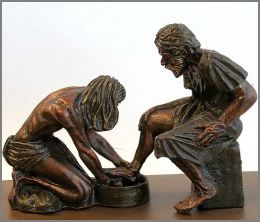
The Last Supper is about Jesus’ final Passover and the beginning of communion.  And on the same night he washed the disciples’ feet.

Is Jesus the Sheep, or the Shepherd?  This rather short post is one of the most read ever on The Master’s Table.

The Resurrection is the most celebrated event in Christianity, but here’s a thought: Jesus Died.  Jesus is God; have you ever thought that all the way through?

He Cannot Save Himself, the original post and He Cannot Save Himself, a poem for Good Friday.

It’s Friday, Sunday’s Coming  Sermon by S.M. Lockridge, with scenes from The Passion

And finally The Importance of the Resurrection.

OneCry, A Nationwide Call for Spiritual Awakening

A blogging friend asked me to promote OneCry, and I gave them 2 sentences in the Read & Share posting yesterday.  I feel I can do better than that.

I grew up in a series of small, fundamentalist churches.  We read the King James Bible and abstained from “mixed bathing.”  The men wore pants, the women wore dresses, and no one wore shorts.  And twice a year we ran revival.  I could empathize with Michael Spencer when he described a very similar experience growing up, and got what he meant by evangelicalism and revivalism.  The need for revival is great, but I get a little uneasy when people talk about having one.

The  difference between Revival and Revivalism

There is a certain revival culture that exists among evangelicals, particularly among fundamentalists.  I have come to believe that you cannot “schedule” revival twice a year just because you book an evangelist for a week and meet every night at 7 p.m.  If an evangelist is preaching every night, and you hope to see lots of people walk the aisle and get saved, then that’s not really a revival anyway.  Revival would involve Christians already in the church being spiritually awakened, or recommitting to being about our father’s business.  There was certainly an evangelistic thrust in all of my childhood revival meeting experiences, but every church member was expected to be there every night also.  Maybe that covers all the bases.  If you want to schedule an evangelist to preach for a week at your church, by all means please do so.  But call what it is. Continue reading

About My Father’s Business

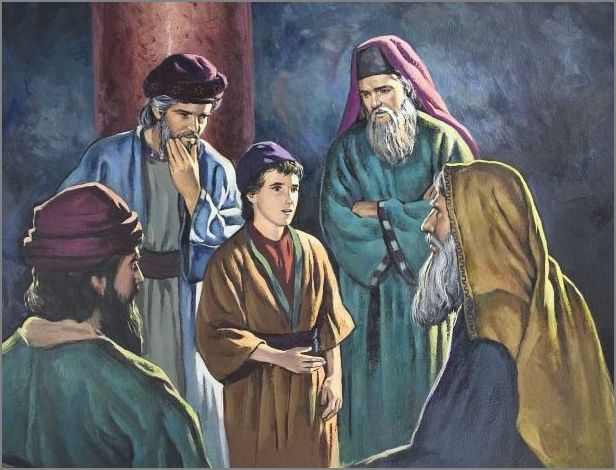
One year as the returned home from Passover, Mary and Joseph discovered that Jesus was not with their group.  They searched among their relatives and acquantances, then went back to Jerusalem to look some more.  They found the 12-year-old Jesus in the temple, asking questions and reasoning with the temple priests.  “Why have you treated us this way?” Mary demanded.  She expressed her concern and distress as they didn’t know where he was these past two days.  “Did you not realize that I must be about my father’s business?” Jesus replied.  (The ESV says in my father’s house.)  Of course his parents could not understand what he was talking about.  Luke 2:41-52

Jesus thought it was obvious.  Why were they looking for him?  He must be about his father’s business.

If you came up missing, where would people look for you?  Should we go straight to God’s house, or perhaps the office?  Or the golf course?  Or the bar?  Would we be found visiting the sick and afflicted, giving a cup of water to the least of his children? Or would we be somewhere else?

Look at Christ and consider the example.  We must be about our father’s business.

There’s More Than One Way to Not Share the Gospel

What do Fred Phelps and Joel Osteen have in common?  There’s no punchline, I really am going somewhere with this.

Fred Phelps is the pastor of the infamous Westboro Baptist Church.  You’ve seen them in the news or online protesting military funerals and more recently posting statements of judgment on Twitter.  I’ve never heard him say “Hell is hot and sin ain’t right” but I imagine he would agree with that statement.  Phelps is completely occupied with God’s judgement.  God does hate sin, and the wages of sin is death.  That seems to be just about the only weapon in the Westboro arsenal.  The message is a call to repent.

At the polar opposite end of the spectrum is Joel Osteen.  He has never used the words wrath and God in the same sentence.  Sin, the cross, the blood of Jesus, he quit preaching on those things years ago.  He actually said in an interview that everybody has already heard those things.  Osteen has his, um, church members hold up their Bibles each week, repeat some little mantra, then put them back down while he tells funny stories for another half hour.  He is an excellent speaker – funny, polished, very encouraging – I just wouldn’t call him a preacher.  His message is to think positive thoughts, believe that God wants to bless you, will bless you, and that nothing would please God more than to bless you.  He has a million dollar smile, gorgeous wife, two books on the New York Times Bestseller List, and 50,000+ attendees every week at Lakewood “Church.”  He’s doing much better in that department than Phelps, whose congregation consists mainly of his own family members. Continue reading

What is the Gospel?

The goal of the Master’s Table is to be God honoring and Christ centered.  The importance of living Christ-centered Christian lives is stressed on the About page, explaining Christ should be at the center of everything Christians do.  Perhaps you’ve heard me say (and by heard I mean read) that the Bible is about Jesus.  The Bible tells one story, of how a holy God relates to a sinful, broken and fallen people.  At the center of the that story is Jesus.

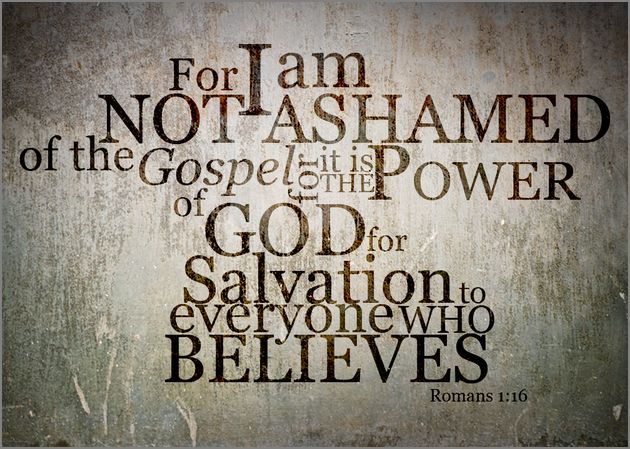
I talk a lot about the Gospel.  I attempt to preach the Gospel in every single sermon, regardless of where in the Bible the sermon begins or what the “topic” is.  I have endeavored to not only share the Gospel but also explain what it is, what the word means, and why it is important for Christians to keep hearing it.  Of all the things the church has to offer, the Gospel is what the world needs to hear. Continue reading

October Baby

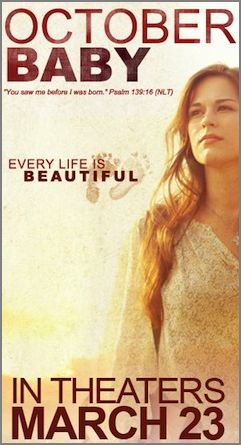
October Baby, based on the true story of Gianna Jessen, opens in theaters March 23.  Jessen is the survivor of a failed abortion attempt.  I first learned of her back in 2008, when the Wall Street Journal (of all things) ran her story.  That was the year Barrack Obama ran for president; here’s what I wrote back when.

Tim Challies has written a review after seeing an early screening.  He was “pleasantly surprised” at how much he enjoyed it.  Tim reviews the film, and also analyzes the challenge facing any and every Christian film.

You could watch the trailer at challies.com, but why not click over to Gianna Jessen’s blog and watch it there.  There’s a trailer for the film, and also a behind the scenes sort of thing with Gianna.

Book Review: Revival and Revialism

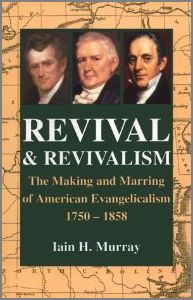
Michael Spencer was the first person I heard use the word revivalism.  Any type of -ism refers to the belief in or practice of a particular thing.  Some churches live in a revival subculture, where revival meetings, revival services and revival preachers are a regular part of ministry.  I believe Iain Murray has written a book after Spencer’s own heart.

I just read an excellent review of Revival and Revivalism: The Making and Marring of American Evangelicalism, 1750-1858 at the 9Marks blog.  Bobby Jamieson has spent some time with the text; the review is practically a study guide to the actual volume.  Read the full review here.

*The review lists $33 as the price, which is retail.  Amazon has it for $24.09, if you’re interested.

The Read and Share File

I would like to try something new.  Sometimes I’m reading or watching the news, and a statement or comment lights that creative spark and I sit down and crank out a blog post.  At other times I read something in an article or on a blog and think “Oh that’s neat,” then go about what I’m doing.  I don’t feel compelled to write 800 words, but would like to share with my readers those things that have blessed me or twisted my noodle just a little bit.

I’m still working on the concept – and the title – but let’s begin with the Read and Share File and see how it goes.

Daniel Jepsen at his self title blog explains Why I Don’t Preach the Law.  The Apostle Paul points out that the Law is useful, but has limitations.  Namely the Law does not make us righteous.  Jepsen lists shortcomings of preaching the Law rather than sharing the Gospel.

Internet Monk (apparently doing a whole series on wilderness, but I missed the announcement) has this to say about the Wilderness of Life Under the Law.  If all you get from the Old Testament is the Law, you’re missing out.  Abraham was justified by faith before God gave the Law.

Steve Brown of Steve Brown Etc. had published a book, Three Free Sins.  He is in the middle of a very short book tour.  Tons of stuff to read, download and listen to on his blog.

Paul Wilkinson publishes the mother of all link pages every Wednesday.  Here is the special, limited edition Leap Day Link List.

The New Testament Model of Training Leadership

I was reading 10 Attributes of a Humble Leader at Catalyst Space (link here) when I came to this:

“Humble leaders know the vision is bigger and will last longer than they will, so they willingly invest in others, raising up and maturing new leaders.”

You will not find more prominent leaders in the New Testament than Jesus and the Apostle Paul, and this is exactly what they were doing. Continue reading